


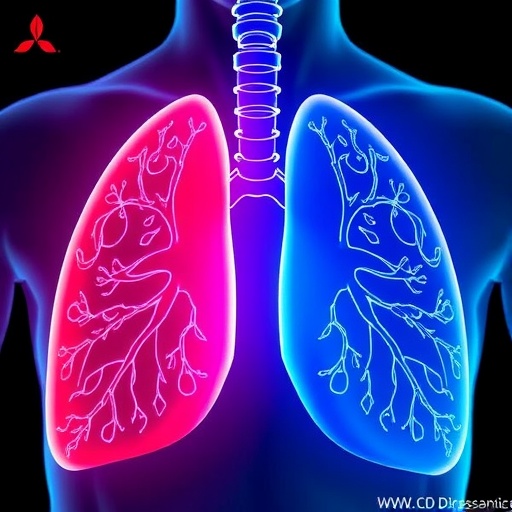
A groundbreaking study conducted by researchers at the University of Barcelona has unraveled critical insights explaining why the two predominant lung cancer histotypes—lung adenocarcinoma and squamous cell carcinoma—exhibit markedly different responses to anti-angiogenic therapies. Anti-angiogenic drugs, designed to inhibit the formation of new blood vessels that tumors exploit for growth and metastasis, have shown variable efficacy in these cancer subtypes. The study, recently published in the high-impact journal Cell Death & Disease, highlights the tumor microenvironment, especially the role of fibroblasts, as a pivotal factor dictating these therapeutic outcomes.
Fibroblasts, the abundant benign cells present within the tumor stroma, have traditionally been considered passive components of the tumor microenvironment. However, this new research illustrates their dynamic role in modulating angiogenesis, the process of new blood vessel formation critical for tumor sustenance and expansion. According to Jordi Alcaraz, a professor at the University of Barcelona’s Faculty of Medicine and Health Sciences and the senior author of the study, these fibroblasts do much more than merely inhabit the tumor niche—they actively influence vascular network architecture, oxygen and nutrient availability, and potentially the metastatic potential of lung tumors along with shaping the immune landscape within the tumor milieu.
This international investigation involved multidisciplinary collaboration between prestigious institutions such as the Catalan Institute of Oncology, the Bellvitge Biomedical Research Institute, the Mayo Clinic in the United States, the Francis Crick Institute in the United Kingdom, and the Garvan Institute of Medical Research and the University of New South Wales in Australia. Spearheaded by the University of Barcelona’s researcher Natalia Díaz Valdivia, the team deployed sophisticated experimental approaches to study angiogenesis markers and hypoxia-related pathways in human lung cancer samples and animal models.
Immunotherapy, a therapy that invigorates the patient’s immune system to target cancer cells, has emerged as a promising lung cancer treatment modality. Nonetheless, many patients fail to derive benefit from immunotherapy alone. Combined therapeutic regimens integrating immunotherapy with anti-angiogenic agents have garnered attention due to their ability to normalize abnormal tumor vasculature and potentially alleviate immunosuppressive tumor niches. Despite this, squamous cell carcinoma has consistently underperformed in response to anti-angiogenic therapy, unlike adenocarcinoma where these drugs demonstrate more robust clinical success.
The researchers distinctly observed that adenocarcinomas display vigorous and functionally competent angiogenesis, characterized by elevated oxygen levels and reduced apoptotic cell death within the tumor mass. Conversely, squamous cell carcinomas were marked by poor vascularization, heightened hypoxia, and an acidic microenvironment—conditions that foster tumor survival under nutrient-deprived and oxygen-starved states but also confer resistance to anti-angiogenic treatments. This stark divergence in vascular biology was traced back to the behavior of cancer-associated fibroblasts, which interact differentially with molecular signaling pathways in these histotypes.
A key mechanistic insight uncovered relates to the synergistic interplay between vascular endothelial growth factor (VEGF) and TIMP-1 (tissue inhibitor of metalloproteinases-1), a novel pro-angiogenic factor. In lung adenocarcinoma, fibroblasts actively enhance angiogenesis through this VEGF-TIMP-1 axis alongside SMAD2/3 signaling pathways, thus facilitating the formation of a functional vascular network. On the other hand, fibroblasts in squamous cell carcinoma exhibit altered molecular profiles likely induced by chronic tobacco exposure, resulting in diminished vessel formation capability and exacerbated tumor hypoxia.
These findings not only elucidate the historically observed selective efficacy of anti-angiogenic drugs favoring adenocarcinoma patients but also shed light on the disparate metastatic behavior of these subtypes. Adenocarcinomas, with their extensive and operational blood vessel networks, seem more predisposed to early metastatic spread, leveraging the vasculature to disseminate cancer cells. Squamous tumors, burdened with hypoxia and acidic stress, appear to metastasize less readily, indicating a complex interplay between the tumor microenvironment and cancer progression dynamics.
The study drives home the imperative need for precision medicine strategies that recognize the heterogeneity of lung cancer subtypes. Therapeutic regimens must transcend one-size-fits-all paradigms, instead integrating tumor microenvironment features such as angiogenesis and hypoxia to stratify patients meaningfully. Biomarkers like TIMP-1 emerge as promising candidates for identifying patient subsets who may benefit from targeted anti-angiogenic interventions or tailored immunotherapy combinations.
Importantly, the work spotlights novel therapeutic targets relevant to these tumor microenvironment differences. For example, adenocarcinoma therapies might be optimized by focusing on agents that disrupt the pro-angiogenic TIMP-1 and SMAD3 pathways, while squamous carcinoma treatments may achieve greater efficacy by addressing tumor hypoxia and metabolic acidosis. This nuanced understanding offers a research blueprint for drug development aiming to manipulate the surrounding stroma in addition to the malignant cells themselves.
A significant practical challenge moving forward is the translation of these mechanistic discoveries into clinical practice. Researchers underscore the importance of validating biomarkers like TIMP-1 in prospective clinical trials and demonstrating that targeting stromal components alongside cancer cells genuinely enhances patient outcomes. The identification and development of specific inhibitors against TIMP-1, currently lacking, represent a critical avenue for therapeutic innovation.
The study received funding from prominent sources including the Spanish National Research Council, the European Union’s Horizon 2020 program, and the Spanish Association Against Cancer. As the global burden of lung cancer continues to rise, innovations that dissect and exploit the tumor microenvironment’s complexity may significantly impact therapeutic efficacy and survival rates for patients worldwide.
Overall, this comprehensive research not only deepens the scientific community’s understanding of lung cancer biology but also paves the way for next-generation treatment strategies that are finely tailored to histotype-specific microenvironmental characteristics, heralding a new era of personalized oncology.
News Publication Date: March 30, 2026
Web References:
https://doi.org/10.1038/s41419-026-08677-2
References:
Published in Cell Death & Disease, 2026
Cite Scienmag News
Nathaniel Bowman. (June 15, 2026). Innovative Advances Propel Personalized Lung Cancer Treatments Forward. Scienmag. https://scienmag.com/innovative-advances-propel-personalized-lung-cancer-treatments-forward/
Nathaniel Bowman. "Innovative Advances Propel Personalized Lung Cancer Treatments Forward." Scienmag, 15 June 2026, https://scienmag.com/innovative-advances-propel-personalized-lung-cancer-treatments-forward/. Accessed 4 September 2026.
Nathaniel Bowman. "Innovative Advances Propel Personalized Lung Cancer Treatments Forward." Scienmag. June 15, 2026. https://scienmag.com/innovative-advances-propel-personalized-lung-cancer-treatments-forward/


