


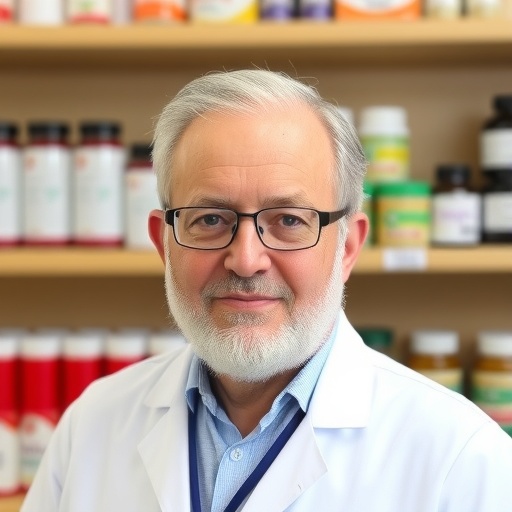
In the evolving landscape of healthcare, medication management for older adults has emerged as a critical area demanding focused research and practical interventions. A recent study conducted by Ulutas Deniz and Ceylan, published in BMC Geriatrics in 2026, delves into the nuanced experiences of Turkish community pharmacists managing medication regimens for the elderly population. This exploration provides a window into the complexities and challenges faced by pharmacists on the front lines, revealing insights that resonate far beyond the borders of Turkey.
Medication management in older adults is a multifaceted issue, intertwining pharmacological, physiological, and social factors. As humans age, their bodies undergo significant changes affecting drug absorption, metabolism, and excretion, thereby altering therapeutic outcomes. The study highlights how these physiological changes necessitate tailored medication management strategies, demanding a high level of expertise from community pharmacists who often serve as the most accessible healthcare professionals.
One of the study’s prominent findings is the pharmacists’ role not merely as dispensers of medication but as critical advisors who navigate polypharmacy risks — a common scenario among older patients who often juggle multiple chronic conditions. Polypharmacy increases the likelihood of adverse drug reactions, drug interactions, and medication non-adherence, complications that pharmacists manage through careful review and patient education.
Through in-depth interviews and observational data, Deniz and Ceylan uncover that Turkish community pharmacists employ a variety of techniques to optimize medication management. These include medication reconciliation, personalized counseling, and collaboration with other healthcare providers. Such approaches are crucial in identifying potentially inappropriate medications and ensuring that prescribing aligns with current clinical guidelines.
The study also illuminates the socio-cultural factors influencing medication practices within the elderly Turkish population. Pharmacists noted cultural beliefs and family dynamics significantly impact medication adherence and perceptions of illness, requiring a highly empathetic and culturally competent approach. This insight underscores how pharmacists must adapt communication styles and educational efforts to effectively serve diverse patient populations.
Importantly, the research emphasizes the systemic barriers faced by pharmacists, such as time constraints, limited access to patient medical records, and lack of formalized protocols for medication management. These obstacles hinder pharmacists’ ability to fully utilize their expertise, suggesting a need for policy reforms and infrastructural investments to empower these healthcare providers.
Another critical angle explored is the integration of technological tools to enhance medication management. Electronic health records, automated alert systems for drug interactions, and telepharmacy services, while not yet ubiquitously implemented in community settings in Turkey, represent promising avenues to support pharmacists in their complex duties.
Furthermore, the study reveals that pharmacists frequently engage in therapeutic monitoring activities, tracking patient responses and side effects to make timely interventions. This active involvement can prevent hospital readmissions and reduce healthcare costs, illustrating the broader societal benefits of optimizing medication management in older adults.
Deniz and Ceylan also discuss educational gaps among pharmacists, especially concerning geriatric pharmacotherapy. As the global population ages, specialized training and continuous professional development become imperative to prepare pharmacists for the unique demands of elderly care.
The research acknowledges the emotional and psychological dimensions of medication management, noting that older adults often experience medication fatigue and anxiety. Pharmacists who establish trustful relationships can alleviate these concerns, improve adherence, and ultimately enhance quality of life.
Interestingly, the study serves as a springboard for broader discussions on interprofessional collaboration. Community pharmacists are well-positioned to act as liaison points between doctors, nurses, patients, and caregivers, fostering a more holistic and coordinated approach to elderly health management.
In conclusion, the insights offered by Ulutas Deniz and Ceylan’s investigation reveal not only the challenges but also the immense potential within community pharmacy practice to transform medication management for older adults. Their findings call for systemic enhancements, including policy support, advanced training, and technological integration, to enable pharmacists worldwide to fulfill pivotal roles in geriatric care.
As societies globally confront aging populations, such research highlights the indispensable function of community pharmacists and the need for amplified attention to their professional experiences. This study not only enriches academic understanding but also sparks a necessary discourse on optimizing healthcare delivery for one of the most vulnerable yet underserved patient groups.
By spotlighting Turkish community pharmacists, this research transcends national boundaries, illustrating universal themes and solutions applicable to global healthcare systems. It invites healthcare stakeholders to reevaluate and restructure support mechanisms, aiming for safer, more effective, and empathetic medication management for older adults everywhere.
Cite Scienmag News
Beatrice Stafford. (June 14, 2026). Turkish Pharmacists’ Insights on Elderly Medication Management. Scienmag. https://scienmag.com/turkish-pharmacists-insights-on-elderly-medication-management/
Beatrice Stafford. "Turkish Pharmacists’ Insights on Elderly Medication Management." Scienmag, 14 June 2026, https://scienmag.com/turkish-pharmacists-insights-on-elderly-medication-management/. Accessed 4 September 2026.
Beatrice Stafford. "Turkish Pharmacists’ Insights on Elderly Medication Management." Scienmag. June 14, 2026. https://scienmag.com/turkish-pharmacists-insights-on-elderly-medication-management/


