


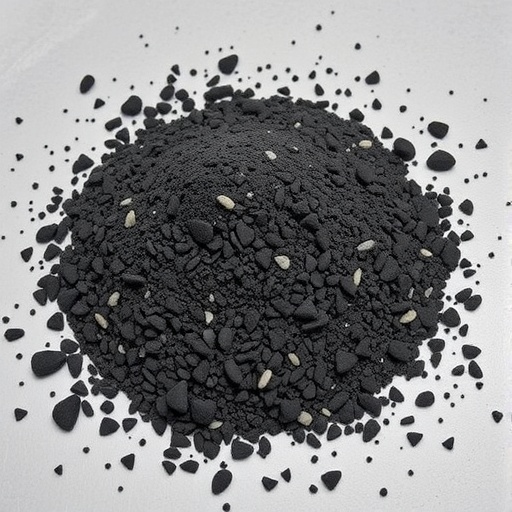
In the relentless pursuit of sustainable infrastructure solutions, a groundbreaking study has emerged, unveiling an innovative approach to enhancing asphalt binders by integrating novel materials derived from waste products. Researchers Huang, Sheng, and Sadeghzadeh have made significant strides in the realm of thermo-rheological performance enhancement through the use of dendritic fibrous nanosilica (DFNS) combined with waste cooking oil and waste rubber powder, forging a path toward more durable, eco-friendly road construction materials. This study, published in Scientific Reports in 2026, demonstrates promising advancements that could revolutionize how we conceive asphalt modification for future transportation infrastructure.
At the heart of this research lies the challenge of improving the mechanical properties and thermal stability of asphalt binders, critical components that govern the longevity and performance of paved surfaces. Traditional asphalt materials often suffer degradation under extreme temperature fluctuations and repeated mechanical stress, leading to potholes, cracks, and other distress phenomena that compromise road safety and require costly maintenance. By leveraging DFNS, a highly porous nanosilica with a unique fibrous architecture, the team has ingeniously amplified the binder’s structural integrity, facilitating enhanced stress distribution and resistance to deformation.
Waste cooking oil and waste rubber powder form the backbone of the study’s sustainability promise, offering a dual environmental benefit. The former, often discarded improperly, poses significant ecological concerns due to its potential to pollute water bodies and soil. By incorporating waste cooking oil into the asphalt matrix, the researchers tapped into its plasticizing abilities, which improve binder flexibility and reduce brittleness at lower temperatures. Concurrently, waste rubber powder—a byproduct of end-of-life tires—contributes valuable elasticity and energy dissipation properties, which are essential for coping with repetitive loading and minimizing crack propagation over time.
The fusion of DFNS with these waste-derived modifiers culminates in a composite asphalt binder that exhibits superior thermo-rheological characteristics compared to conventional materials. Rigorous laboratory testing highlighted the binder’s remarkable ability to maintain viscosity under elevated temperatures, which correlates strongly with reduced susceptibility to rutting, a common deformation issue in asphalt roads subjected to hot climates and heavy traffic. This thermal robustness is complemented by an impressive recovery in low-temperature cracking resistance, attributed to enhanced molecular interactions within the binder’s polymeric network, facilitated by the nano-scale architecture of DFNS.
From a rheological perspective, the modulation of viscoelastic behavior in the DFNS-enhanced binders points to a finely tuned balance between elastic and viscous responses. The presence of waste cooking oil softens the material matrix just enough to allow stress redistribution without compromising structural resilience, while the rubber powder’s elastic properties further augment this effect. Consequently, these modified binders demonstrate an ability to absorb and recover from deformations with greater efficiency, indicating an extended service life and improved performance sustainability in real-world applications.
Mechanistically, the integration of DFNS introduces a high surface area scaffold that supports the uniform dispersion of waste modifiers within the asphalt binder. This uniformity is critical to preventing agglomeration and phase separation, which could otherwise lead to inconsistencies in mechanical performance and early failure under load. The dendritic morphology of DFNS also enhances interfacial bonding, promoting synergistic effects between the organic waste additives and the mineral-asphalt phases. Such strong interfacial interactions are pivotal in maintaining composite integrity throughout temperature and mechanical cycles, effectively bridging the microscale structural complexities with macroscale durability outcomes.
The implications of these findings reverberate beyond mere material science, intersecting importantly with environmental engineering and urban development agendas. Utilizing waste cooking oil and rubber powder not only diverts significant amounts of solid and liquid waste from landfills and natural ecosystems but also mitigates the reliance on virgin fossil-based asphalt modifiers. This circular economy initiative contributes directly to reducing the carbon footprint associated with road construction activities, aligning with global climate action commitments and fostering a transformative vision for urban infrastructure resilience.
Moreover, adapting DFNS-enhanced asphalt binders into commercial paving practices could yield measurable economic benefits. With longer life spans and reduced maintenance cycles, road authorities could achieve substantial savings in repair costs and traffic disturbance. The enhanced material performance under high thermal and mechanical stress conditions also offers new possibilities for infrastructure development in regions facing harsher climatic extremes, where conventional asphalt materials fail prematurely.
Future research trajectories inspired by this study may focus on scaling production techniques for DFNS, waste modifier processing, and the comprehensive field trials necessary to validate laboratory performance under varied environmental conditions. Importantly, interdisciplinary collaborations among materials scientists, civil engineers, and environmental policymakers will be essential to optimize formulations and establish standards that ensure safety, efficiency, and sustainability in road infrastructure.
While the immediate study showcases the synergy of dendritic nanosilica with waste cooking oil and rubber powder, the conceptual framework invites exploration of other waste streams and nanomaterial configurations. Such innovations can potentially unlock novel pathways for multifunctional pavements capable of self-healing, energy harvesting, or pollution mitigation, thereby expanding the frontier of smart infrastructure technologies.
In essence, Huang, Sheng, and Sadeghzadeh’s work marks a pivotal contribution to the field of asphalt binder modification by harmonizing cutting-edge nanotechnology with green chemistry principles. Their research underlines the transformative potential that lies in the integration of sustainable waste valorization within traditional construction materials—ushering in an era where infrastructure not only serves but also safeguards the environment.
This visionary approach epitomizes the fusion of scientific rigor and ecological stewardship, presenting a compelling narrative for the materialization of resilient, adaptive, and environmentally conscious transport networks. As urban populations grow and climate challenges intensify, such innovative solutions will become indispensable pillars supporting the sustainable development of modern societies.
The publication in Scientific Reports stands as a testament to the rigorous peer review and scientific validation underpinning these findings, providing a credible foundation for industrial uptake and further academic inquiry. With the pressing need for sustainable infrastructure, the study’s methodologies and conclusions are primed to attract widespread attention and catalyze a paradigm shift in asphalt technology.
Ultimately, the integration of DFNS, waste cooking oil, and waste rubber powder within asphalt binders is not merely a step forward in materials engineering; it is a beacon illuminating the path toward a sustainable infrastructure future. The study not only addresses immediate technical challenges associated with thermo-rheological performance but also embodies a holistic vision where waste becomes resource, and innovation paves the way for resilience and environmental harmony in the roads of tomorrow.
Cite Scienmag News
Denise Maddox. (June 13, 2026). Enhanced Asphalt Binder: DFNS, Waste Oil, Rubber. Scienmag. https://scienmag.com/enhanced-asphalt-binder-dfns-waste-oil-rubber/
Denise Maddox. "Enhanced Asphalt Binder: DFNS, Waste Oil, Rubber." Scienmag, 13 June 2026, https://scienmag.com/enhanced-asphalt-binder-dfns-waste-oil-rubber/. Accessed 4 September 2026.
Denise Maddox. "Enhanced Asphalt Binder: DFNS, Waste Oil, Rubber." Scienmag. June 13, 2026. https://scienmag.com/enhanced-asphalt-binder-dfns-waste-oil-rubber/


