


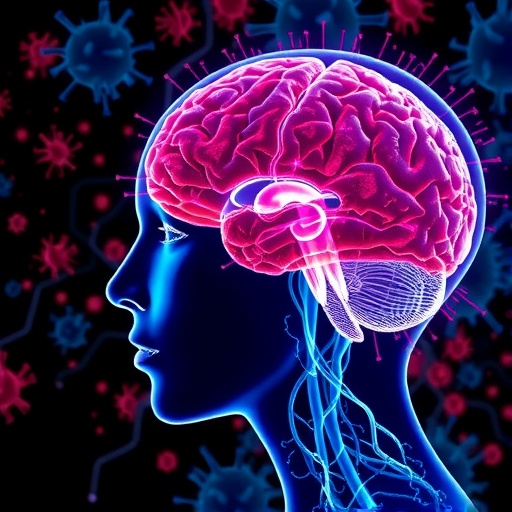
Traumatic brain injury (TBI), a condition often associated with sports, accidents, and everyday falls, continues to challenge neuroscience with its complex and sometimes lasting impacts on cognitive and neurological functions. Recent groundbreaking research conducted by the University of California, Riverside, sheds new light on the intricate molecular cascades triggered by even mild forms of brain injury such as concussions. This study, published in the Journal of Neuroinflammation, elucidates a previously unidentified interaction between toll-like receptor 4 (TLR4), an innate immune receptor in neurons, and the enzyme matrix metalloproteinase-9 (MMP-9). This dynamic governs neuronal communication disruption and subsequent cognitive dysfunction after brain trauma.
At the heart of this study lies the critical discovery that TLR4 activation directly influences MMP-9 activity following traumatic brain injury. Under normal physiological conditions, MMP-9 plays a pivotal role in remodeling the extracellular matrix (ECM) of the brain—the structural scaffold that supports neurons—and modulates synaptic plasticity, which is essential for learning and memory. However, when the brain is affected by trauma, this regulatory system is thrown off balance. The researchers demonstrated that TLR4 activation in neurons initiates an upsurge in MMP-9 levels, which then destabilizes synaptic connections, resulting in heightened network excitability and impaired cognitive function. This pathological cascade provides a mechanistic explanation for the neuronal dysfunction often observed after brain injury, including the propensity for seizures and memory deficits.
Using carefully designed experimental models involving rats and genetically modified mice, the research team meticulously traced how TLR4 signaling governs MMP-9 expression post-injury. Their observations revealed a rapid increase in both TLR4 and MMP-9 after mild-to-moderate concussions. Importantly, interventions that blocked TLR4 signaling—either through pharmacological agents in rats or genetic knockouts in mice—effectively prevented the rise of MMP-9, underscoring TLR4’s upstream regulatory role. This insight is crucial as it firmly establishes the TLR4-MMP-9 axis as a key molecular switch controlling pathological neuronal remodeling following trauma.
The balance between excitatory and inhibitory signaling within the brain’s neural networks is fundamental to stable brain function. The study highlights how this balance is disrupted after TBI, with elevated MMP-9 contributing to weakened inhibitory signals and excessive neural excitation. This imbalance leads to circuit destabilization, impairing brain rhythms and fostering an environment of ‘noise’ rather than meaningful communication between neurons. The degraded precision in neural signaling translates into diminished synaptic plasticity, which researchers measured by reduced capacity for the dentate gyrus—a critical brain region involved in forming spatial memories—to adapt following injury.
Behavioral tests conducted one month after induced brain trauma revealed significant spatial memory deficits in the injured animals, aligning with disrupted dentate circuit function. Strikingly, animals treated with inhibitors targeting TLR4 or MMP-9 within 48 hours post-injury exhibited marked improvement in cognitive performance, indicating that timely pharmacological intervention can attenuate long-term consequences of brain injury. This finding introduces an actionable therapeutic window that could transform clinical approaches to TBI by moving beyond symptom management to targeting underlying cellular pathways that drive chronic neurological impairments.
The implications of this study extend beyond the molecular biology of injury response. Traditionally, TLR4 has been studied primarily as an immune receptor involved in inflammatory signaling. However, this research reveals a more nuanced role: in the healthy brain, TLR4 contributes to homeostasis, maintaining the delicate equilibrium necessary for optimal neural function. Paradoxically, blocking TLR4 in uninjured brains led to adverse outcomes such as hyperexcitability and memory issues, underscoring its dualistic nature. The key to future therapeutic strategies will be the selective targeting of the TLR4-MMP-9 pathway exclusively in the context of injury, preserving TLR4’s beneficial roles in normal physiology.
Deepak Subramanian, the study’s lead researcher, emphasizes the increasing need to treat all brain injuries seriously, including seemingly mild concussions often overlooked in sports and daily life incidents, such as falls or scooter accidents. “Even mild concussions can trigger internal molecular cascades that cause long-lasting disruptions in neuronal function,” Subramanian explains. This research reinforces the urgency of early intervention following head trauma to prevent progressive and perhaps irreversible neurological damage.
The researchers caution, however, that the immune signaling systems involved are finely balanced, described metaphorically as operating within a “Goldilocks zone.” Both insufficient and excessive activation of TLR4 and MMP-9 carry risks, as these proteins are essential for maintaining healthy brain plasticity and stability. Therapeutic approaches must, therefore, precisely modulate this pathway to restore balance without undermining normal neural function.
Looking ahead, the team is focused on mapping the downstream molecular targets of MMP-9 that mediate neuronal circuit destabilization. They aim to unravel the complex biological ‘switch’ that transforms TLR4 from a homeostatic regulator into a driver of pathological excitability and impaired cognition after injury. Understanding this process on a molecular level could pave the way for highly specific drug development aimed at restoring brain circuit integrity and cognitive resilience in TBI patients.
The study’s findings have far-reaching potential to refine clinical protocols for traumatic brain injury, pinpointing a narrow but critical window for intervention that could dramatically improve neurological outcomes. Funded primarily by the U.S. Department of Defense, alongside contributions from the National Institutes of Health and the American Epilepsy Society, this research stands at the forefront of translational neuroscience, blending molecular insights with tangible therapeutic promise. With brain injuries affecting millions worldwide, the ability to intercept damaging immune-neuronal signaling soon after trauma offers hope for a future where brain injury outcomes are no longer dictated by chance but can be effectively managed and mitigated.
News Publication Date: 3-Jun-2026
Web References:
https://link.springer.com/article/10.1186/s12974-026-03890-4
References:
Subramanian et al., Journal of Neuroinflammation, DOI: 10.1186/s12974-026-03890-4
Cite Scienmag News
Cassandra Pierce. (June 12, 2026). When the Body Fights Itself: How the Immune System Can Exacerbate Brain Injury Outcomes. Scienmag. https://scienmag.com/when-the-body-fights-itself-how-the-immune-system-can-exacerbate-brain-injury-outcomes/
Cassandra Pierce. "When the Body Fights Itself: How the Immune System Can Exacerbate Brain Injury Outcomes." Scienmag, 12 June 2026, https://scienmag.com/when-the-body-fights-itself-how-the-immune-system-can-exacerbate-brain-injury-outcomes/. Accessed 3 September 2026.
Cassandra Pierce. "When the Body Fights Itself: How the Immune System Can Exacerbate Brain Injury Outcomes." Scienmag. June 12, 2026. https://scienmag.com/when-the-body-fights-itself-how-the-immune-system-can-exacerbate-brain-injury-outcomes/


