


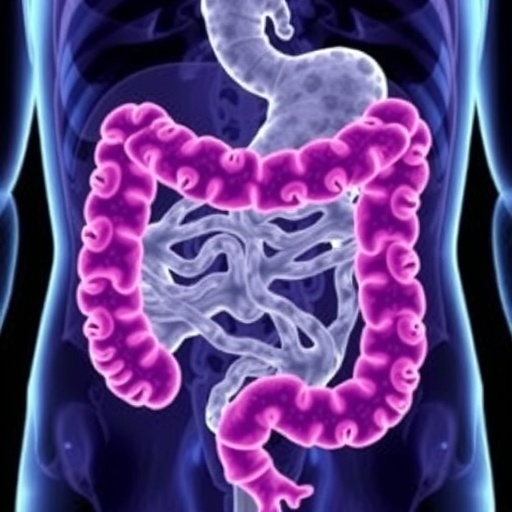
In the ever-evolving landscape of cancer research, colorectal carcinoma remains a major focus due to its prevalence and clinical complexity. Among the myriad factors influencing prognosis, tumour deposits (TDs) have emerged as critical yet enigmatic components. These microscopic nodules, separated from the primary tumour and lymph nodes, are recognized as adverse prognostic markers. However, the biological significance of TDs and their integration into conventional nodal staging have sparked intensive debate within the oncology community. The latest study led by Lee et al., published in the British Journal of Cancer, presents groundbreaking insights into how TDs contribute to tumour aggression through mechanisms of immune evasion and how their burden influences patient outcomes beyond traditional nodal assessments.
Historically, colorectal cancer staging has relied heavily on assessing lymph node involvement, a cornerstone for guiding therapeutic decisions. Tumour deposits, while acknowledged in recent staging systems, have yet to be fully appreciated for their prognostic weight. This study challenges the current paradigms by demonstrating that the presence and quantity of TDs mediate a dose-dependent impact on survival metrics, independent of nodal status. This suggests that TDs embody a distinct biological phenomenon, not merely misclassified lymph node metastases but rather unique microenvironmental niches fostering tumour progression.
Delving into the immune microenvironment of primary colorectal tumours harboring TDs, Lee and colleagues utilized advanced immunoprofiling techniques to uncover signatures of immune suppression and evasion. The research highlights that TD-positive tumours are characterized by a paucity of cytotoxic T lymphocytes and an enrichment of immunosuppressive cells, including regulatory T cells and myeloid-derived suppressor cells. This skewed immune landscape likely facilitates tumour cell dissemination and survival outside lymphatic architecture, promoting the seeding of distant microdeposits with aggressive phenotypes.
Crucially, the findings implicate tumour deposits as active players in remodelling local and systemic immunity rather than passive byproducts of tumour spread. The authors propose that TDs may secrete immunomodulatory factors or alter stromal components to subvert immune surveillance. Such mechanisms of immune evasion align closely with observed poorer patient prognoses and resistance to immunotherapies, highlighting TDs as potential targets for novel interventions aiming to restore anti-tumour immunity.
The concept of “dose-dependent” adverse prognosis adds a novel quantitative dimension to colorectal cancer staging. In contrast to binary nodal status assessments, quantifying TD burden provides a nuanced prognostic scale. Lee et al. demonstrated that increasing numbers of TDs correlate with progressively worse survival, irrespective of the presence or absence of lymph node metastases. This paradigm shift carries profound clinical implications, urging oncologists to incorporate TD counts into risk stratification models and treatment algorithms.
Furthermore, the study elucidates the spatial and histopathological distinctions between tumour deposits and lymph node metastases. Whereas lymph nodes maintain residual immune structures even when invaded, TDs lack organized lymphoid architectures, supporting their classification as discrete entities. Morphological and molecular profiling reinforce this separation, suggesting that TDs arise through mechanisms distinct from classical lymphatic dissemination, possibly involving vascular invasion or perineural spread.
These insights compel a reconsideration of staging systems such as the TNM framework, calling for refinement to better capture the prognostic significance of TDs. Incorporating TD burden alongside nodal and distant metastasis status could enhance predictive accuracy and personalize patient management strategies. Given the growing emphasis on precision oncology, metrics that reflect tumour biology and microenvironmental interactions stand to improve prognostication and treatment tailoring.
The immune landscape associated with TD-positive tumours also opens avenues for therapeutic innovation. Understanding the cellular players and immunosuppressive pathways prevalent in these settings may inform the design of immune-modulating agents or combination regimens. For instance, counteracting regulatory T cell accumulation or myeloid-derived suppressor cell activity could potentiate checkpoint inhibitors’ efficacy, which currently show variable success in colorectal cancer.
Methodologically, the research employed multiplex immunohistochemistry paired with transcriptomic analyses to dissect tumour-immune interactions at an unprecedented resolution. This integrative approach enabled the identification of cellular subsets and signaling circuits driving immune escape. The robust correlation between molecular findings and clinical outcomes strengthens the translational relevance of the study, bridging bench and bedside.
Importantly, the authors caution against oversimplifying tumour deposits as merely an extension of nodal disease, emphasizing their discrete biological identity. This distinction warrants careful pathological evaluation during surgical specimen assessment to ensure accurate diagnosis and staging. Enhanced training and standardized criteria for TD identification could therefore standardize reporting and improve consistency across institutions.
From a patient perspective, recognizing tumour deposits as a marker of aggressive disease may impact counseling and surveillance intensity. Patients with higher TD burdens might benefit from closer follow-up and consideration for adjuvant therapies beyond standard protocols. Incorporating TD assessment into multidisciplinary tumor boards can facilitate more informed decision-making and optimize therapeutic outcomes.
Despite the compelling evidence presented, the study acknowledges limitations including the need for larger multicenter cohorts and longitudinal studies to validate findings across diverse populations. Additionally, mechanistic investigations into the signaling pathways mediating immune evasion by TDs remain an active area of research. Future work integrating spatial transcriptomics and single-cell profiling promises to unravel the molecular intricacies underpinning TD biology further.
In summary, Lee et al.’s seminal work reshapes our understanding of tumour deposits in colorectal carcinoma, establishing their role as pivotal drivers of immune escape and dose-dependent adverse prognosis beyond nodal involvement. Their findings advocate for a paradigm shift in colorectal cancer staging and management, highlighting the imperative to redefine how we evaluate and treat this complex malignancy. As precision medicine advances, the identification and targeted disruption of TD-associated immune evasion mechanisms hold promise for improving survival outcomes in affected patients.
This study represents a significant leap forward in oncologic pathology and immunology, illuminating the dark corners of tumour dissemination and immune landscape manipulation. By bridging pathological observations with immune profiling, it lays the groundwork for novel therapeutic strategies poised to ameliorate the dismal prognosis historically linked to tumour deposits. The oncology community must now rise to the challenge of integrating these insights into clinical practice to harness their full potential in combating colorectal cancer.
As research continues to unravel the intricate dance between tumour cells and their microenvironment, the relevance of tumour deposits as both a biological phenomenon and clinical biomarker will likely expand. These microscopic but deadly nodules exemplify how subclinical features can profoundly influence disease trajectories. Through continued multidisciplinary investigation, the hope remains that colorectal cancer outcomes will be dramatically improved by understanding and targeting the subtle but devastating impact of tumour deposits.
Cite Scienmag News
Nathaniel Bowman. (June 12, 2026). Tumour Deposits Drive Immune Evasion, Worsen Colorectal Prognosis. Scienmag. https://scienmag.com/tumour-deposits-drive-immune-evasion-worsen-colorectal-prognosis/
Nathaniel Bowman. "Tumour Deposits Drive Immune Evasion, Worsen Colorectal Prognosis." Scienmag, 12 June 2026, https://scienmag.com/tumour-deposits-drive-immune-evasion-worsen-colorectal-prognosis/. Accessed 5 September 2026.
Nathaniel Bowman. "Tumour Deposits Drive Immune Evasion, Worsen Colorectal Prognosis." Scienmag. June 12, 2026. https://scienmag.com/tumour-deposits-drive-immune-evasion-worsen-colorectal-prognosis/


