


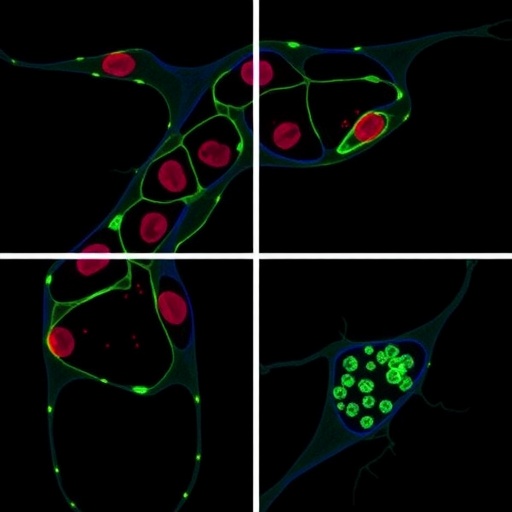
In a breakthrough study that bridges the fields of immunology and chronobiology, scientists from Kyushu University have uncovered a novel molecular mechanism explaining how macrophages—the body’s frontline immune cells—are governed by the circadian clock. This discovery elucidates the role of a key circadian protein, BMAL1, in modulating immune responses by directing the enzyme MFP2 into the nucleus of macrophages, where it activates genes responsible for driving inflammation. The implications of this finding extend far beyond fundamental biology, offering promising possibilities for innovative treatments for inflammatory diseases and cancer, potentially revolutionizing therapeutic strategies by leveraging the timing of drug delivery.
Macrophages serve as critical sentinels against infectious agents, orchestrating inflammation and tissue repair. However, dysregulation of their inflammatory state can precipitate a multitude of diseases, from chronic inflammatory conditions to malignancies. While it has been established that macrophage function oscillates with the body’s intrinsic circadian rhythm, the molecular underpinnings of how the circadian clock protein complex exerts control over macrophage pro-inflammatory activation remained elusive until now. The research conducted at Kyushu University illuminates the transport dynamics of MFP2, an enzyme involved in lipid metabolism and peroxisomal function, uncovering its transcriptional role within inflammatory gene regulation.
The circadian clock operates through a series of transcriptional feedback loops involving proteins such as CLOCK, BMAL1, PER, and CRY. BMAL1, in particular, is a master regulator that forms heterodimers with CLOCK to drive rhythmic gene expression. This study highlights a previously unrecognized function of BMAL1 that transcends its canonical role. BMAL1 physically interacts with MFP2, facilitating its translocation from the cytoplasm into the cell nucleus. This nuclear localization of MFP2 enables it to act as a coactivator of pro-inflammatory genes, effectively rewiring macrophage transcriptional programs to promote an inflammatory phenotype.
Researchers utilized a combination of molecular biology techniques including co-immunoprecipitation, chromatin immunoprecipitation sequencing (ChIP-seq), and real-time PCR to map the interaction landscape between BMAL1 and MFP2 and to identify the downstream gene targets activated during macrophage circadian cycles. These sophisticated assays revealed a temporal pattern where BMAL1 peaks coincide with enhanced nuclear accumulation of MFP2, linking peak circadian phases to heightened inflammatory responses. This finding implies that the circadian clock does not merely modulate macrophage function passively but actively primes these cells to respond with rhythmic intensity to pathogenic insults.
The discovery of BMAL1’s role in ferrying MFP2 to the nucleus also offers insights into lipid metabolism’s interface with immune regulation. MFP2 is known for its function in fatty acid β-oxidation in peroxisomes, but its nuclear function had remained unexplored until this study. The dual localization of MFP2 suggests it acts as a molecular nexus between metabolic state and inflammation, integrating signals from the circadian clock to fine-tune macrophage responses. This cross-talk might explain why metabolic diseases and inflammation frequently exhibit circadian dysregulation.
Furthermore, the study offers a conceptual framework for temporal precision in immunotherapy. By modulating the circadian regulation of macrophages through targeting BMAL1 or MFP2 pathways, it may be possible to tailor anti-inflammatory or anti-cancer treatments to specific times of the day. Such chronotherapies could maximize therapeutic efficacy while minimizing side effects by aligning drug administration with macrophage activation peaks, thus exploiting the natural ebb and flow of immune cell function.
This paradigm shift in understanding immune cell biology underscores the importance of biological timing in disease processes. Chronic inflammation is a hallmark of numerous pathologies, including autoimmune diseases, atherosclerosis, neurodegenerative disorders, and cancer. The molecular clock-mediated regulation of macrophage function provides new avenues to intercept these pathogenic processes at a fundamental level, potentially transforming the landscape of clinical intervention and patient management.
Moreover, the elucidation of BMAL1-mediated nuclear translocation of MFP2 invites further research into other clock-controlled metabolic enzymes that may similarly influence immune cell plasticity. This opens a broad field of investigation into how circadian clocks coordinate diverse cellular compartments and pathways to maintain homeostasis and respond dynamically to environmental challenges.
The Kyushu University team’s investigations also emphasize the importance of time-of-day considerations in experimental immunology and pharmacology. Ignoring circadian variables may lead to inconsistent and irreproducible data, impeding translational research. The integration of circadian biology into standard research and clinical protocols can enhance the accuracy and success of interventions aimed at immune modulation.
As the field moves forward, identifying small molecules or biologics that can selectively modulate BMAL1-MFP2 interactions represents a tantalizing therapeutic strategy. Additionally, deciphering how external cues such as light, feeding cycles, and stress impact this pathway could provide lifestyle-based adjuncts to pharmacological treatments, reinforcing holistic approaches to managing inflammatory conditions.
Ultimately, this research marks a crucial step in decoding the complex choreography by which the circadian clock shapes immune function. It unveils a sophisticated molecular mechanism where BMAL1 acts as a critical mediator, guiding metabolic enzymes like MFP2 to the nucleus to orchestrate the genetic programming necessary for macrophage activation. This intricate interplay not only advances fundamental knowledge but also paves the way for innovative, time-sensitive therapeutic interventions targeting inflammation and cancer.
Cite Scienmag News
Juliet Wilcox. (June 11, 2026). Circadian Rhythm Regulates Inflammatory Responses in Macrophages, Study Finds. Scienmag. https://scienmag.com/circadian-rhythm-regulates-inflammatory-responses-in-macrophages-study-finds/
Juliet Wilcox. "Circadian Rhythm Regulates Inflammatory Responses in Macrophages, Study Finds." Scienmag, 11 June 2026, https://scienmag.com/circadian-rhythm-regulates-inflammatory-responses-in-macrophages-study-finds/. Accessed 3 September 2026.
Juliet Wilcox. "Circadian Rhythm Regulates Inflammatory Responses in Macrophages, Study Finds." Scienmag. June 11, 2026. https://scienmag.com/circadian-rhythm-regulates-inflammatory-responses-in-macrophages-study-finds/


