

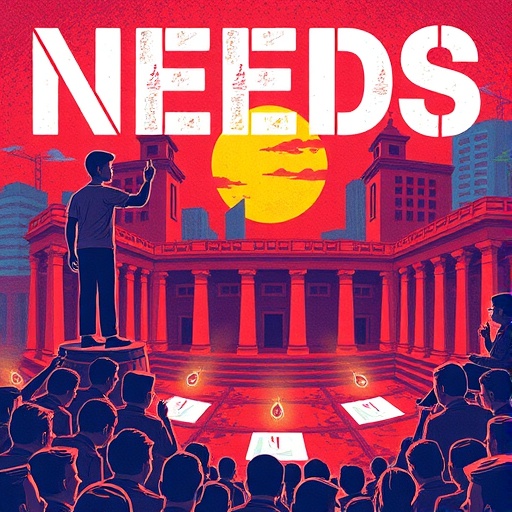
The escalating complexity of cascading crises—where multiple, interconnected risks and vulnerabilities converge—demands a nuanced approach that transcends traditional technical solutions. Recognizing this imperative, the NEEDS 2026 Conference convened from April 28th to 30th at Kaunas University of Technology in Lithuania, chaired by Prof. Aistė Balžekienė and spearheaded by Dr. Farid Karimi from the University of Jyväskylä, the project lead of DeCrises. This pivotal event brought together an assembly of scholars, policymakers, and practitioners intent on dissecting the multifaceted nature of societal resilience in the face of overlapping disasters.
The conference inaugurated with a series of high-level plenaries that framed governance and social structures as foundational to managing cascading crises. Emphasizing multilevel governance (MLG) as a mechanism to steer an equitable twin transition—coupling ecological and digital transformations—Karimi and Balžekienė set the stage for robust dialogues about synchronizing policy instruments across local, regional, and European scales. This multiscale cooperation is critical to ensuring that no community is marginalized amid these transitions, highlighting the need for social innovation alongside institutional reform.
Day one steered discussions towards governance architectures and the social fabric that undergirds resilience. Vineta Kleinberga from Rīga Stradiņš University chaired a session on “Governance for Resilient Futures,” which examined how institutional frameworks adapt under recurrent systemic shocks. These discussions illuminated the elasticity and rigidity of governance systems, calling attention to the inherent tension between established bureaucracies and the necessity for agile, adaptive mechanisms responsive to rapid change.
Concurrently, technological dimensions were foregrounded by Asta Jurgutė of KTU in a session titled “Technological Innovation for Disaster Reduction.” Here, emerging digital tools, sensor networks, and data analytics were explored as critical levers that enhance early warning systems and crisis response efficacy. Yet, the discourse underscored technology as an enabler rather than a panacea, warning against over-reliance on automated systems without parallel investments in human capital and social trust networks.
A landmark presentation by Joaquin Zenteno Hopp from the Western Norway Research Institute bridged social and technical divides by spotlighting marginalized voices. In “Uncertain Skills, Invisible Voices: The Personal Barriers to Socio-Technical Change,” Zenteno Hopp argued for embedding diverse perspectives within resilience planning, particularly those often sidelined due to socio-economic or epistemic marginalization. Such inclusion is vital to democratizing innovation and ensuring that transformational policies resonate across all societal strata.
As the conference progressed, day two zoomed in on community-centric approaches and the pivotal role of governance at multiple layers. Natalia Bełdyga led discussions on refugee integration and displacement dynamics, parsing the socio-political challenges of hosting displaced populations amid crisis. Her insights emphasized that resilience extends beyond infrastructure, encompassing the social cohesion essential for recovery.
Simultaneously, Balžekienė steered a session on perception, trust, and recovery, revealing the psychological underpinnings of societal resilience. Trust in institutions emerged as a decisive factor influencing compliance with crisis policies and collective action, reinforcing the argument that legitimacy and transparency are prerequisites for effective governance.
Health resilience—a critical yet often overlooked dimension—was scrutinized in sessions chaired by Audronė Telešienė and Matúš Mišík. They highlighted the intersection of public health preparedness with disaster risk reduction strategies, advocating for capacity building that integrates medical, social, and infrastructural components to foster holistic community resilience frameworks.
Adding a grassroots lens, Bełdyga’s panel participation unveiled the power of bottom-up organizing amid multilayered crises. This grassroots mobilization signals a paradigm shift wherein civil society actors transition from passive recipients of aid to active co-creators of resilience pathways. Such empowerment challenges conventional top-down governance models, pushing for hybrid arrangements marked by collaboration and shared stewardship.
Perhaps the intellectual fulcrum of day two was the DeCrises-led roundtable on “Multilevel Governance for Decarbonisation in Times of Crises.” Moderated by Karimi and featuring a constellation of experts including Balžekienė, Mišík, Zenteno Hopp, Kleinberga, and Arteaga, the dialogue confronted the political and institutional challenges of aligning climate mitigation with crisis response. The session highlighted the contestation between green and security politics, underscoring policy fragmentation as a barrier to effectuating a just and inclusive energy transition.
The final day distilled the conference’s rich discourse into practical applications and forward-looking scenarios. Highlighting the democratic dimensions of resilience, sessions chaired by Zenteno Hopp and Karimi emphasized the necessity of political inclusivity and civic engagement for sustainable crisis preparedness, situating these ideals squarely within the framework of European governance.
One standout contribution was Balžekienė’s empirical research into lay versus expert perceptions in Lithuania, which exposed gaps in trust and risk communication. This regional case study illuminated how epistemic divides can hinder consensus on resilience priorities, bolstering calls for deliberative governance that bridges specialist knowledge with community lived experience.
Further expanding methodological frontiers, Rodrigo Santaella Goncalves from LUT University analyzed the datafication of official statistics in the Baltics, interrogating how digitized data shapes policy narratives and public perceptions. Complementing this, Matti Kojo’s case study showcased deliberative panels in Finland concerning small modular reactors, illustrating how foresight and participatory methods can mitigate technological controversies in crisis contexts.
The conference culminated with an innovative scenario-based simulation led by Telešienė and colleagues, which modeled cascading crises across complex risk environments. This exercise revealed the dynamic interplay of systemic vulnerabilities and institutional responses, providing a hands-on demonstration of how resilience entails not only preparedness but also adaptive learning and interconnected governance.
Throughout these multiday engagements, a resounding theme emerged: resilience is fundamentally a social innovation challenge. Beyond infrastructural fixes and technological gadgets lies a need for empowered civil societies that act as vigilant watchdogs and co-owners of transition processes. The imperative is clear — only through strengthening the social contract, fostering inclusivity, and enhancing interinstitutional coordination can Europe navigate its multipronged crises and ensure no community faces disaster alone.
The NEEDS 2026 Conference thus positioned itself at the vanguard of resilience scholarship and practice, framing a compelling vision for future research and policy. It called for a transformative recalibration of democratic governance—one that embraces complexity, amplifies marginalized voices, and reimagines sustainability and security as intertwined ambitions. The DeCrises project, backed by Horizon Europe, exemplifies this ambition by promoting multilevel governance and community-led social innovation as twin pillars of durable societal resilience in an era marked by pervasive uncertainty.
Subject of Research: Democratic governance, social innovation, and multilevel governance frameworks addressing cascading crises and societal resilience in Europe.
Article Title: Societal Resilience in the Face of Cascading Crises: Insights from the NEEDS 2026 Conference.
News Publication Date: April 30, 2026.
Web References:
– DeCrises Project: https://decrises.eu/
– DeCrises LinkedIn: https://www.linkedin.com/company/decrises-project/
– DeCrises Instagram: https://www.instagram.com/decrises.project/#
– DeCrises YouTube: https://www.youtube.com/@DeCrises
– Newsletter: https://dashboard.mailerlite.com/forms/1559712/155805276050556366/share
Image Credits: Pensoft Publishers.
Keywords: cascading crises, societal resilience, multilevel governance, twin transition, social innovation, democratic governance, disaster preparedness, climate mitigation, community engagement, crisis communication, participatory governance, datafication, resilience simulations.


