


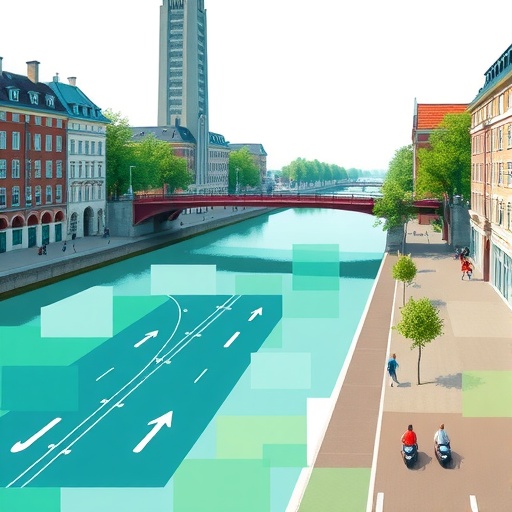
As the world races toward an increasingly digital future, cities stand at the forefront of this transformation. The integration of digital technologies into urban environments promises not only greater efficiency but also the potential for unprecedented sustainability. A groundbreaking new study delves deep into this intersection, presenting a comprehensive comparative analysis of German smart city strategies and exploring how these initiatives aim to bridge the gap between digitalization and sustainability. This study, recently published in npj Urban Sustainability, offers fresh insights into how German cities are navigating the complex terrain of adopting cutting-edge technologies while adhering to the principles of environmental and social sustainability.
Germany serves as a significant testbed for the smart city concept, given its economic strength, technological prowess, and extensive commitment to sustainable development. The research meticulously examines various city strategies, comparing approaches in digital infrastructure deployment, policy frameworks, and citizen engagement models. The study’s core thesis posits that successful smart city initiatives must not only leverage digital tools but also align their implementation with holistic sustainability objectives, including energy conservation, waste reduction, improved urban mobility, and enhanced social equity.
One of the salient points addressed involves the dual challenge cities face when integrating digital innovation. On one hand, there is a pressing need to modernize urban services through IoT (Internet of Things) networks, AI-enhanced data analytics, and real-time monitoring systems. On the other, these technologies must be deployed in ways that do not exacerbate resource consumption or deepen existing social inequalities. This analysis identifies this tension and proposes frameworks for balancing technological advancement with ethical and ecological considerations.
Innovatively, the study segments German smart city strategies into three broad categories based on their orientation and goals. The first group is primarily technology-driven, emphasizing cutting-edge infrastructure and connectivity solutions. While these strategies excel in their use of innovative tools such as AI-enabled traffic management and energy-efficient sensor grids, they sometimes lack explicit sustainability metrics. The second category prioritizes sustainability explicitly, focusing on renewable energy integration, circular economy principles, and carbon neutrality targets. The final category represents a convergence of both, seeking synergies between digitalization and sustainability through integrated urban planning and participatory governance approaches.
Key findings highlight that cities combining strong institutional frameworks with community involvement tend to perform best in achieving sustainability goals through digitalization. The report underscores the critical role of stakeholder engagement, including citizens, local businesses, academic institutions, and municipal authorities, in co-creating smart city solutions. This participatory model mitigates risks related to technological sovereignty and digital divides, ensuring more equitable access and use of emerging urban technologies.
Deep technical analyses reveal how specific digital tools are optimized to meet sustainability criteria. For instance, advanced sensor networks are deployed not merely for data collection but to dynamically monitor water and energy usage, enabling adaptive management that can lower consumption and waste. Similarly, digital platforms facilitate real-time feedback loops between municipal agencies and residents, promoting behavior changes that align with sustainability targets. The study offers detailed evaluations of these technical implementations, illustrating their effectiveness and challenges.
The research further probes the policy environments underpinning these smart city initiatives. Strategic documents from major German cities reveal commonalities and divergences in regulatory approaches, funding models, and international collaboration frameworks. Some cities leverage public-private partnerships to accelerate technology deployment, whereas others emphasize open data policies and interoperability standards to foster innovation ecosystems. These policy instruments significantly influence the pace and direction of digitalization efforts and their alignment with sustainability priorities.
Importantly, this analysis does not shy away from discussing the risks and unintended consequences associated with smart city developments. Issues such as data privacy, cybersecurity vulnerabilities, and the environmental footprint of digital infrastructure components are scrutinized. The study advocates for embedding robust ethical frameworks and lifecycle assessments into the planning and operational stages of smart city projects to safeguard against these threats.
Moreover, the study situates German smart city strategies within the broader European and global context. Comparative insights suggest that Germany’s approach uniquely balances technological innovation with sustainability ambitions, reflecting national cultural values and regulatory traditions. Lessons drawn from this analysis hold relevance for other cities worldwide striving to leverage digitalization as a catalyst for sustainable urban futures.
Future outlooks articulated in the study emphasize the need for agility and adaptability in smart city strategies. Given the rapid evolution of digital technologies and shifting sustainability benchmarks, cities must continuously reassess their goals and capacities. The report calls for ongoing monitoring, comprehensive impact assessments, and the creation of flexible governance structures capable of responding to emerging challenges and opportunities.
Technically, the article also highlights advances in AI and machine learning as pivotal enablers for predictive urban management. By harnessing big data, cities can anticipate traffic flows, manage energy grids more efficiently, and predict environmental hazards with greater accuracy. Such predictive capabilities foster proactive rather than reactive urban management paradigms, significantly enhancing sustainability outcomes.
Crucially, the research argues that digital transformation in urban contexts must be framed not simply as a technological upgrade but as a socio-technical transition. This perspective acknowledges the intricate interactions between digital tools, social dynamics, and ecological systems. Only through this integrative lens can cities realize truly sustainable smart futures that are inclusive, resilient, and environmentally sound.
In summation, this study offers a vital contribution to understanding how digitalization and sustainability intersect within the urban landscape, using Germany’s smart city strategies as a poignant example. Its detailed comparative framework, robust technical analysis, and policy insights provide a valuable roadmap for policymakers, technologists, and sustainability advocates alike. As cities worldwide grapple with the dual imperatives of modernization and ecological stewardship, such nuanced, evidence-based examinations will be indispensable in guiding the smart, sustainable urban transformations of tomorrow.
Cite Scienmag News
Sloane Callahan. (June 9, 2026). Bridging Sustainability and Digitalization in German Smart Cities. Scienmag. https://scienmag.com/bridging-sustainability-and-digitalization-in-german-smart-cities/
Sloane Callahan. "Bridging Sustainability and Digitalization in German Smart Cities." Scienmag, 9 June 2026, https://scienmag.com/bridging-sustainability-and-digitalization-in-german-smart-cities/. Accessed 3 September 2026.
Sloane Callahan. "Bridging Sustainability and Digitalization in German Smart Cities." Scienmag. June 9, 2026. https://scienmag.com/bridging-sustainability-and-digitalization-in-german-smart-cities/


