


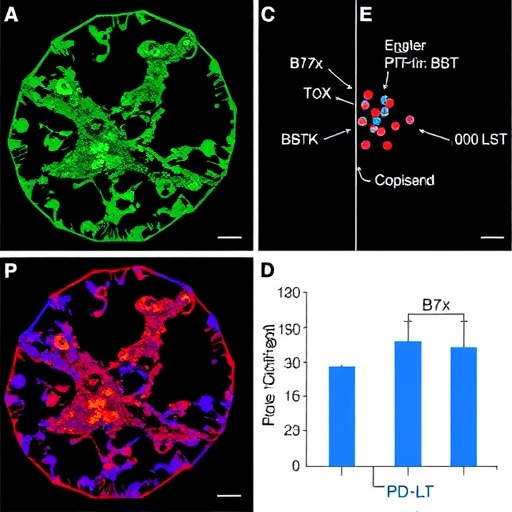
Bladder cancer represents one of the most formidable challenges in contemporary oncology, characterized by its high prevalence, frequent recurrence, and substantial metastatic potential. Despite advancements in immune checkpoint blockade therapies, particularly targeting the PD-1/PD-L1 axis, long-term durable clinical responses remain elusive for a considerable portion of patients. This resistance underscores an urgent need to unravel additional immunological mechanisms fueling therapeutic failure. Recently, an illuminating study from Albert Einstein College of Medicine has identified the immune checkpoint molecule B7x (also known as B7-H4, B7S1, or VTCN1) as a critical driver of tumor immune evasion and resistance to PD-1/PD-L1 blockade in advanced bladder cancer.
B7x belongs to the B7/CD28 immunoglobulin superfamily and plays a potent inhibitory role in modulating T-cell-mediated immune responses. Its expression is markedly dysregulated in various cancers, but this study highlights its pivotal function in bladder cancer progression and metastasis. Through comprehensive transcriptomic analyses combined with immunohistochemical validation, researchers demonstrated that B7x expression is significantly upregulated in malignant bladder tissues compared to adjacent normal urothelial cells. This heightened expression directly correlates with advanced tumor stages, aggressive histopathological features, and decreased overall survival, positioning B7x as both a prognostic biomarker and a promising therapeutic target.
The mechanistic insights provided here elucidate how B7x remodels the tumor microenvironment (TME) to favor immune suppression. By actively excluding cytolytic effector cells such as CD8+ cytotoxic T lymphocytes, natural killer (NK) cells, and natural killer T (NKT) cells, B7x undermines the host’s antitumor immunity. Concurrently, it facilitates infiltration and expansion of immunosuppressive populations including myeloid-derived suppressor cells (MDSCs), M2-polarized tumor-associated macrophages, and regulatory T cells (Tregs). This dual modulation orchestrates a hostile milieu that blunts effective immune surveillance and clearance of malignant cells, promoting unchecked tumor expansion and dissemination.
Experimental modeling in immunocompetent murine systems utilizing the well-characterized BBN963 bladder cancer cell line corroborates the oncogenic and immunosuppressive roles of tumoral B7x expression. Mice bearing tumors with heightened B7x levels exhibited accelerated tumor growth kinetics and significantly shortened survival compared to counterparts lacking B7x expression. Transcriptomic profiling further revealed an association between B7x and the activation of epithelial-mesenchymal transition (EMT) pathways, suggesting a mechanistic link to metastatic competency and stem-like phenotypes within the tumor bulk.
Clinical validation was performed via analysis of samples from the IMvigor210 clinical trial, involving patients treated with anti-PD-L1 therapy. Elevated B7x expression emerged as a robust predictor of immunotherapy resistance, underscoring B7x as a compensatory immune checkpoint that subverts the efficacy of PD-1/PD-L1 blockade. This novel axis of immune suppression indicates that B7x serves as a critical alternative route by which tumors maintain immune privilege despite checkpoint inhibition.
In light of these compelling findings, the study explored combinatorial immunotherapeutic strategies to overcome B7x-mediated resistance. Dual checkpoint blockade targeting both B7x and either PD-1/PD-L1 or CTLA-4 immune checkpoints yielded synergistic antitumor effects surpassing mono-therapeutic interventions. These combination therapies resulted in significant tumor growth retardation, reinvigoration of cytotoxic T cell infiltration and function, reduction of immunosuppressive myeloid and regulatory populations, and elevated production of pro-inflammatory cytokines critical for antitumor immunity.
The restoration of effective immune surveillance observed under combinational blockade highlights B7x’s potential as a high-impact therapeutic target. By simultaneously dismantling multiple immunosuppressive mechanisms within the TME, precision immunotherapy strategies incorporating B7x inhibition may markedly enhance clinical outcomes for patients suffering from advanced or treatment-refractory bladder cancer.
Overall, the integration of molecular, cellular, and clinical data in this study establishes B7x as a central hub in bladder cancer immune escape and therapeutic resistance. These results not only deepen our mechanistic understanding of immune checkpoint dynamics beyond PD-1/PD-L1 but also pave the way for innovative therapeutic paradigms in urological oncology. Targeting B7x in combination with established immune checkpoint inhibitors holds transformative potential to overcome immune suppression, inhibit tumor progression, and ultimately prolong patient survival in this difficult-to-treat malignancy.
News Publication Date: Not specified.
Web References:
- Genes & Diseases Journal: https://www.sciencedirect.com/journal/genes-and-diseases
- DOI: 10.1016/j.gendis.2025.101950
References: Original research published in Genes & Diseases by Marc C. Pulanco et al.
Cite Scienmag News
Nathaniel Bowman. (June 8, 2026). B7x Promotes Resistance to PD-1/PD-L1 Blockade in Bladder Cancer. Scienmag. https://scienmag.com/b7x-promotes-resistance-to-pd-1-pd-l1-blockade-in-bladder-cancer/
Nathaniel Bowman. "B7x Promotes Resistance to PD-1/PD-L1 Blockade in Bladder Cancer." Scienmag, 8 June 2026, https://scienmag.com/b7x-promotes-resistance-to-pd-1-pd-l1-blockade-in-bladder-cancer/. Accessed 3 September 2026.
Nathaniel Bowman. "B7x Promotes Resistance to PD-1/PD-L1 Blockade in Bladder Cancer." Scienmag. June 8, 2026. https://scienmag.com/b7x-promotes-resistance-to-pd-1-pd-l1-blockade-in-bladder-cancer/


