


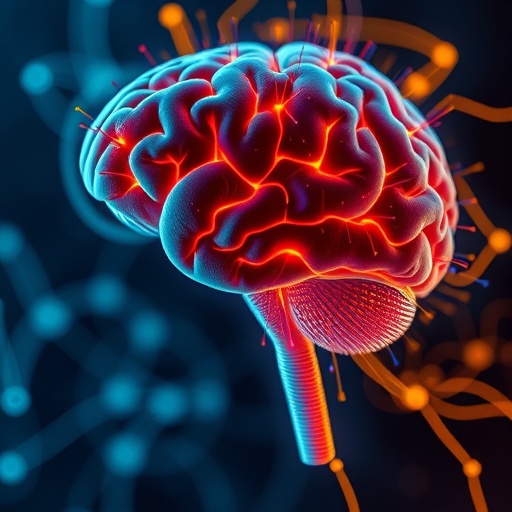
In a groundbreaking study poised to reshape our understanding of sleep neurobiology, researchers have demonstrated for the first time that cortical on/off periods—brief, coordinated pauses in neuronal firing traditionally associated with sleep—can be artificially induced in awake mice. These induced neural states replicated crucial sleep functions, challenging prevailing dogmas about the necessity of behavioral sleep for brain restoration and information processing. The findings open provocative new avenues toward unraveling the fundamental mechanisms underlying sleep’s restorative role and raise tantalizing prospects for therapeutic interventions that target neural activity patterns rather than sleep quantity or duration.
Sleep has long been viewed as a global, whole-brain state marked by striking behavioral and physiological changes. Key among these hallmarks are cortical slow oscillations—periodic fluctuations between depolarized “on” states where neurons vigorously fire action potentials, and hyperpolarized “off” states characterized by widespread neuronal silence. These on/off periods dominate slow wave sleep and are widely believed to facilitate synaptic homeostasis, metabolic waste clearance, and memory consolidation. Until now, such oscillatory patterns were considered an exclusive accompaniment of the natural sleep state and, importantly, inseparable from the behavioral unconsciousness of sleep.
The new study, published in Nature Neuroscience, shatters this perceived boundary by demonstrating that local cortical on/off dynamics can be selectively triggered within awake brain circuits, fulfilling key physiological roles traditionally attributed to genuine sleep. Using precise optogenetic manipulations and electrophysiological recordings, the investigators induced bouts of cortical silence in awake mice, directly measuring the resulting effects on neuronal activity, synaptic plasticity markers, and cognitive performance. The results suggest that these localized oscillatory events effectively emulate the restorative computations of sleep, even in the absence of whole-brain sleep behavior.
From a technical standpoint, the scientists employed an elegant experimental design involving genetically modified mice expressing light-sensitive ion channels in targeted cortical interneurons. This enabled temporally precise inhibition of neuronal firing upon application of specific wavelengths of light. By tuning stimulation parameters to artificially entrain off periods while preserving wakefulness, the team recreated the quintessential slow oscillation microarchitecture, notably within sensorimotor and prefrontal cortical territories. Concurrent high-density electrophysiological measurements captured the hallmark transition dynamics, confirming the neural population’s transient quiescence and subsequent reactivation on a timescale mirroring natural sleep patterns.
Intriguingly, these induced on/off cortical states did not merely replicate electrophysiological signatures but also conferred functional benefits. Awake animals exposed to optogenetically driven off periods displayed enhanced synaptic homeostasis, as evidenced by electrophysiological indices of synaptic downscaling and reduced expression of immediate early genes linked to neuronal overexcitation. Moreover, behavioral assessments revealed improved cognitive flexibility on memory-dependent tasks, implying a neuroprotective effect comparable to conventional sleep. These findings suggest the artificial rhythmic silencing of cortical networks may suffice to trigger restorative brain processes previously thought to require full sleep cycles.
This paradigm shift challenges entrenched assumptions that sleep’s functional relevance depends exclusively on sustained behavioral quiescence. Instead, the data emphasize that the temporal patterning of neural firing—specifically the intermittent silencing afforded by slow oscillations—constitutes a core mechanistic substrate underpinning sleep’s salutary roles. Such a refined perspective aligns with emerging models of sleep as a locally regulated, use-dependent phenomenon, capable of spatially targeted restorative processes without necessitating global brain shutdown. The potential translational ramifications are profound, hinting at strategies to mitigate sleep deprivation consequences or neurodegenerative pathology via targeted modulation of cortical network dynamics.
Further explication of these results highlights the nuanced interplay between local cortical states and global brain function. The observed induction of off periods in areas implicated in executive function and sensory processing underscores the brain’s capacity to selectively engage sleep-like computations in specific cortical modules during wakefulness. This challenges the classical dichotomy of wake versus sleep as mutually exclusive, suggesting instead a model where the brain flexibly partitions offline and online modes with remarkable spatial-temporal precision. Such adaptability may underlie the neural plasticity essential for learning, memory consolidation, and synaptic homeostasis during wake.
The methodology furnishes an unprecedented experimental platform to dissect sleep mechanisms at unprecedented resolution. By decoupling local cortical oscillatory events from the confound of behavioral sleep, researchers can now causally interrogate the cellular and molecular pathways mediating sleep’s cognitive and restorative functions. This could accelerate discovery of novel pharmacological targets and neuromodulatory interventions aimed at mimicking beneficial sleep patterns in afflicted populations, including individuals suffering from insomnia, narcolepsy, or neurodegenerative disorders marked by disrupted sleep architecture.
Notably, the findings also enhance understanding of pathological conditions characterized by aberrant cortical dynamics. Disorders such as epilepsy, schizophrenia, and depression often involve alterations in cortical oscillations and sleep disruptions. The ability to exogenously drive cortical on/off periods opens potential for correcting maladaptive network states, restoring physiological rhythmicity, and alleviating symptomology. Moreover, this work contextualizes prior observations of micro-sleeps and “local sleep” intrusions during wakefulness as physiologically meaningful phenomena with functional consequences rather than mere lapses.
Importantly, the research underscores the critical influence of cortical interneurons in shaping network rhythms central to brain health and cognition. Manipulating inhibitory circuits to orchestrate cortical silence advances understanding of the complex excitation/inhibition balance critically disrupted in various neuropsychiatric illnesses. This insight not only refines the conceptual framework for sleep regulation but also delineates specific cellular targets for innovative neuromodulatory therapies harnessing endogenous oscillatory mechanisms.
Future investigations inspired by these findings will likely examine how induced off periods interact with other sleep processes like REM oscillations and glymphatic clearance, as well as their effects on long-term memory consolidation and emotional regulation. Expanding studies into other species and higher-order cortical associations will be essential to appraise translational value and to chart therapeutic pathways. Integration with non-invasive brain stimulation and neurofeedback modalities hints at eventual clinical applications that enhance restorative brain function without necessitating extended sleep episodes.
In summary, this pioneering study not only redefines the neural substrates of sleep but also heralds a conceptual and practical frontier wherein sleep functions can be dissociated from conventional sleep states. By capturing the essence of sleep’s restorative core through precise, localized manipulation of neuronal firing patterns, the work unlocks transformative insights into brain plasticity, health, and disease. As sleep disorders and neuropsychiatric conditions ascend global health priorities, discoveries of this caliber equip science and medicine with potent new tools to probe and harness the brain’s intrinsic rhythms for therapeutic gain.
This research reflects the culmination of sophisticated multidisciplinary efforts spanning molecular genetics, optogenetics, systems neuroscience, and behavioral science. It boldly challenges entrenched paradigms, portrays the brain as an adaptive oscillatory system, and illuminates the elusive yet vital processes that sustain cognition and wellbeing. The path ahead is illuminated by a vision of sleep not as a monolithic state but as a dynamic interplay of intrinsic network rhythms open to novel modulation and clinical intervention.
Cite Scienmag News
Cassandra Pierce. (June 8, 2026). Induced Cortical On/Off Periods Mimic Sleep Functions. Scienmag. https://scienmag.com/induced-cortical-on-off-periods-mimic-sleep-functions/
Cassandra Pierce. "Induced Cortical On/Off Periods Mimic Sleep Functions." Scienmag, 8 June 2026, https://scienmag.com/induced-cortical-on-off-periods-mimic-sleep-functions/. Accessed 5 September 2026.
Cassandra Pierce. "Induced Cortical On/Off Periods Mimic Sleep Functions." Scienmag. June 8, 2026. https://scienmag.com/induced-cortical-on-off-periods-mimic-sleep-functions/


