


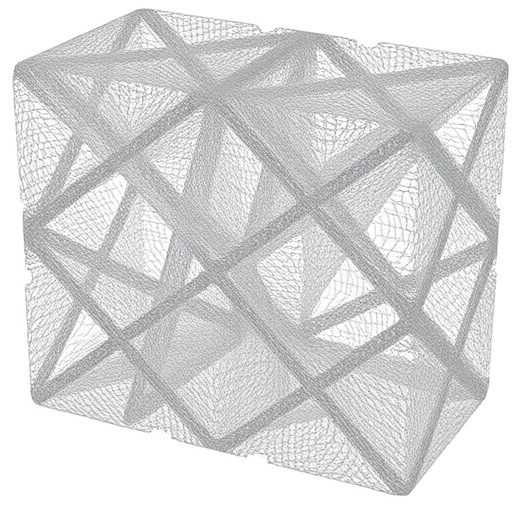
In the rapidly evolving realm of manufacturing technology, the quest to perfect additive manufacturing methods has driven an intense research focus on understanding microstructural dynamics at multiple scales. A groundbreaking study recently published in npj Advanced Manufacturing, titled “Part-scale evolution of fine-scale microstructural heterogeneity in solid-state additive manufacturing,” reveals unprecedented insights into how microstructural features develop and evolve during the solid-state additive manufacturing (SSAM) process. This research, conducted by Franz, Wing, Fancher, and colleagues, bridges the gap between microscopic phenomena and macroscopic part performance, potentially revolutionizing the way industry approaches the design and production of high-performance components.
Additive manufacturing, often synonymous with 3D printing, traditionally involves melting and solidifying material to build parts layer by layer. However, the solid-state variant eschews melting, utilizing techniques like friction stir additive manufacturing where materials remain in solid phase throughout the process. This transition in methodology opens new horizons in controlling microstructural characteristics, which are crucial determinants of mechanical behavior such as strength, ductility, and fatigue resistance. The study offers a detailed exploration of how microstructural heterogeneity—variations in grain size, phase distribution, and defect density—emerges and transforms from the microscopic to part-scale during SSAM.
One core element of the investigation is the elucidation of microstructural heterogeneity at the fine scale and its progressive evolution as the manufacturing process proceeds. This involves comprehensive characterization using advanced imaging and analytical techniques to capture the morphology, spatial distribution, and orientation of microstructural features. These characteristics do not remain static; instead, they evolve dynamically influenced by thermal gradients, mechanical deformation, and material flow inherent in solid-state deposition. By mapping these variations throughout the part volume, the researchers underscore how localized microstructural differences can aggregate to influence global mechanical properties.
The complexity of microstructural heterogeneity arises from competing physical phenomena during deposition. For instance, grain refinement and recrystallization mechanisms actively reshape the microstructure in response to the intense shear forces and heat generated without melting. In addition, the diffusion kinetics are dramatically altered in solid state, enabling diffusion across interfaces without the classical phase transformations observed in melt-based processes. This dramatically impacts the homogenization or persistence of heterogeneity, making the prediction of final microstructural states a formidable challenge.
To tackle this, the research team employed a synergistic approach by integrating high-fidelity microstructural characterization with multiscale modeling frameworks. This combination allowed them to not only document empirical patterns of heterogeneity but also decipher the underlying physical principles governing their evolution. Their models incorporate thermomechanical coupling, capturing how mechanical deformation influences thermal fields and, consequently, microstructural development. This is a significant advancement over prior models that treated microstructural change as purely thermally driven.
Critically, the team discovered that the spatial variation in grain size and texture is not uniform but exhibits distinct gradients linked to processing parameters such as tool rotation speed and feed rate. These parameters dictate the intensity of plastic deformation and heat input at each layer, thereby driving microstructural evolution in complex ways. Understanding these dependencies empowers manufacturers to tailor process settings deliberately to engineer desired properties at specific locations within a part, a capability with immense practical value in aerospace, automotive, and biomedical applications.
A fascinating revelation from the study lies in the identification of zones within the printed part where heterogeneity persists strongly despite multiple passes and mechanical stirring. These persistent zones are attributed to localized stagnation points in material flow and anisotropic deformation patterns, phenomena unique to solid-state additive manufacturing. Such knowledge provides critical insights into potential weak points or stress concentrators in final components, directing designers and engineers to optimize build strategies that mitigate these vulnerabilities.
Moreover, by mapping microstructural heterogeneity at the part scale, this research sheds light on the heterogeneity’s cumulative effect on residual stress distribution. Residual stresses, often a bane in additive manufacturing due to their contribution to part distortion and premature failure, are profoundly impacted by microstructural variation. The study reveals mechanistic links between evolving microstructure, stress accumulation, and ultimate part performance, offering pathways to strategically alleviate residual stresses through process control.
The implications of this research extend beyond the refinement of additive manufacturing itself. By establishing a clearer understanding of microstructural development at the interface of thermal, mechanical, and material science, the work feeds directly into the broader pursuit of digital twins for manufacturing. Digital twins—virtual models that replicate physical processes with high fidelity—stand to benefit enormously from accurate microstructural evolution modeling, enabling predictive maintenance, property optimization, and lifecycle management.
Furthermore, the findings hold promise for customizing parts with spatially graded properties, a feature increasingly sought after in design considerations. Components can be engineered so that critical regions exhibit enhanced strength or toughness by exploiting controlled microstructural heterogeneity. This level of tailored performance is particularly valuable in the aerospace sector where part reliability under extreme conditions is paramount.
Notably, the methodological advancements pioneered in this study highlight the importance of cross-disciplinary research. The successful combination of cutting-edge experimental techniques, ranging from electron backscatter diffraction (EBSD) to high-resolution X-ray tomography, with sophisticated computational modeling sets a new standard for materials research in additive manufacturing. It signals a future wherein detailed microstructural insights are routinely integrated early in design phases, shortening development cycles and reducing costly trial-and-error manufacturing runs.
Looking ahead, the researchers advocate for extending their approach to other solid-state additive manufacturing processes and material systems. Exploring how different alloys react to the same process conditions or how the incorporation of reinforcements and composites modulates microstructural heterogeneity could unlock novel material properties. Furthermore, ongoing improvements in in-situ monitoring techniques promise to capture real-time microstructure evolution, enabling adaptive process control for next-generation manufacturing platforms.
In summary, the pioneering work by Franz and colleagues marks a watershed moment in understanding the intricate interplay between microscopic structures and macroscopic outcomes in solid-state additive manufacturing. By unraveling the part-scale evolution of fine-scale heterogeneity, this research offers practical blueprints for advancing additive manufacturing from a largely empirical craft to a highly predictive science. As industries increasingly adopt additive manufacturing for mission-critical applications, mastering microstructural control will be the key to unleashing the full potential of this transformative technology, leading to stronger, lighter, and more reliable components.
Cite Scienmag News
Denise Maddox. (June 5, 2026). Fine-Scale Microstructure Evolution in Solid-State 3D Printing. Scienmag. https://scienmag.com/fine-scale-microstructure-evolution-in-solid-state-3d-printing/
Denise Maddox. "Fine-Scale Microstructure Evolution in Solid-State 3D Printing." Scienmag, 5 June 2026, https://scienmag.com/fine-scale-microstructure-evolution-in-solid-state-3d-printing/. Accessed 5 September 2026.
Denise Maddox. "Fine-Scale Microstructure Evolution in Solid-State 3D Printing." Scienmag. June 5, 2026. https://scienmag.com/fine-scale-microstructure-evolution-in-solid-state-3d-printing/


