


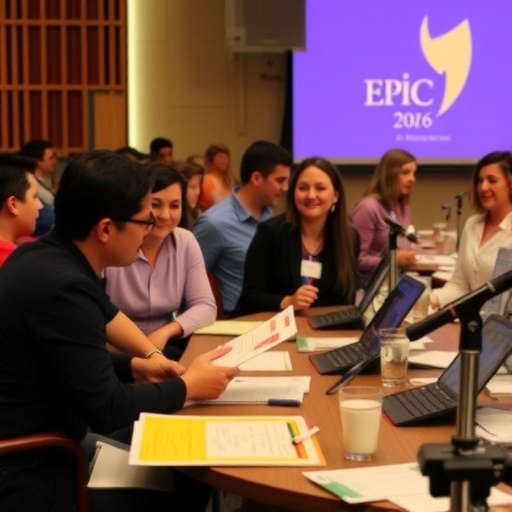
LOS ANGELES, CA (June 4, 2026) — In a significant development for the academic publishing landscape, Sage’s “How to Do Research and Get Published” webinar series has been honored with the prestigious Gold Award in the Publishing Education and Training Initiatives category at the 2026 EPIC Awards. These awards, presented by the Society for Scholarly Publishing (SSP), highlight groundbreaking contributions that enhance scholarly communication, collaborative practices, and knowledge dissemination throughout the global research community. The winners were announced on May 28 during the SSP Annual Meeting held in Chula Vista, California, underscoring the event’s role as a premier hub for academic publishing innovation.
The EPIC Awards recognize programs that not only exemplify excellence but also foster advancements that are crucial in navigating the increasingly complex terrain of scholarly publishing. Sage’s webinar series stands out as a beacon of educational accessibility and practical utility, aiming to demystify the often opaque process of academic publishing. By providing deep insights into the multifaceted journey researchers undertake—from conceptualizing studies to achieving publication—it serves as a comprehensive resource that bridges knowledge gaps for academics at various career stages.
At the core of Sage’s initiative is a free, global webinar program designed with inclusivity and scalability in mind. The series strategically addresses the unique challenges scholars face today, including the evolving standards of peer review, the nuances of journal selection in diverse disciplines, the growing importance of open access models, and effective strategies for broader research dissemination. These critical elements are often engendered by rapidly advancing publishing technologies and shifting policy landscapes, making the program’s practical orientation particularly valuable.
The structure of the webinar sessions reflects a careful orchestration of interdisciplinary expertise and accessible pedagogy. Featuring prominent voices from the global scholarly community, including editors, publishers, and seasoned researchers, the program leverages a diversity of perspectives. This ensures that participants gain a holistic understanding of not only the technical workflows of publishing but also the ethical and strategic considerations that influence academic success and research impact in an increasingly competitive environment.
One of the webinar series’ distinctive strengths lies in its commitment to making high-quality publishing education accessible to a wider audience, particularly those researchers who may lack institutional support or resources. This democratization of knowledge addresses systemic inequities that have historically marginalized certain groups in academia. By delivering actionable advice and clear guidelines on topics such as manuscript preparation, navigating ethical dilemmas in publication, understanding open peer review, and optimizing research visibility, the program empowers individuals globally to enhance the reach and recognition of their scholarly work.
Jessica Offenberger, senior editor at Sage and editorial lead of the series, emphasized this inclusive vision by stating, “This recognition highlights Sage’s commitment to increasing access to high-quality publishing education and supporting researchers worldwide, including those without institutional resources, by delivering accessible, actionable insights that help authors succeed.” Such a pronounced focus on actionable knowledge distinguishes the series from conventional training programs, positioning it as an indispensable tool for researchers intent on navigating the complexities of modern academic publishing.
Looking ahead, Sage intends to expand the How to Do Research and Get Published series with the integration of new sessions and resources throughout 2026 and beyond. This expansion is poised to respond dynamically to emerging trends such as the rise of preprint servers, the integration of artificial intelligence in editorial processes, and the ongoing evolution of scholarly metrics. The program’s adaptability ensures that participants remain abreast of best practices and technological innovations that shape the trajectory of research dissemination.
Furthermore, the series serves as a vital nexus for discussion on pressing issues such as data transparency, reproducibility crises, and the ethical implications of publishing practices. By embedding these complex deliberations into its curriculum, the program not only educates but also cultivates a community of informed researchers who can contribute to the ongoing reform of academic publishing norms. This active engagement fosters a culture of responsibility and innovation that benefits the scientific ecosystem as a whole.
Technically, the program delves into the priority of selecting appropriate journals based on impact factors, scope, audience, and indexing databases, providing attendees with toolkits to critically evaluate publishing venues. It also elucidates peer review mechanisms, including single-blind, double-blind, and open peer review systems, emphasizing the importance of transparency and fairness in scholarly evaluation. The inclusion of open access publishing models further enhances researchers’ understanding of shifting revenue and copyright paradigms and the implications for public accessibility.
Amplification of research reach through enhanced dissemination techniques forms another pillar of the training. Participants learn how to leverage social media platforms, academic networking sites, and institutional repositories to boost visibility. The webinar also examines altmetrics and traditional bibliometric indicators, guiding researchers on how to interpret these metrics in the context of academic career development and funding opportunities.
The award-winning nature of Sage’s series underscores the growing importance of educational initiatives tailored to the intricacies of academic publishing and reflects a concerted effort to empower researchers with the skills necessary to excel in an era marked by rapid transformation. By blending technical rigor with practical application, the program sets a high standard for publishing education globally, serving as a model for institutions and organizations seeking to bolster research communication and impact.
In sum, Sage’s How to Do Research and Get Published webinar series represents a vital contribution to scholarly publishing education. It embodies an innovative, inclusive, and comprehensive approach that meets the evolving needs of researchers worldwide, ensuring that knowledge production and dissemination remain at the forefront of academic excellence in the 21st century.
- How to Do Research and Get Published webinar series: https://www.sagepub.com/journals/information-for-authors/publishing-guidance-support/how-to-do-research-get-published-webinar-series
- 2026 EPIC Awards: https://www.sspnet.org/community/news/announcing-the-winners-of-the-2026-epic-awards/
Keywords: academic publishing, scholarly communication, publishing education, peer review, open access, research dissemination, SSP EPIC Awards, scholarly publishing innovation
Cite Scienmag News
Courtney Benton. (June 4, 2026). Sage’s “How to Do Research and Get Published” Series Takes Home Gold at 2026 EPIC Awards. Scienmag. https://scienmag.com/sages-how-to-do-research-and-get-published-series-takes-home-gold-at-2026-epic-awards/
Courtney Benton. "Sage’s “How to Do Research and Get Published” Series Takes Home Gold at 2026 EPIC Awards." Scienmag, 4 June 2026, https://scienmag.com/sages-how-to-do-research-and-get-published-series-takes-home-gold-at-2026-epic-awards/. Accessed 3 September 2026.
Courtney Benton. "Sage’s “How to Do Research and Get Published” Series Takes Home Gold at 2026 EPIC Awards." Scienmag. June 4, 2026. https://scienmag.com/sages-how-to-do-research-and-get-published-series-takes-home-gold-at-2026-epic-awards/


