


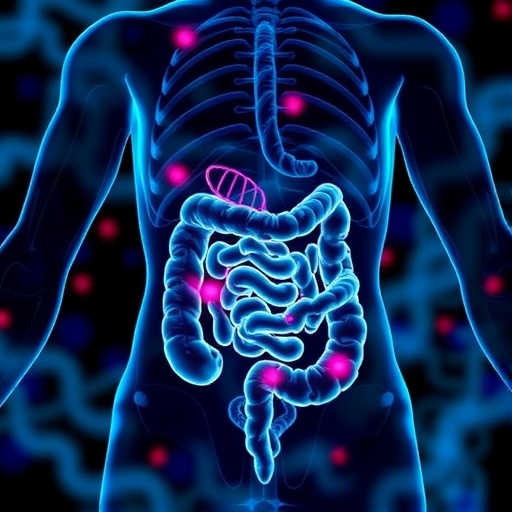
A groundbreaking study has unveiled new insights into the cellular underpinnings of inflammatory bowel disease (IBD) by leveraging an unprecedented resolution of genetic variation tied to specific intestinal cell types. This research marks a pivotal step toward understanding how dysregulation at the epithelial layer contributes to chronic intestinal inflammation, offering novel perspectives on disease susceptibility mechanisms.
Intriguingly, the investigation identified colonocyte populations as key effector cell types implicated in IBD risk. Particularly notable are subsets expressing RBFOX1, alongside those marked by CEACAM7, KRT20, and IFI27. These colonocyte subsets collectively intersect with multiple genetic loci associated with IBD, highlighting their central role in maintaining intestinal barrier function. This cellular resolution sheds light on how specific epithelial phenotypes contribute to disease pathogenesis.
One striking confirmation comes from a replicated colocalization between IBD risk variants and expression quantitative trait loci (eQTL) affecting the FERMT1 gene. FERMT1, also known as kindlin-1, encodes a protein critical for anchoring the actin cytoskeleton to the plasma membrane, thereby preserving epithelial integrity. Mutations in FERMT1 cause Kindler syndrome, a rare monogenic disorder characterized by epithelial fragility and gastrointestinal involvement, underscoring the link between barrier disruption and IBD.
Extending beyond known genetic connections, the study unearths novel eQTL colocalizations linked to genes governing epithelial differentiation and renewal, spotlighting RASGRP1 and LPIN3. RASGRP1 encodes a Ras guanine nucleotide exchange factor that modulates MAPK signaling pathways essential for epithelial proliferation. The risk allele correlates with increased RASGRP1 expression in colonocytes, a finding consistent with murine models where RASGRP1 depletion precipitates colitis-like phenotypes. This connection suggests a role in sustaining epithelial turnover necessary for gut homeostasis.
Similarly, LPIN3’s colocalization with IBD risk points to disruptions in lipid metabolism and Wnt signaling modulation. Wnt signaling is paramount in maintaining the regenerative capacity of epithelial stem cells, and perturbations here can jeopardize mucosal integrity. Notably, this work expands the repertoire of Wnt regulators associated with IBD, doubling previous nominations and spotlighting this pathway’s critical involvement in disease pathophysiology.
Delving deeper into Wnt signaling, the research reveals an eQTL for MYC that colocalizes with Crohn’s disease risk within OLFM4 and LGR5-expressing intestinal stem cells. MYC is a canonical target of Wnt signaling and a master regulator of epithelial proliferation and metabolism. Its aberrant regulation disrupts intestinal homeostasis, which aligns with findings illustrating MYC’s oncogenic potential and its role in tumorigenesis via both somatic and germline alterations.
Further complementing this narrative, an eQTL influencing FUBP1 expression—a known MYC and Wnt component regulator—also colocalizes with Crohn’s disease risk, solidifying the entwined relationship between Wnt-driven regulatory networks and intestinal inflammation. These findings collectively underscore a disrupted proliferative signaling milieu that may predispose to epithelial dysfunction and disease onset.
Crucially, an inflammation-dependent interaction expression quantitative trait locus (ieQTL) for RNF14—a gene encoding an E3 ubiquitin ligase that potentiates Wnt signaling—was shown to colocalize with Crohn’s disease susceptibility. Here, the risk allele associates with diminished RNF14 expression specifically in enterocytes from inflamed tissue. This suggests that inflammation attenuates the cellular machinery pivotal for epithelial regeneration via impaired Wnt pathway signaling, further exacerbating barrier compromise.
From a broader perspective, these cellular and genetic insights illuminate the underappreciated axis of epithelial renewal and Wnt-dependent proliferation as fundamental contributors to IBD pathogenesis. While adhesion defects have been well-characterized previously, failure to sustain or restore the epithelial barrier introduces a complementary mechanism by which chronic intestinal inflammation may be triggered and perpetuated.
The research underscores the delicate interplay between genetic variation and cell-type-specific gene regulation in shaping disease susceptibility. By resolving eQTL effects at high cellular resolution, particularly within epithelial subpopulations, the study paves the way for precision medicine approaches that target the epithelial renewal defects alongside immune dysfunction in IBD.
Moreover, these findings invite deeper exploration into therapeutic strategies that could harness modulation of the Wnt signaling pathway or bolster epithelial integrity as avenues to mitigate disease severity. Given the dual role of genes like MYC in oncogenesis and inflammation, nuanced interventions may be required to balance tissue regeneration with cancer risk.
Ultimately, this comprehensive investigation reframes our understanding of how epithelial genetic drivers interact within the complex microenvironment of the gut mucosa, advancing our capacity to identify actionable targets and develop tailored therapies for patients suffering from inflammatory bowel disease.
Cite Scienmag News
Juliet Wilcox. (June 4, 2026). Cell-Specific Genetics Drive Inflammatory Bowel Risk. Scienmag. https://scienmag.com/cell-specific-genetics-drive-inflammatory-bowel-risk/
Juliet Wilcox. "Cell-Specific Genetics Drive Inflammatory Bowel Risk." Scienmag, 4 June 2026, https://scienmag.com/cell-specific-genetics-drive-inflammatory-bowel-risk/. Accessed 4 September 2026.
Juliet Wilcox. "Cell-Specific Genetics Drive Inflammatory Bowel Risk." Scienmag. June 4, 2026. https://scienmag.com/cell-specific-genetics-drive-inflammatory-bowel-risk/


