


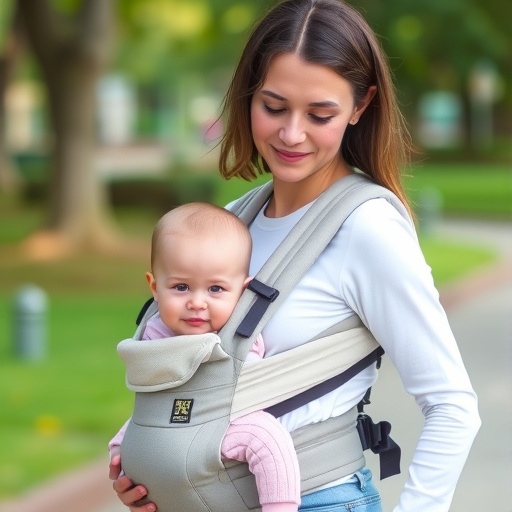
A groundbreaking study conducted by prominent baby sleep researchers at Durham University in the United Kingdom has spotlighted an urgent need for a nationwide campaign aimed at directing parents toward reliable, expert guidance on the safe use of adult-worn baby slings and carriers. Published in the highly regarded journal BMJ Paediatrics Open, this research unveils critical gaps in awareness and information that could potentially save lives and improve infant safety during babywearing.
Despite the widespread adoption of slings and baby carriers, the study presents an alarming reality: there is no comprehensive, evidence-based national guidance in the UK addressing the safe use of these ubiquitous infant transport solutions. This oversight is of particular concern given reports of rare but tragic accidental infant deaths linked to improper sling usage, including incidents of suffocation and falls. Suffocation risks arise when a baby’s nose and mouth become obstructed, either by the parent’s body or by fabric, or when a baby’s posture causes airway compression by slumping and pinching the windpipe.
By surveying 1,470 parents with infants under one year of age, researchers uncovered pervasive deficiencies in the dissemination of sling safety information at critical moments, such as at the point of purchase. Data revealed that a staggering 89% of parents purchased slings or carriers online, where minimal support or real-time guidance was available—under 3% reported receiving assistance from virtual sales assistants or chat functionalities. Even in physical retail environments, only 30% of buyers encountered meaningful sling safety advice from staff, highlighting a significant gap between parental needs and available support.
The reliance on manufacturer instructions alone is insufficient, as these are often limited and lack the personalized touch needed to address complex issues such as correct positioning, duration of babywearing, and safe breastfeeding in slings. Many parents also turn to social media forums, specialized babywearing websites, blogs, and, crucially, sling libraries—community resources that offer baby sling loan services along with expert advice from trained babywearing consultants. The study found that among parents who utilized these libraries or specialist guidance, 76% received personalized recommendations that enabled safer baby sling use.
Paradoxically, while sling libraries exist in many UK cities and towns, their reach and awareness remain suboptimal. Many parents are simply unaware of these valuable resources or the significant role they can play in preventing avoidable incidents. This underscores the need for a proactive strategy to amplify public knowledge and support infrastructures, ensuring families can access expert advice before purchasing and using baby slings.
Compounding the challenge is the fact that currently prevailing safety guidance, such as the TICKS framework—which advises that slings should be Tight, In view at all times, Close enough to kiss, Keep chin off the chest, and Supported back—while widely recognized, may omit essential details about infant positioning nuances, the risks associated with prolonged carrying, and the complexities of combining babywearing with breastfeeding and sleeping.
Professor Helen Ball, Director of the Durham Infancy and Sleep Centre, emphasizes the delicate span during which babies are most vulnerable, typically the newborn phase when parents first adopt baby slings. She articulates the urgent need for ensuring parents are empowered with the knowledge to select appropriate products and safely integrate them into daily caregiving routines. Though fatalities linked to slings are statistically infrequent, each incident represents a tragedy that could have been prevented through heightened safety awareness and education.
The study was partly motivated by a high-profile coroner’s warning issued in December 2024 following the death of six-week-old James Alderman during “hands-free” breastfeeding while in a sling. This tragic event underscored the latent dangers that arise from insufficient guidance and unmonitored use of babywearing products during critical caregiving activities.
Complementing Professor Ball’s assertions, Jenny Ward, CEO of The Lullaby Trust, advocates for enhanced clarity and accessibility of sling safety information. She highlights ongoing collaborative efforts among leading charities, healthcare entities, and researchers to develop more comprehensive and user-friendly guidance, tailored to meet the needs of diverse families and their unique babywearing contexts.
Parents interviewed for the study consistently cited the functional advantages of baby slings, from enabling mobility and soothing fussy infants to fostering emotional bonding and allowing caretakers to keep their hands free for other tasks. However, proper usage appears complicated by practical challenges, such as difficulties positioning the baby comfortably, securing the sling correctly, and maintaining adequate support for the infant’s body and airways.
Drawing upon these findings, researchers recommend standardized, evidence-based safety protocols that address several key considerations: awareness of positional asphyxia risk, the necessity for vigilant active monitoring during babywearing, and explicit guidelines on safely feeding and sleeping infants in slings. These measures, paired with expanded educational resources like sling libraries and trained consultants, could drastically reduce risk and increase parental confidence.
Parents seeking further support or guidance are encouraged to consult dedicated babywearing resources such as Carrying Matters, which provides comprehensive information on sling types, safety tips, and access to local sling libraries. The ultimate goal is a widespread, informed culture of baby sling usage where safety knowledge is as accessible and ubiquitous as the products themselves.
This pioneering research, funded by The Lullaby Trust and Teddy’s Wish, serves as a clarion call for coordinated action to fill the safety information void. As baby slings become ever more popular in modern parenting, institutional mechanisms ensuring parents have ready access to trusted, practical advice are crucial to safeguarding infant wellbeing and preventing avoidable tragedies.
Cite Scienmag News
Ophelia Keating. (June 4, 2026). Improving Parental Guidance on Safe Baby Carrier Use: A Scientific Perspective. Scienmag. https://scienmag.com/improving-parental-guidance-on-safe-baby-carrier-use-a-scientific-perspective/
Ophelia Keating. "Improving Parental Guidance on Safe Baby Carrier Use: A Scientific Perspective." Scienmag, 4 June 2026, https://scienmag.com/improving-parental-guidance-on-safe-baby-carrier-use-a-scientific-perspective/. Accessed 4 September 2026.
Ophelia Keating. "Improving Parental Guidance on Safe Baby Carrier Use: A Scientific Perspective." Scienmag. June 4, 2026. https://scienmag.com/improving-parental-guidance-on-safe-baby-carrier-use-a-scientific-perspective/


