


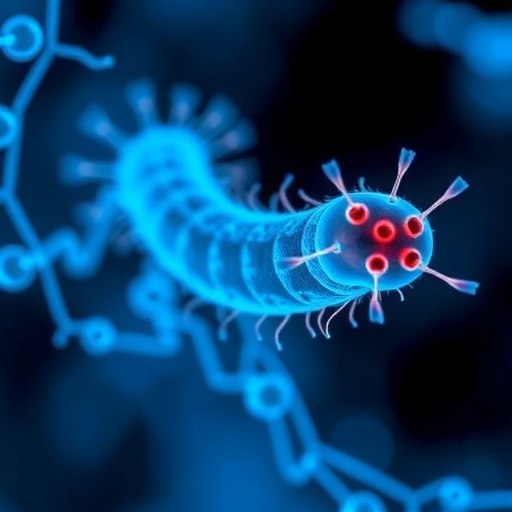
In a groundbreaking leap for biotechnology and medical science, researchers have engineered a transgenic hookworm capable of secreting a human single-chain antibody that neutralizes tetrodotoxin, one of nature’s deadliest neurotoxins. This pioneering study, recently published in Nature Communications, merges the realms of parasitology, immunotherapy, and genetic engineering, opening new vistas for combatting toxin-related pathologies and seeking innovative therapeutic modalities. The work represents a profound advancement in our ability to harness living organisms for precision delivery of neutralizing biomolecules, potentially reshaping therapeutic intervention paradigms.
Tetrodotoxin is a potent neurotoxin best known for its presence in certain pufferfish species, where it functions as a formidable defense mechanism by blocking voltage-gated sodium channels, culminating in paralysis and often fatal respiratory failure. Despite numerous studies elucidating its mechanism of action, effective treatments to counter tetrodotoxin poisoning remain elusive. The urgent need for novel countermeasures against this toxin has spurred researchers to explore unconventional biotechnological solutions. In this context, the innovative approach of employing a genetically modified parasite as a biological production and secretion system for a neutralizing antibody marks a radical departure from traditional therapeutic development.
The research team succeeded in genetically modifying Ancylostoma ceylanicum, a species of hookworm known to infect mammalian hosts including humans. By utilizing advanced recombinant DNA techniques, the scientists introduced genes encoding a human single-chain variable fragment (scFv) antibody specifically designed to bind tetrodotoxin with high affinity. This engineering feat entailed meticulous molecular design to ensure the stable integration, expression, and secretion of functional antibody fragments by the worm’s secretory apparatus within its host environment. Confirmatory assays demonstrated the proper folding and toxin-binding capabilities of the expressed scFv, establishing this transgenic organism as a biofactory for anti-tetrodotoxin agents.
What sets this research apart is the strategic use of the hookworm’s natural parasitic lifestyle as a living drug delivery system. Unlike conventional antibody production methods that rely on mammalian cell cultures or microbial expression systems followed by complicated purification processes, the transgenic hookworm continuously produces and secretes the therapeutic antibody directly in the host’s gut. This form of ‘in situ biopharmaceutical synthesis’ promises to bypass significant hurdles typically associated with drug administration, notably enhancing the bioavailability and pharmacokinetics of the neutralizing antibody where it is most critically needed. The capacity to sustain delivery over extended periods through a living vector is a pivotal innovation with immense clinical implications.
The molecular characterization of the transgenic hookworm revealed that the anti-tetrodotoxin scFv antibody was not only secreted efficiently but also retained its functional integrity and specificity for the toxin within the complex milieu of the host’s intestinal environment. Biochemical assays and immunological tests validated the high-affinity interaction between the scFv and tetrodotoxin molecules, supporting the concept that the transgenic worm’s secretions could neutralize the toxin in vivo. Importantly, the genetic constructs were stably incorporated into the hookworm genome, ensuring consistent expression even after numerous reproductive cycles, highlighting the potential for long-term therapeutic utility.
To rigorously evaluate the neutralizing efficacy of the engineered hookworm, the researchers employed in vitro models mimicking tetrodotoxin intoxication and subsequently progressed to in vivo trials using rodent models. The administration of transgenic hookworms substantially mitigated the toxic effects of tetrodotoxin exposure, exemplified by enhanced survival rates, reduced neurotoxic symptoms, and preservation of normal physiological functions. This proof-of-concept demonstration underpins the therapeutic promise of living vectors bearing neutralizing antibodies, proposing a novel framework to counteract a broad array of toxins through bespoke parasitic engineering.
The safety profile of introducing genetically modified hookworms for therapeutic purposes was meticulously investigated, addressing critical bioethical and biosafety concerns. The research team conducted extensive host-pathogen interaction studies, ensuring that the modified parasites did not exacerbate pathogenicity or induce adverse immune responses beyond those observed with their unmodified counterparts. In parallel, containment strategies and gene regulation mechanisms were devised to prevent uncontrolled environmental dissemination. These precautionary measures present an essential template for advancing similar transgenic strategies responsibly within future clinical and ecological contexts.
From a molecular engineering perspective, the development of a human scFv antibody tailored to neutralize tetrodotoxin was a formidable challenge, demanding precise epitope mapping and affinity maturation campaigns. The study’s success derived from harnessing phage display libraries and in vitro evolution techniques to refine antibody sequences that exhibited robust binding under physiological conditions. This level of molecular customization facilitated harmonious integration into the hookworm’s secretory protein pathways, underscoring the utility of combining cutting-edge immunotechnology with parasitic host adaptation for therapeutic innovation.
The concept of employing parasitic organisms as living biofactories transcends traditional medical biotechnology, potentially heralding a new class of biologically integrated therapies. By converting pathogenic or commensal organisms into functional therapeutic agents capable of targeting disease-specific molecules in real time, scientists are redefining the boundaries between host and therapeutic entity. This work exemplifies the future of personalized, adaptive medicine where genetically programmed organisms may regulate and counteract disease processes internally, minimizing reliance on conventional pharmacological interventions and enhancing treatment efficacy in diverse patient populations.
The broader implications of this research extend beyond tetrodotoxin neutralization. The platform established here lays foundational technology for engineering a variety of parasites and symbionts to express and secrete custom therapeutic proteins targeting autoimmune conditions, infectious agents, or metabolic disorders. Since many parasitic organisms have co-evolved complex mechanisms to modulate host immunity and physiology, leveraging their inherent biological capabilities may open unforeseen therapeutic avenues, facilitating protracted delivery within immunoprivileged niches inaccessible to standard drugs.
Moreover, the socio-economic impact of such bioengineered therapeutic approaches could be profound, especially in regions where access to advanced medicines is limited. The potential to deploy genetically modified hookworms as self-sustaining biological treatment agents might significantly reduce healthcare costs and improve outcomes for populations vulnerable to toxin exposures or other treatable conditions. Nevertheless, the ethics and regulatory landscape surrounding transgenic parasite therapies will require careful navigation, balancing innovation against ecological stewardship and patient safety.
This multidisciplinary breakthrough was enabled by collaboration spanning molecular biology, parasitology, immunology, and synthetic biology. The integration of genomic editing tools such as CRISPR-Cas systems for precise gene insertion, along with sophisticated antibody engineering allowed the creation of a stable, functional transgenic organism. Comprehensive omics analyses ensured a deep understanding of the transgene’s impact on the hookworm’s biology, enabling optimization to maximize therapeutic output while minimizing deleterious effects on host-parasite dynamics.
Looking ahead, the scalability and translational potential of this technology remain areas ripe for exploration. Further refinement in controlling expression levels, secretion kinetics, and host immune interactions will be pivotal to advancing these living therapeutics toward clinical applicability. Additionally, expanding the repertoire of neutralizing antibodies and target toxins will broaden the scope and impact of this platform. The integration of biosensing and regulatory circuits within transgenic organisms may ultimately allow responsive, programmable therapeutic delivery with unprecedented precision.
In conclusion, the engineering of a transgenic hookworm secreting a human single-chain antibody against tetrodotoxin represents a seminal advancement in the bioengineering of therapeutic organisms. This innovative approach merges parasitology with cutting-edge antibody technology to devise a living, self-sustained treatment system against a formidable neurotoxin. As this technology matures, it holds promise not only for revolutionizing toxin neutralization but also for spearheading a paradigm shift in how we conceptualize and deploy biologically integrated therapies for a plethora of human diseases.
Cite Scienmag News
Juliet Wilcox. (June 3, 2026). Transgenic Hookworm Produces Anti-Tetrodotoxin Antibody. Scienmag. https://scienmag.com/transgenic-hookworm-produces-anti-tetrodotoxin-antibody/
Juliet Wilcox. "Transgenic Hookworm Produces Anti-Tetrodotoxin Antibody." Scienmag, 3 June 2026, https://scienmag.com/transgenic-hookworm-produces-anti-tetrodotoxin-antibody/. Accessed 3 September 2026.
Juliet Wilcox. "Transgenic Hookworm Produces Anti-Tetrodotoxin Antibody." Scienmag. June 3, 2026. https://scienmag.com/transgenic-hookworm-produces-anti-tetrodotoxin-antibody/


