


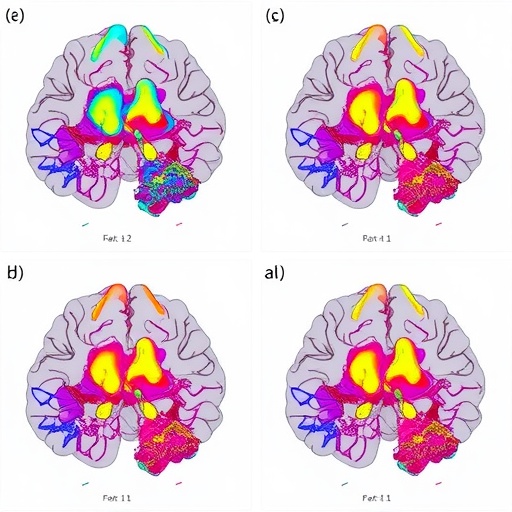
In a groundbreaking new study published in Nature, researchers have unveiled the intricate cellular landscape remodeling that underlies the progression of IDH-mutant gliomas, a prevalent form of brain cancer. By employing advanced single-cell RNA sequencing technologies and integrative computational analyses, the team dissected malignant cell states across different tumor grades and types, revealing a dynamic choreography dictated by genetic alterations and tumor microenvironmental interactions. This work not only enriches our understanding of glioma biology but also charts new avenues for targeted therapies aimed at halting tumor evolution.
The research delved into the abundance of malignant states by tumor type and grade, uncovering nuanced patterns that challenge previous assumptions. While most cell state distributions were similar across tumor types, oligodendrogliomas exhibited a notable increase in a neural progenitor-like (NPC-like) cell state, hinting at divergent differentiation pathways associated with tumor lineage. This observation was statistically robust, suggesting that lineage-specific programs might pre-condition these tumors to distinct malignant trajectories.
Tumor grade emerged as a powerful determinant of cellular state composition. Higher-grade tumors demonstrated a consistent decline in the differentiated astrocyte-like (AC-like) cell population coupled with an increase in mesenchymal-like (MES-like), undifferentiated, and proliferative cycling cells. This gradation vividly illustrates the stepwise dedifferentiation and heightened proliferative capacity that accompany malignancy intensification. Through rigorous validation using both bulk RNA deconvolution from TCGA and Glioma Longitudinal Analysis (GLASS) consortium data and external single-cell sequencing cohorts, these grade-associated shifts were confirmed as robust and reproducible across diverse datasets.
Spatial heterogeneity, often cited as a confounding factor in tumor biology, was scrutinized using spatially mapped single-cell data. Interestingly, malignant-state composition remained comparatively stable across distinct tumor regions within the same patient, indicating that cell state architecture is more profoundly influenced by temporal progression and genetic evolution than by spatial variation alone. This insight refines our understanding of intratumoral complexity and suggests that therapeutic strategies targeting specific states may achieve uniform efficacy within heterogeneous tumor masses.
Longitudinal analysis across treatment timelines brought to light profound cell-state dynamics associated with tumor recurrence. The investigators documented significant increases in MES-like, undifferentiated, and cycling states at recurrence, alongside a pronounced reduction in AC-like cells. This shift towards a less differentiated and more proliferative state mirrors the progression observed with increasing tumor grade, underscoring the parallelism between disease advancement and cell-state evolution. Intriguingly, these trends were observed across tumor types and persisted when restricted to primary astrocytoma diagnoses, highlighting their broad relevance.
A pivotal revelation emerged when correlating these cellular state changes with acquired genetic alterations associated with recurrence. Tumors harboring new genetic events such as hypermutation, enhanced somatic copy number variations, small deletions, and cell cycle disruptions exhibited greater increases in undifferentiated and cycling cell populations. This genetic crescendo was linked to an elevated stemness signature, emphasizing the coalescence of genetic instability with a more aggressive cellular phenotype. Conversely, MES-like state expansion appeared independent of these genetic changes, suggesting multiple pathways driving tumor plasticity.
Molecular distance metrics further corroborated the tight coupling between genetic alterations and transcriptional remodeling. Positive correlations between longitudinal mutational burden and transcriptional divergence encapsulate a model wherein genomic evolution fuels phenotypic heterogeneity. This co-evolution is substantiated by the finding that gliomas acquiring genetic aberrations concurrently display altered chromatin accessibility patterns, implicating coordinated genome-epigenome remodeling during tumor progression.
Validations within the GLASS cohort reinforced these inferences by demonstrating that recurrence-associated genetic shifts coincide with decreased differentiation and heightened proliferation signatures inferred from bulk RNA data. This multi-modal validation not only affirms the robustness of the observed trends but also exemplifies the power of integrative genomics in decoding tumor evolution.
Altogether, the study posits that IDH-mutant gliomas traverse a defined evolutionary trajectory marked by cellular dedifferentiation and increased proliferative vigor, tightly linked to the accumulation of genetic alterations. These findings bear critical implications for clinical practice, as they identify malignant cellular states as both markers and drivers of tumor progression, offering potential targets for therapeutic intervention aimed at intercepting the path to recurrence.
Beyond their immediate clinical impact, these revelations prompt a broader reevaluation of brain tumor biology. The stable spatial distribution of malignant states within tumors juxtaposed with temporal and genetic variation suggests that therapeutic timing and genomic context are paramount considerations in designing effective treatment regimens. Interventions targeting early evolutionary branches or restricting stem-like and cycling populations could substantially alter the course of disease.
Furthermore, the delineation of MES-like cells as a genetically independent population expanding in recurrence opens questions about the environmental or microenvironmental cues fostering this state. Disentangling intrinsic genetic drivers from extrinsic modulators could illuminate novel vulnerabilities exploitable by combination therapies.
The methodology underscoring this work leverages cutting-edge single-cell sequencing techniques, computational deconvolution methodologies such as CIBERSORTx, and gene set enrichment analyses, highlighting the synergy between technological advancements and biological inquiry. These tools enable a granular depiction of tumor ecosystems, revolutionizing our ability to track tumor evolution at unprecedented resolution.
Looking ahead, these insights pave the way for longitudinal monitoring of glioma patients through minimally invasive sampling coupled with single-cell profiling. Such approaches could inform adaptive treatment strategies tailored to real-time tumor state dynamics, ultimately improving prognosis and patient survival.
In essence, this study elegantly captures the complex, intertwined genetic and cellular transformations that sculpt IDH-mutant glioma progression. By elucidating the molecular underpinnings of malignant cell states and their evolution, it sets the stage for innovative therapeutic paradigms tailored to intercept the relentless advancement of these formidable brain tumors.
Cite Scienmag News
Juliet Wilcox. (June 3, 2026). Genetic and Cell-State Evolution in IDH Gliomas. Scienmag. https://scienmag.com/genetic-and-cell-state-evolution-in-idh-gliomas/
Juliet Wilcox. "Genetic and Cell-State Evolution in IDH Gliomas." Scienmag, 3 June 2026, https://scienmag.com/genetic-and-cell-state-evolution-in-idh-gliomas/. Accessed 4 September 2026.
Juliet Wilcox. "Genetic and Cell-State Evolution in IDH Gliomas." Scienmag. June 3, 2026. https://scienmag.com/genetic-and-cell-state-evolution-in-idh-gliomas/


