


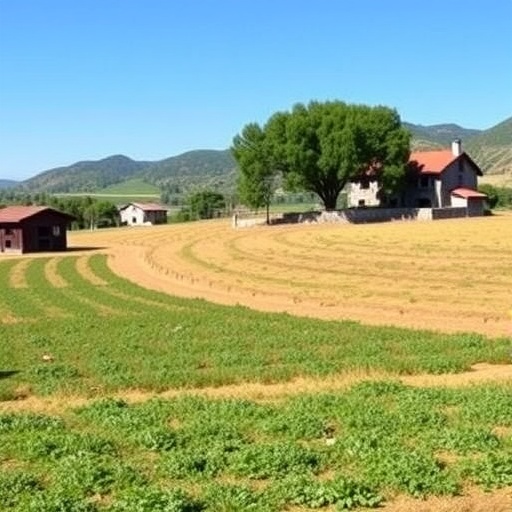
The interuniversity initiative titled “Roots of Resilience: Rural Knowledge for a Sustainable Future” (RESINA) has been formally launched, marking a significant advancement in the identification, validation, and dissemination of sustainable living methodologies deeply rooted in rural Spain. Spearheaded by a collaborative team of researchers from Universitat Jaume I of Castelló, the Public University of Navarre, and the University of Cádiz, RESINA endeavors to challenge and ultimately reshape the dominant narratives surrounding rural territories. These regions, often overlooked or undervalued, are increasingly acknowledged as vital incubators of social innovation and communal resilience, particularly when confronting pressing 21st-century challenges such as ecological degradation, demographic decline, and socio-cultural fragmentation.
This pioneering project has secured funding through Spain’s Ministry of Social Rights, Consumer Affairs, and the 2030 Agenda, underscoring its alignment with national priorities on sustainable development. The core aim is to systematically document and critically analyze sustainable practices that hinge on fundamental principles including neighborly cooperation, agroecological methods, social economy mobilization, mutual care frameworks, and collective resource governance. These practices have historically functioned as adaptive strategies, empowering rural communities to subsist and flourish against a backdrop of environmental adversity and systemic socio-economic challenges.
RESINA’s field operations are meticulously planned across nine pilot municipalities exemplifying extreme rurality, geographically dispersed across three autonomous communities. The selected areas include Viver, La Jana, and La Mata in the inland province of Castelló; the mountainous villages of Benaocaz, Grazalema, and Zahara de la Sierra in the Sierra de Grazalema (Cádiz); and Aoiz, Auñamendi (Aribe), alongside Roncal-Salazar (Erronkarri) in the Navarrese Pyrenees. This spatial distribution is strategically chosen not only to capture a heterogeneity of rural contexts but also to validate the transferability of sustainable practices across diverse ecological and cultural landscapes.
A noteworthy methodological feature of RESINA is its reliance on participatory action research (PAR) and citizen science principles. This rigorously participatory framework ensures that local communities are not passive subjects but active co-creators of knowledge and agents of their social transformation. By engaging local stakeholders from the inception, the project fosters authentic community ownership, which is critical to the legitimacy and effectiveness of knowledge dissemination and application processes that follow.
The significance of the RESINA project in the national scientific and policy landscape was recently amplified when it was selected by the Spanish Ministry of Culture to partake in the 9th Culture and Ruralities Forum, scheduled for October 2026 in Zafra, Badajoz. This prestigious event serves as a premier platform for interdisciplinary discussions on the intersections of cultural production, social cohesion, and the trajectory of rural areas in Spain’s future. The forum’s endorsement lends considerable visibility and institutional validation to RESINA, while its principal investigators—Xavier Ginés from Universitat Jaume I, and Andoni Iso and Antonio J. González from the Public University of Navarre and University of Cádiz, respectively—will contribute their empirical findings and theoretical insights to a broader audience.
One of RESINA’s anticipated central outcomes is a comprehensive compendium of over forty empirically-grounded best practices. These will be systematically organized into an Open Methodological Toolkit, made accessible under a Creative Commons license to maximize dissemination and replicability. This toolkit will include diagnostic guides and evaluative instruments designed to empower rural territories throughout Spain—and potentially beyond—to adapt, implement, and localize sustainable rural development models. The democratization of this knowledge underscores RESINA’s commitment to open science and the co-production of knowledge between academia and local communities.
Fundamentally, RESINA challenges the conventional academic and policy paradigms that often treat rural knowledge as peripheral or anecdotal. Instead, it posits resilience not merely as an abstract concept but as a deeply embedded, praxis-oriented body of knowledge that has been cultivated over centuries within rural settlements. By validating and amplifying this lived knowledge in scholarly forums and practical policy domains, the project re-centers rural areas as dynamic laboratories for ecological stewardship, economic innovation, and social renewal.
This project’s theoretical and practical contributions are tightly interwoven with the objectives outlined in the 2030 Sustainable Development Strategy of Spain, which prioritizes enhancing social cohesion, revitalizing local economies, and promoting responsible natural resource management. RESINA thereby positions rural communities as crucial actors and testing grounds for achieving these ambitious national and global sustainability goals, highlighting the importance of specificity and place-based understanding in policy design.
Technically, RESINA leverages interdisciplinary methodologies spanning environmental science, sociology, economics, and cultural studies. The integration of citizen science techniques facilitates the collection of granular, community-generated data that enriches academic analysis and provides tangible metrics for assessing resilience outcomes. Concurrently, the participatory action research approach fosters iterative feedback loops between researchers and communities, ensuring that interventions are context-sensitive and co-adaptive.
As the project progresses, its outputs are expected to attract attention beyond academic circles, potentially influencing rural policy frameworks at municipal, regional, and national levels. By showcasing successful models of autonomous resource management, agroecological production, and mutual care networks, RESINA offers credible alternatives to dominant top-down development schemes, advocating instead for grassroots-led transformation.
In essence, RESINA exemplifies a new wave of scientific inquiry in rural studies—one that is grounded in ethics, collaboration, and openness, prioritizing local knowledge as the bedrock for sustainable futures. Its contribution transcends theoretical discourse, charting a pragmatic pathway for rural revitalization that balances ecological integrity, social equity, and economic vitality. As rural areas face mounting pressures from climate change, urban migration, and economic restructuring, initiatives such as RESINA are indispensable for charting resilient trajectories that respect planetary boundaries while empowering communities.
The initiative’s holistic perspective showcases how integration across sectors—agriculture, social economy, cultural production, and environmental governance—can work synergistically to address complex socio-environmental dynamics. This paradigm shift not only enriches scientific understanding but also fosters policy innovation and community empowerment, reaffirming the multifaceted value of rural knowledge systems.
In conclusion, the RESINA project stands as a beacon for the emergent discourse on rural futures, intertwining rigorous scientific inquiry with participatory governance. By illuminating the embedded resilience practices within rural Spain, the initiative not only safeguards invaluable cultural and ecological knowledge but also pioneers scalable models for sustainable living that can inspire global rural policy and research agendas.
News Publication Date: Not specified
Web References: http://resina.uji.es
Cite Scienmag News
Courtney Benton. (June 3, 2026). Three Spanish Universities Launch RESINA Project to Unlock Innovation Potential in Rural Areas. Scienmag. https://scienmag.com/three-spanish-universities-launch-resina-project-to-unlock-innovation-potential-in-rural-areas/
Courtney Benton. "Three Spanish Universities Launch RESINA Project to Unlock Innovation Potential in Rural Areas." Scienmag, 3 June 2026, https://scienmag.com/three-spanish-universities-launch-resina-project-to-unlock-innovation-potential-in-rural-areas/. Accessed 4 September 2026.
Courtney Benton. "Three Spanish Universities Launch RESINA Project to Unlock Innovation Potential in Rural Areas." Scienmag. June 3, 2026. https://scienmag.com/three-spanish-universities-launch-resina-project-to-unlock-innovation-potential-in-rural-areas/


