


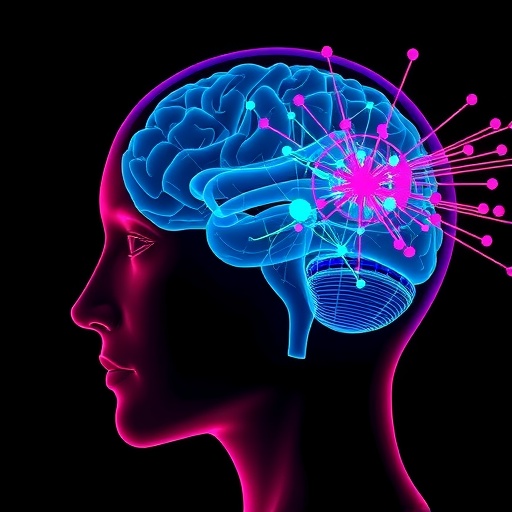
In an era where sports science and neurorehabilitation increasingly intersect, a groundbreaking study published in Scientific Reports is reshaping our understanding of post-surgical brain functionality. The research, led by Grinberg, Lehmann, Strandberg, and colleagues, provides compelling evidence that visual information plays a critical role in modulating brain network activity during static balance tasks following anterior cruciate ligament (ACL) reconstruction. Utilizing sophisticated graph theoretical analysis, this study offers a fresh perspective on the brain’s adaptability and the intricate neural mechanisms supporting balance recovery after orthopedic injuries.
Given the high prevalence of ACL injuries in athletic populations, the road to full recovery remains arduous and complex. Traditional rehabilitation focuses primarily on restoring physical strength and joint stability. However, emerging evidence suggests that the central nervous system undergoes significant reorganization after such injuries, influencing motor control and postural stability. This study delves deeper, exploring how visual inputs dynamically alter the brain’s communication networks during balance performance once the ACL is surgically reconstructed.
The research team employed a rigorous experimental design incorporating neuroimaging and quantitative network analysis to unravel these complex neural dynamics. Participants who had undergone ACL reconstruction were assessed while maintaining a static balance posture under varying conditions of visual feedback. By leveraging graph theoretical models, the authors were able to characterize alterations in functional connectivity and network topology within the brain, revealing distinct patterns linked to visual information availability.
Remarkably, the findings highlight that visual input is not merely a supplementary cue but actively reshapes the brain’s balance-related network architecture. Under conditions where visual information was available, the brain exhibited enhanced efficiency and integration within key sensorimotor networks. This nuanced neural adaptation underscores the brain’s remarkable plasticity and the pivotal role that visual cues play in restoring postural control following ligament repair.
From a methodological standpoint, the application of graph theory in this context represents a significant advance. Traditional neuroimaging analyses often focus on localized brain activation, whereas graph theoretical approaches allow for systemic evaluation of how different brain regions interact as a cohesive network. This holistic perspective is crucial for understanding how the brain orchestrates complex functions like balance, especially when compensating for peripheral impairments.
Intriguingly, the study reports that post-ACL reconstruction, the brain’s networks undergo reconfiguration, exhibiting both increased segregation and integration depending on the sensory conditions. When visual input was occluded, functional connectivity patterns suggested a less efficient network organization, highlighting the compensatory reliance on vision for balance maintenance. This insight could inform tailored rehabilitation strategies that optimize sensory feedback to accelerate functional recovery.
The implications extend beyond athletes recovering from knee injuries. The elucidation of visual modulation on brain connectivity could influence rehabilitation protocols for a variety of neurological and orthopedic conditions where balance is compromised. By understanding the fundamental neural circuitry interaction influenced by sensory information, clinicians may better target interventions that harness neuroplasticity to improve outcomes.
Moreover, this study contributes to the expanding field of sensorimotor neuroscience by illuminating how multisensory integration supports postural stability. Balance is not governed by isolated vestibular or proprioceptive inputs alone but emerges from a sophisticated interplay of sensory modalities, with vision evidently playing a predominant role. The graph theoretical findings underscore how this sensory integration manifests as dynamic network changes in the brain during task execution.
The use of static balance as a behavioral paradigm offers a controlled environment to isolate the neural effects of visual manipulation, yet it also raises intriguing questions about how these findings translate to more dynamic, real-world motor activities. Future investigations may build upon this framework by exploring the neural correlates of balance during complex, sport-specific movements or under dual-task conditions that mimic real-life challenges faced by recovering athletes.
From the perspective of computational neuroscience, the employment of graph theoretical measures such as network efficiency, clustering coefficient, and modularity provides robust quantitative markers of brain function. These metrics not only enable comparisons across clinical populations but also offer mechanistic insights into how network reorganization supports behavioral adaptations. This methodological sophistication enhances the translational relevance of the findings.
The study’s findings are situated within a growing recognition that brain-behavior relationships post-injury are dynamic and modifiable. Rehabilitation programs that incorporate visual training modalities might potentiate beneficial brain network plasticity and improve balance outcomes more effectively than those focusing solely on physical strengthening. This highlights the necessity of integrating neuroscientific principles into clinical practice for optimized patient care.
In addition to its clinical relevance, the research signals a broader scientific paradigm shift emphasizing network neuroscience as a framework to interpret neurological recovery. The brain is increasingly viewed as an adaptive, self-organizing system rather than a static collection of functional modules. Such perspectives are transforming our understanding of recovery processes and informing the design of novel therapeutic strategies.
Technological advances enabling real-time brain network monitoring and neurofeedback could ultimately harness these insights for personalized rehabilitation. For example, wearable neuroimaging devices may assess network dynamics during therapy sessions, allowing for immediate adjustments tailored to the patient’s evolving neural state. These developments promise to revolutionize traditional rehabilitation approaches by making them more responsive and evidence-based.
Overall, Grinberg and colleagues’ study is a testament to the power of interdisciplinary research combining biomechanics, neuroscience, and computational analysis to uncover the subtleties of human motor control. By demonstrating that visual information profoundly modulates brain network characteristics during static balance after ACL reconstruction, they pave the way for more integrative and effective interventions that bridge neural science and clinical application.
As the field progresses, further research is encouraged to explore the temporal evolution of these network changes across different stages of rehabilitation. Longitudinal studies tracking neural plasticity from acute post-surgical phases through to complete functional restoration could elucidate the critical windows during which sensory modulation produces maximal benefit.
In conclusion, this pioneering investigation sheds light on the essential role of vision in enhancing brain network organization for balance control following ligament repair, challenging conventional rehabilitation paradigms. It underscores the importance of multimodal sensory integration in post-injury neural reorganization, offering novel pathways to improve both understanding and treatment of balance impairments. Such scientific advances not only elevate clinical practice but also inspire future innovation at the intersection of neuroscience and rehabilitation medicine.
Cite Scienmag News
Cassandra Pierce. (June 2, 2026). Visual Cues Shape Brain Networks After ACL Surgery. Scienmag. https://scienmag.com/visual-cues-shape-brain-networks-after-acl-surgery/
Cassandra Pierce. "Visual Cues Shape Brain Networks After ACL Surgery." Scienmag, 2 June 2026, https://scienmag.com/visual-cues-shape-brain-networks-after-acl-surgery/. Accessed 4 September 2026.
Cassandra Pierce. "Visual Cues Shape Brain Networks After ACL Surgery." Scienmag. June 2, 2026. https://scienmag.com/visual-cues-shape-brain-networks-after-acl-surgery/


