


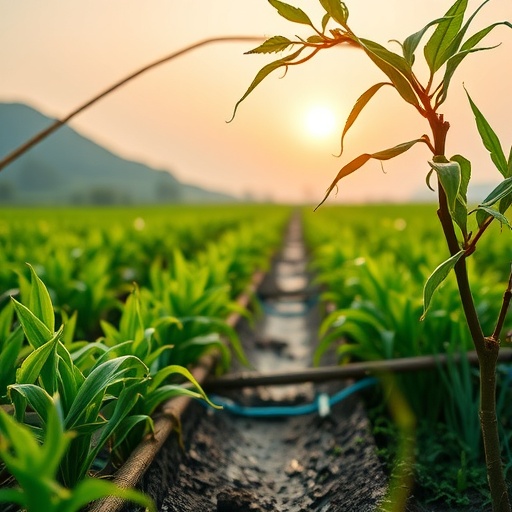
As the world grapples with the escalating challenges of climate change, innovative strategies for carbon removal have become paramount. Among these, bioenergy crops cultivated on marginal croplands present a compelling solution, especially in countries like China with vast agricultural landscapes. A recent groundbreaking study by Hua, Yu, Krishna, and colleagues, published in Communications Earth & Environment, delves into the intricate balance between carbon sequestration potential and the limitations inherent to bioenergy crop cultivation on marginal lands in China, providing a nuanced perspective on this dual-faceted approach.
China’s extensive agricultural sector includes significant portions of marginal croplands—areas characterized by poor soil fertility, water scarcity, or climatic constraints that limit conventional crop productivity. These lands, often overlooked or underutilized, could play a vital role in the carbon cycle if strategically employed for bioenergy crop cultivation. The research team meticulously evaluated the carbon-removal capacity of various bioenergy crops under real-world agronomic and environmental conditions, emphasizing the importance of site-specific management practices to optimize carbon uptake.
Bioenergy crops, known for their rapid growth rates and high biomass yields, have been championed for their ability to sequester atmospheric CO2 through photosynthesis, storing carbon in both aboveground biomass and belowground root systems. However, the study highlights that not all marginal lands can support bioenergy crops efficiently, and the potential carbon sequestration is significantly influenced by soil characteristics, climate variability, and crop species selection. This heterogeneity necessitates a careful assessment of which lands and crops are best suited to maximize net carbon removal without compromising existing ecosystem services.
One of the critical insights from the study lies in the analysis of carbon balance. While bioenergy crops capture substantial carbon, considerations such as land preparation, cultivation inputs, and eventual biomass usage significantly impact the net carbon budget. For instance, the carbon emissions associated with soil disturbance or fertilizer application could offset the benefits accrued from carbon fixation, underscoring the delicate equilibrium between practices aimed at maximizing biomass versus minimizing emissions.
The authors employed advanced modeling techniques integrating satellite imagery data, soil assessments, and climate models to project carbon sequestration scenarios over the next several decades. This innovative approach enabled them to identify hotspots where bioenergy crop planting would yield the highest carbon-removal benefits while maintaining ecological and economic viability. Their model suggested that even with conservative assumptions, the use of marginal croplands for bioenergy production could sequester millions of tons of carbon annually, contributing significantly to China’s carbon neutrality goals.
Beyond carbon sequestration, the study considered other ecosystem impacts, such as effects on soil health, biodiversity, and water resources. Marginal lands, often fragile, require careful management to prevent degradation from intensive bioenergy crop cultivation. The research points toward multi-functional land-use strategies that integrate crop production with conservation practices, ensuring that carbon mitigation efforts do not inadvertently undermine broader environmental sustainability.
A particularly notable aspect of the paper is its discussion on policy frameworks and socio-economic constraints. The transition to bioenergy crops on marginal lands involves complex land tenure issues, farmer incentives, and market dynamics for biomass. The authors argue that without supportive policies that address these challenges, the theoretical carbon benefits may remain unrealized. Investments in farmer education, infrastructure development, and market creation for bioenergy markets are critical components for scaling this approach.
Technological advancements feature prominently as enablers for improving bioenergy crop carbon sequestration efficacy. Precision agriculture tools, remote sensing for monitoring land use changes, and genetic improvements in crop varieties are among the factors that can enhance yield and carbon storage potential. The study emphasizes the need for interdisciplinary research to harness these technologies effectively within the context of marginal land management.
Addressing the temporal dimension, the researchers note the importance of long-term monitoring and adaptive management strategies. Carbon stocks in bioenergy crop systems can fluctuate due to factors like pest outbreaks, extreme weather events, and changes in land-use policy. Therefore, understanding lifecycle carbon dynamics and incorporating resilience into crop selection and land management plans are pivotal for ensuring sustained carbon-removal benefits.
Importantly, the article tempers optimism with realism, acknowledging that bioenergy cropping cannot be a silver bullet solution. The scale of marginal croplands suitable for this purpose is finite, and the trade-offs between bioenergy production and food security, as well as biodiversity conservation, must be negotiated judiciously. The paper calls for integrated modeling frameworks that incorporate socio-ecological dimensions to inform decision-makers about optimal pathways for sustainable carbon removal.
The study’s findings carry profound implications beyond China, offering a template for other nations with comparable land resources and environmental challenges. By providing a scientific basis for evaluating the carbon-removal potential alongside ecological and social factors, the research contributes to a more holistic understanding of bioenergy crops’ role in global climate mitigation strategies.
In conclusion, Hua and colleagues present a comprehensive analysis that advances the discourse on bioenergy crops in climate mitigation. By focusing on the nuanced interplay between carbon sequestration opportunities and the constraints posed by marginal croplands, the study enriches our understanding and paves the way for more informed policies and practices. It highlights the critical need for integrated approaches that transcend simple carbon metrics to embrace holistic land stewardship compatible with environmental sustainability and socio-economic development.
The compelling narrative crafted by this research underscores that leveraging marginal croplands for bioenergy crops holds significant promise but necessitates a calibrated and context-sensitive approach. By balancing opportunity with constraint, this strategy can potentially become a cornerstone in the global quest to reduce atmospheric carbon concentrations while promoting agricultural sustainability and rural livelihoods.
The advancements outlined in this study resonate with the growing urgency to deploy nature-based solutions alongside technological innovations. As the international community ramps up commitments to net-zero emissions, insights from this research will prove invaluable in guiding multi-scale interventions that harness the latent potential of underutilized lands for the planet’s benefit.
Cite Scienmag News
Alan Morgan. (May 29, 2026). Bioenergy Crops: Carbon Solutions and Challenges in China. Scienmag. https://scienmag.com/bioenergy-crops-carbon-solutions-and-challenges-in-china/
Alan Morgan. "Bioenergy Crops: Carbon Solutions and Challenges in China." Scienmag, 29 May 2026, https://scienmag.com/bioenergy-crops-carbon-solutions-and-challenges-in-china/. Accessed 4 September 2026.
Alan Morgan. "Bioenergy Crops: Carbon Solutions and Challenges in China." Scienmag. May 29, 2026. https://scienmag.com/bioenergy-crops-carbon-solutions-and-challenges-in-china/


