


Meniere’s disease remains an enigmatic disorder within the realm of vestibular disorders, presenting an ongoing challenge for clinicians and researchers alike. Characterized primarily by episodic vertigo, fluctuating sensorineural hearing loss, tinnitus, and aural fullness, the disease’s diagnosis hinges heavily on clinical presentation and the identification of endolymphatic hydrops (EH) – an abnormal accumulation of fluid in the inner ear’s membranous labyrinth. However, the heterogeneity that defines Meniere’s disease complicates this diagnostic framework, as conventional reliance on EH as a cardinal marker does not uniformly apply to all patients. These limitations highlight a crucial gap in the field: the need for a comprehensive diagnostic approach that transcends simple imaging findings to better capture the disease’s complexity.
In a groundbreaking study recently published in ENT Discovery, Jun Yang and Qing Zhang’s research team confronts this challenge head-on by focusing on clinical features in unilateral Meniere’s disease patients both with and without demonstrable endolymphatic hydrops. Employing advanced gadolinium-enhanced magnetic resonance imaging (MRI) alongside a battery of audiovestibular assessments, their inquiry encompasses a cohort of 95 subjects. This multimodal evaluation strategy is pivotal, as it systematically interrogates the extent to which imaging correlates with functional impairment and symptomatology, thus shedding light on the inconsistencies that have historically plagued Meniere’s disease classification.
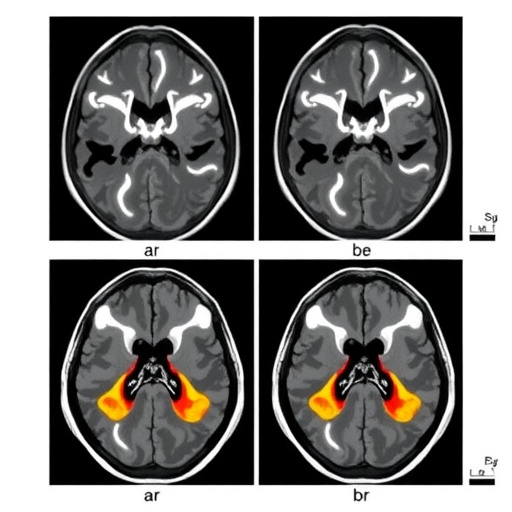
The study’s methodological rigour is particularly evident in its use of gadolinium-contrasted MRI, which permits detailed visualization of endolymphatic space distention within the cochlear and vestibular apparatus. Such imaging techniques have revolutionized inner ear diagnostics, enabling clinicians to visualize hydrops with unprecedented clarity. However, Yang and Zhang’s findings reveal a critical nuance: a significant subset of patients manifest typical clinical features of Meniere’s disease without radiological evidence of EH, challenging the dogma that hydrops is an indispensable biomarker. This dissociation between symptoms and imaging underscores the disease’s intrinsic clinical heterogeneity and suggests alternative pathophysiological pathways may contribute to its manifestation.
Beyond imaging characteristics, the study probes into hearing metrics and vestibular evoked myogenic potentials (VEMPs), which serve as objective indicators of cochlear and vestibular function respectively. The research delineates marked differences in these parameters among patients with and without visible hydrops, with the severity of hydrops correlating robustly with both disease duration and functional deficits. Such correlations not only validate the clinical relevance of hydrops quantification but also emphasize the dynamic nature of Meniere’s disease progression, where vestibular and auditory functions degrade in tandem over time.
This investigation signals a paradigm shift in otologic research by advocating for an integrated diagnostic framework that synergizes symptom profiling, functional testing, and imaging modalities. The implications are profound: moving beyond a binary classification centered on the presence or absence of EH towards a multidimensional model that better captures patient heterogeneity. Such an approach is instrumental in tailoring clinical management strategies, optimizing therapeutic interventions, and ultimately enhancing patient outcomes.
Furthermore, Yang and Zhang’s work lays the groundwork for future subtype classification of Meniere’s disease. By mapping the variable phenotypic expression against imaging and audiovestibular metrics, researchers can begin delineating distinct disease phenotypes. This stratification holds promise for precision medicine initiatives, where individualized treatment can be adjusted according to specific pathophysiological signatures rather than broad clinical labels.
The study also underscores the limitations of relying exclusively on radiological findings in clinical decision-making. Patients exhibiting classical Meniere’s symptoms but lacking MRI-evident hydrops have historically been relegated to diagnostic uncertainty. By validating this subgroup’s clinical legitimacy through comprehensive auditory and vestibular evaluations, the research fosters greater inclusivity in disease characterization, paving the way for more nuanced diagnostic criteria.
Technically, the implementation of gadolinium-enhanced MRI to visualize endolymphatic spaces hinges on delayed imaging protocols that capitalize on differential contrast agent distribution between endolymph and perilymph compartments. This technique demands meticulous timing and imaging parameters to optimize sensitivity and specificity. Yang and Zhang’s utilization of such advanced imaging protocols demonstrates an adept application of cutting-edge technology to clinical research, offering a model for future studies aiming to elucidate inner ear pathologies.
In conjunction with imaging, the study’s deployment of vestibular evoked myogenic potentials (both cervical and ocular VEMPs) integrates functional vestibular testing into the diagnostic equation. These electrophysiological assessments quantify reflex pathways, thereby offering objective insight into otolith organ involvement, which may be variably impaired in Meniere’s disease. Variations in VEMP outcomes between hydrops-positive and hydrops-negative patients hence provide an additional dimension in understanding disease mechanisms.
Finally, the research draws attention to the temporal evolution of Meniere’s disease, where the severity of hydrops and functional impairments intensify with prolonged disease duration. This temporal aspect underscores the necessity for early, multifaceted diagnostic interventions to potentially modify disease trajectory and mitigate progressive sensory deterioration.
In conclusion, the work of Jun Yang and Qing Zhang heralds a new era in the comprehension and clinical management of Meniere’s disease. By reconciling discrepancies between imaging and clinical symptomatology through a comprehensive diagnostic model, they not only challenge entrenched paradigms but also chart a course toward personalized medicine in otology. Their contribution, meticulously detailed in ENT Discovery, stands as a beacon for future research aiming to unravel the complex tapestry of vestibular disorders.
Cite Scienmag News
Ophelia Keating. (May 29, 2026). New Insights into Unilateral Meniere’s Disease Patients Lacking Endolymphatic Hydrops via MRI Analysis. Scienmag. https://scienmag.com/new-insights-into-unilateral-menieres-disease-patients-lacking-endolymphatic-hydrops-via-mri-analysis/
Ophelia Keating. "New Insights into Unilateral Meniere’s Disease Patients Lacking Endolymphatic Hydrops via MRI Analysis." Scienmag, 29 May 2026, https://scienmag.com/new-insights-into-unilateral-menieres-disease-patients-lacking-endolymphatic-hydrops-via-mri-analysis/. Accessed 4 September 2026.
Ophelia Keating. "New Insights into Unilateral Meniere’s Disease Patients Lacking Endolymphatic Hydrops via MRI Analysis." Scienmag. May 29, 2026. https://scienmag.com/new-insights-into-unilateral-menieres-disease-patients-lacking-endolymphatic-hydrops-via-mri-analysis/


