


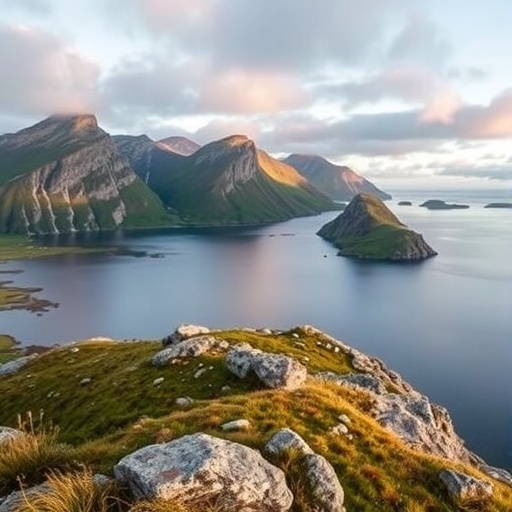
As the world accelerates towards a sustainable future, Norway finds itself at a pivotal crossroads where expanding renewable energy infrastructure is imperative to meet rising electricity demands. A recent comprehensive study led by Jan Borgelt, a postdoctoral fellow at the Norwegian University of Science and Technology (NTNU), in collaboration with SINTEF and the Norwegian Institute for Nature Research (NINA), exposes a nuanced and urgent challenge: while decarbonization hinges on increased renewable energy production, the very development of this infrastructure threatens to exacerbate habitat loss and impact Norway’s rich biodiversity.
Norway’s electricity system is predominantly powered by hydropower, accounting for approximately 88% of the national supply. With over 1,800 hydropower plants and more than a thousand reservoirs spread across the country, much of the ecological transformation wrought by hydropower dates back to the 20th century, with significant expansions during the 1960s and 70s. Although the opportunity for large-scale new hydropower plants is limited primarily due to the high degree of protection afforded to undeveloped natural zones, the ongoing modernization and capacity expansion of existing hydroelectric facilities continue to exert land-use pressures that affect terrestrial ecosystems.
The study’s findings reveal a critical conundrum: the expansion of renewable energy infrastructure to satisfy future electricity demand could drive habitat loss up by as much as 28% by 2050, depending on the intensity of deployment strategies. This emphasizes the urgency of balancing energy goals with ecological conservation. Land scarcity and habitat disruption are common denominators among renewable technologies. Wind farms, solar arrays, hydropower projects, and their connective transmission grids all necessitate substantial spatial footprints, which can lead to fragmentation and degradation of habitats critical for maintaining biodiversity.
Wind power emerges as a particularly complex facet of Norway’s renewable landscape. As the second largest source of renewable electricity in the country, with 64 onshore wind farms generating close to 16 terawatt-hours annually, wind energy’s physical footprint per unit of electricity is relatively modest—for instance, direct land use might be just 1.6 square kilometers per TWh—yet it is accompanied by indirect ecological costs. These include avian mortality due to turbine blades, noise disturbance impairing local fauna, and land-use changes that can alter habitat connectivity. Public perception, too, is mixed, with concerns over impacts on recreation, noise pollution, and wildlife leading to ongoing debates about the sustainable future of wind deployment.
Solar energy, while contributing the smallest share to land-based habitat loss, presents its own unique challenges. Ground-mounted solar farms demand extensive land areas relative to their electricity output, leading to considerable habitat conversion when sited in forests or other natural environments. Yet, rooftop solar installations present a starkly better environmental profile by utilizing existing built environments without additional habitat disruption. This distinction highlights that strategic siting is not a peripheral concern but central to minimizing ecological trade-offs associated with solar power expansion.
The transmission grid, an often overlooked but critical component of the renewable electricity system, wields significant influence over habitat integrity. Power lines, necessitating deforestation and corridor clearings across vast forested areas, impose substantial land pressure. Intriguingly, the study finds that the cleared corridors associated with transmission infrastructure can benefit certain taxa such as plants, amphibians, and reptiles by maintaining open landscapes. However, these benefits are offset by negative effects on bird populations and mammals, reflecting the multifaceted nature of ecological responses to infrastructure.
What ultimately stands out from the research is a fundamental insight: the aggregate electricity demand trumps the choice of renewable technology in determining ecological impact. Whether future electricity is sourced predominantly from wind, solar, or hydropower, the demand volume drives the scale of habitat loss and biodiversity disruption. Consequently, the focus on expanding renewable infrastructure must harmonize with aggressive demand-side management strategies, including energy efficiency and conservation, to truly mitigate ecological footprints.
This research underscores the vital role of spatial planning and ecological sensitivity in renewable energy deployment. Locating new projects in previously disturbed or low-conflict areas can significantly reduce tensions between conservation objectives and energy production. Such an approach demands sophisticated modeling and robust environmental assessments to inform policies that accommodate energy growth without compromising vital habitats.
The study also accentuates the need for transparent and participatory decision-making frameworks. As Norway embarks on its energy transition journey, incorporating biodiversity considerations alongside cost-efficiency and technical feasibility into planning processes will foster more sustainable outcomes. The integration of ecological data into energy planning is no longer optional but essential to avoid legacy impacts that could hinder conservation efforts for decades.
Moreover, this investigation invites a broader reflection on the global energy transition paradigm. Norway’s experience epitomizes the complex trade-offs intrinsic to large-scale renewable deployment. The imperative to decarbonize must be carefully balanced with protecting biodiversity—a lesson that resonates internationally as nations pursue their climate and sustainability commitments.
In conclusion, the ambitious expansion of renewable energy infrastructure in Norway carries a clear environmental price tag. Nevertheless, the study’s salient message conveys optimism: through strategic siting, prioritizing rooftop solar installations, minimizing intrusion into species-rich habitats, and, critically, reducing overall electricity demand, it is possible to significantly curtail the biodiversity impacts associated with the clean energy revolution. The future of sustainable electricity in Norway—and beyond—hinges not solely on technological advances but on integrating ecological stewardship into the very blueprint of energy planning.
News Publication Date: 17-Feb-2026
Web References:
- Norwegian Water Resources and Energy Directorate: https://www.nve.no/energi/energisystem/vannkraft/oversikt-over-vannkraft/
- Norwegian Water Resources and Energy Directorate on wind power data: https://www.nve.no/energi/energisystem/vindkraft-paa-land/data-for-utbygde-vindkraftverk-i-norge/
- Wind power land use information: https://www.nve.no/konsesjon/konsesjonsbehandling-av-vindkraft-paa-land/arealbruk-for-vindkraftverk/direkte-fysiske-inngrep/
- Recent sustainability study on wind power: https://www.frontiersin.org/journals/sustainable-energy-policy/articles/10.3389/fsuep.2025.1538828/full
- ScienceDirect article: https://www.sciencedirect.com/science/article/pii/S2772783126000087?via%3Dihub
References:
Jan Borgelt, Dafna Gilad, Roel May, Francesca Verones, Renewable energy growth amplifies land pressure on Norwegian biodiversity, Cleaner Energy Systems, Vol. 13, 2026.
Cite Scienmag News
Margaret Porter. (May 29, 2026). Striking the Balance: Navigating Renewable Energy Development and Biodiversity Conservation in Norway. Scienmag. https://scienmag.com/striking-the-balance-navigating-renewable-energy-development-and-biodiversity-conservation-in-norway/
Margaret Porter. "Striking the Balance: Navigating Renewable Energy Development and Biodiversity Conservation in Norway." Scienmag, 29 May 2026, https://scienmag.com/striking-the-balance-navigating-renewable-energy-development-and-biodiversity-conservation-in-norway/. Accessed 4 September 2026.
Margaret Porter. "Striking the Balance: Navigating Renewable Energy Development and Biodiversity Conservation in Norway." Scienmag. May 29, 2026. https://scienmag.com/striking-the-balance-navigating-renewable-energy-development-and-biodiversity-conservation-in-norway/


