


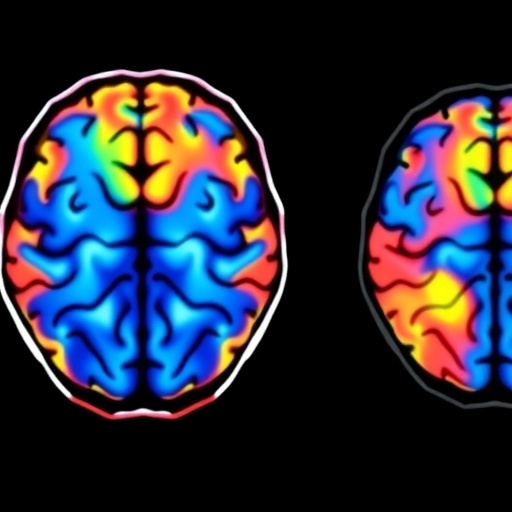
In a groundbreaking and comprehensive multisite investigation into the complexities of cognitive impairment among diverse populations, recent findings reveal that Black and Hispanic individuals, despite exhibiting a higher overall prevalence of dementia, demonstrate notably reduced presence of Alzheimer’s pathology on positron emission tomography (PET) brain scans compared to other racial and ethnic groups. This pivotal study, conducted under the auspices of Vanderbilt Health and presented in Alzheimer’s & Dementia: The Journal of the Alzheimer’s Association, challenges prevailing assumptions regarding the homogeneity of Alzheimer’s disease manifestations across different populations and underscores the urgent need to reassess diagnostic and therapeutic strategies tailored by ethnoracial context.
Alzheimer’s disease, a debilitating neurodegenerative disorder, accounts for approximately 60% to 80% of all dementia cases and is traditionally identified via hallmark amyloid plaques and tau tangles within the brain. These protein aggregates impair synaptic function and neuronal communication, culminating in progressive cognitive decline. However, the emerging evidence from this large-scale PET imaging study reveals a discordance between clinical dementia symptoms and the presence of classic Alzheimer’s pathology, particularly among Black and Hispanic cohorts. Such ethnoracial disparities signal that alternative neuropathological mechanisms may underlie cognitive impairment in these populations, potentially involving cerebrovascular disease, Lewy body pathology, or other neurodegenerative processes.
The study meticulously analyzed data from 5,757 Medicare beneficiaries nationwide suffering from mild cognitive impairment or dementia. This sample, notable for its ethnoracial diversity with 22% Black, 20% Hispanic, and 58% categorized as “any other racial or ethnic group” (AORE), represents one of the most extensive PET imaging cohorts to evaluate amyloid positivity with an intersectional lens on social determinants of health. Incorporating variables such as gender, educational attainment, Medicare coverage type (traditional versus Medicare Advantage), and the Area Deprivation Index (ADI)—a socioeconomic metric stratifying neighborhoods by disadvantage—the research peers critically into how these nonmedical factors intertwine with neurobiological disease markers.
Remarkably, the analysis demonstrated that Black and Hispanic participants were 28% and 22% less likely, respectively, to exhibit amyloid positivity relative to the AORE group. This finding is especially significant when contextualized against epidemiological data indicating that dementia incidences are 54% higher in Black and 92% higher in Hispanic populations compared to white individuals. The paradox of increased dementia burden yet decreased amyloid pathology highlights the insufficiency of amyloid-centric diagnostic criteria to capture the heterogeneity of neurodegenerative diseases across ethnoracial lines.
Further complicating the landscape are social determinants of health, which evidentiate their influence on both disease manifestation and healthcare access. The study revealed that individuals residing in distressed neighborhoods exhibited 40% higher odds of PET amyloid positivity compared to those living in prosperous areas. Such socioeconomic disparities likely mediate factors including healthcare quality, environmental exposures, and chronic stress levels, which collectively modulate neurodegenerative risk profiles. Interestingly, other factors such as gender, education level, and Medicare plan type did not significantly alter amyloid positivity odds, suggesting that structural neighborhood disadvantage exerts a particularly potent effect.
Crucially, the report emphasizes that Black and Hispanic participants were more frequently diagnosed at the dementia stage rather than the earlier mild cognitive impairment phase, and were substantially more likely to be enrolled in Medicare Advantage plans. This latter association may reflect systemic barriers to accessing traditional care pathways, potentially delaying diagnosis and intervention and thus impacting clinical outcomes. Such disparities underline the necessity to re-evaluate diagnostic thresholds and clinical trial eligibility criteria, which often hinge on PET amyloid positivity and may inadvertently exclude substantial segments of ethnoracially diverse populations.
Leading voices in the study, including Dr. Consuelo Wilkins, underscore the implications of these findings for public health and clinical research frameworks. She cautions that an exclusive focus on Alzheimer’s pathology risks exacerbating existing ethnoracial disparities by failing to acknowledge and address alternative dementia etiologies prevalent in minority populations. The findings advocate for diversified investigative approaches encompassing vascular contributions, metabolic factors, and potentially novel biomarkers to unravel the multifaceted nature of cognitive decline.
The application of PET imaging in this context is transformative, enabling visualization of in vivo amyloid deposition and thereby refining diagnostic precision beyond clinical symptomatology alone. This study leverages cutting-edge radiotracers and advanced imaging modalities to probe neuropathological diversity on a scale hitherto unparalleled by amyloid PET research. Such technological advancements are pivotal to disentangling the complex interplay between genetic, biological, and environmental contributors to dementia.
Penetrating the nuanced geographic and socioeconomic layers of dementia pathology elucidates compelling patterns that challenge conventional clinical dogma. The area deprivation index stratification elucidates how place and neighborhood context materially alter disease pathogenesis and healthcare trajectories. Subsequent research should explore targeted interventions that mitigate these social determinants, potentially attenuating dementia risk in vulnerable communities.
As dementia research advances, the recognition of ethnoracial heterogeneity and social determinants propels a paradigm shift towards more inclusive, equitable, and precision-based diagnostics and therapeutics. The new IDEAS study epitomizes this direction, advocating for integrative models that encompass both biological markers and socioeconomic realities. It invites the scientific and clinical community to reimagine dementia as a spectrum of disorders with variable etiologies shaped by ethnoracial and environmental factors.
Funding for this landmark work was provided by a consortium of prominent organizations including the Alzheimer’s Association, the American College of Radiology, Avid Radiopharmaceuticals Inc., General Electric Healthcare, Life Molecular Imaging, and the National Institutes of Health. The collaboration of 18 co-authors across 11 institutions underscores the scale and interdisciplinary nature of the effort to elucidate dementia’s diverse etiologies.
In conclusion, this extensive PET imaging study delivers vital insights into the ethnoracial disparities characterizing dementia and Alzheimer’s disease pathology. By revealing attenuated amyloid deposition in Black and Hispanic populations—despite higher dementia prevalence—this research challenges monolithic models of neurodegeneration and highlights the necessity for nuanced diagnostic frameworks that integrate social determinants and pathophysiological diversity. Such knowledge is crucial for designing equitable healthcare policies and precision medicine approaches poised to address the global dementia crisis in its full complexity.
News Publication Date: 27-May-2026
Web References: https://alz-journals.onlinelibrary.wiley.com/doi/abs/10.1002/alz.71406
Cite Scienmag News
Cassandra Pierce. (May 28, 2026). Brain Imaging Study Reveals Ethnoracial Variations in Dementia Risk and Progression. Scienmag. https://scienmag.com/brain-imaging-study-reveals-ethnoracial-variations-in-dementia-risk-and-progression/
Cassandra Pierce. "Brain Imaging Study Reveals Ethnoracial Variations in Dementia Risk and Progression." Scienmag, 28 May 2026, https://scienmag.com/brain-imaging-study-reveals-ethnoracial-variations-in-dementia-risk-and-progression/. Accessed 4 September 2026.
Cassandra Pierce. "Brain Imaging Study Reveals Ethnoracial Variations in Dementia Risk and Progression." Scienmag. May 28, 2026. https://scienmag.com/brain-imaging-study-reveals-ethnoracial-variations-in-dementia-risk-and-progression/


