


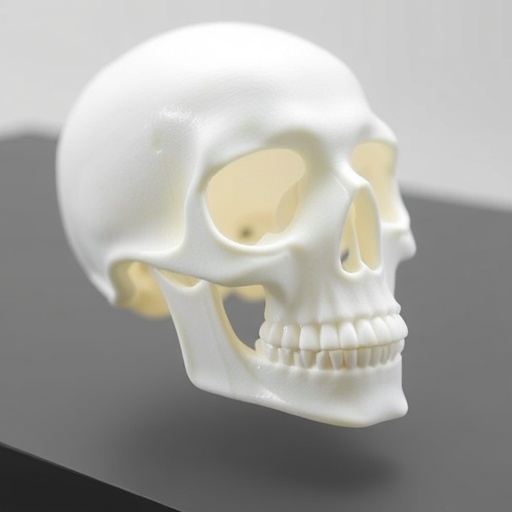
In a groundbreaking advancement poised to redefine the future of surgical care, 3D-printed anatomical models are emerging as indispensable tools for improving surgical outcomes. This innovative fusion of digital imaging and additive manufacturing technology offers an unprecedented level of precision and personalization in pre-surgical planning, implant design, and medical education. The technology’s ability to replicate complex patient-specific anatomy with remarkable accuracy is accelerating the shift toward truly individualized medicine.
At the forefront of this revolution is Dr. Kyle VanKoevering, an ENT surgeon who pioneered the clinical application of 3D printed fetal anatomical models. Faced with a fetus harboring a rare, airway-obstructing facial mass, Dr. VanKoevering sought to understand the intricate spatial relationships and potential surgical challenges before delivery. By leveraging advanced imaging modalities such as MRI and CT scans, combined with sophisticated segmentation software, he created a digital 3D reconstruction of the fetal head. This model was then rendered physically through additive manufacturing, providing surgeons with a tangible, life-sized replica to examine preoperatively.
The implications of this capability extend far beyond rare fetal cases. The integration of patient-specific 3D models into surgical planning has demonstrated significant potential in complex procedures involving delicate anatomical structures—such as intricate vascular networks, craniofacial abnormalities, and oncologic resections. Surgeons report enhanced spatial awareness and confidence when navigating unique anatomical variations, significantly reducing intraoperative surprises and associated complications. This precision approach aligns closely with the broader trend toward personalized medicine, where treatments are tailored to the individual’s unique biology.
The process of generating these models is a marvel of interdisciplinary collaboration and technological innovation. It commences with high-resolution diagnostic imaging data acquisition, ensuring no critical detail is lost. Advanced segmentation algorithms then isolate and categorize various tissues, bones, and vascular components. This detailed digital blueprint is refined through computer-aided design (CAD) tools to optimize printability while maintaining anatomical fidelity. Finally, various 3D printing technologies—ranging from stereolithography to selective laser sintering—materialize the model in lifelike colors and textures that simulate real human tissue. The choices of printing modalities and materials are critical, as they influence the model’s tactile feedback, durability, and educational value.
One of the most transformative applications of 3D printing in medicine lies within patient-specific implant and prosthetic fabrication. Unlike traditional manufacturing methods, additive manufacturing enables the production of bespoke devices that conform precisely to the patient’s anatomical contours. This tailored approach minimizes fitting errors, enhances biocompatibility, and optimizes functional integration. For example, custom cranial plates or mandibular reconstructions can be designed to restore both form and function meticulously. The iterative design process facilitated by digital models accelerates the transition from concept to clinical application, reducing lead times and costs.
Furthermore, 3D printed anatomical replicas serve as invaluable tools for medical education and resident training. Conventional cadaveric dissection, while foundational, is limited by availability, ethical concerns, and lack of pathological variability. In contrast, 3D printed models provide reproducible, customizable specimens displaying a vast spectrum of clinical scenarios. These models mimic the tactile and visual properties of human tissue, allowing trainees to refine surgical techniques in a risk-free environment. Simulation-based training incorporating realistic anatomical replicas is shown to enhance skill acquisition and improve procedural outcomes.
Despite the compelling advantages, the widespread adoption of 3D printed medical models faces pragmatic challenges. Initial capital investment in high-fidelity printers, bio-compatible materials, and skilled personnel creates a substantial barrier to entry for many institutions. Additionally, regulatory pathways remain complex; in cases involving implantable devices, rigorous FDA clearance processes must be navigated to demonstrate safety and efficacy. Integrating 3D printing into clinical workflows demands multidisciplinary collaboration among radiologists, surgeons, biomedical engineers, and regulatory experts, adding administrative and operational complexity.
Yet, the promise of 3D printing as a vehicle for personalized surgical care far outweighs these hurdles. Longitudinal analyses suggest that expertly crafted models can reduce operative time, decrease complication rates, and shorten hospital stays—all of which translate into meaningful cost savings and improved patient quality of life. As technologies mature and become more accessible, economies of scale are expected to further reduce expenses while enhancing printing speed and resolution.
Looking ahead, the convergence of 3D printing with emerging digital health modalities signals an exciting frontier. Integration with artificial intelligence algorithms could automate segmentation and model optimization, accelerating production timelines. Advances in bioprinting may enable the fabrication of living tissue constructs, opening possibilities for organ replacement and regenerative therapies. Meanwhile, augmented reality (AR) and virtual reality (VR) technologies complement 3D physical models by providing immersive surgical simulations and intraoperative navigation assistance.
The paradigm shift initiated by 3D printed anatomical models represents a compelling example of how technology can drive innovation in patient-centered care. By transforming abstract imaging data into tangible, precise replicas, surgeons can plan with unprecedented insight and execute with enhanced confidence. Patients stand to benefit from safer, more effective procedures tailored to their unique anatomy—ushering in an era where personalized medicine is no longer aspirational but standard practice.
As the medical community continues to refine these technologies and surmount implementation challenges, the role of 3D printing will undoubtedly expand across specialties and care settings. Enthusiastic early adopters like Dr. VanKoevering’s M4 Lab are illuminating the path forward, demonstrating that integrating additive manufacturing into healthcare is both feasible and impactful. The journey towards comprehensive personalized surgical care is accelerating, propelled by this transformative synergy of imaging, engineering, and clinical expertise.
In sum, the fusion of 3D printing technology with surgical practice is revolutionizing how medicine can be customized to individual patients. The ability to study, simulate, and support complex surgical interventions with high-fidelity anatomical replicas fosters improved outcomes and redefines education and innovation in medicine. While challenges remain, the trajectory of research and clinical use cases signals a promising future where personalized, precision surgery becomes the new global standard.
Cite Scienmag News
Ophelia Keating. (May 26, 2026). 3D-Printed Models Enhance Precision and Outcomes in Surgery, Study Finds. Scienmag. https://scienmag.com/3d-printed-models-enhance-precision-and-outcomes-in-surgery-study-finds/
Ophelia Keating. "3D-Printed Models Enhance Precision and Outcomes in Surgery, Study Finds." Scienmag, 26 May 2026, https://scienmag.com/3d-printed-models-enhance-precision-and-outcomes-in-surgery-study-finds/. Accessed 3 September 2026.
Ophelia Keating. "3D-Printed Models Enhance Precision and Outcomes in Surgery, Study Finds." Scienmag. May 26, 2026. https://scienmag.com/3d-printed-models-enhance-precision-and-outcomes-in-surgery-study-finds/


