


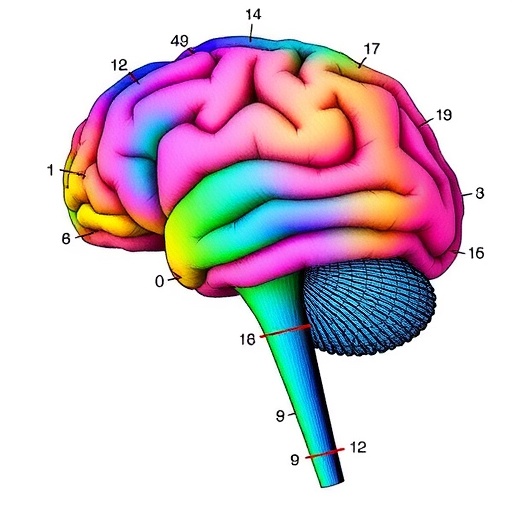
In the ever-evolving landscape of cognitive neuroscience, the question of how the brain anticipates incoming sensory information has captivated researchers and theorists alike. A recent publication titled “Reply to: ‘No evidence of neural feature-specific pre-activation during the prediction of an upcoming stimulus,'” authored by Demarchi et al., and featured in Nature Communications, ignites renewed discussion surrounding the intricate mechanisms underlying predictive processing. This study directly addresses prevailing criticisms and presents compelling evidence that challenges the skepticism about neural pre-activation’s role in feature-specific anticipation.
The notion that the brain pre-activates neural circuits in anticipation of forthcoming sensory stimuli is rooted in predictive coding theories. These theories posit that the brain, far from being a passive recipient of information, actively forecasts future inputs based on past experiences. By generating predictions through hierarchical neural architectures, the brain purportedly optimizes perception and minimizes surprise by comparing incoming input with top-down expectations. Demarchi and colleagues critically examine these ideas, responding to earlier research which claimed there was no evidence supporting the specificity of this neural pre-activation, especially with regards to feature details.
Demarchi et al. leverage sophisticated neuroimaging methods to reassess and expand upon previous findings. Employing state-of-the-art multivariate pattern analysis (MVPA) alongside time-resolved electroencephalography (EEG) data, their methodology dives deep into the temporal dynamics of neural activity as participants engage in prediction tasks. Through carefully controlled experimental paradigms that manipulate anticipated visual features, the researchers aim to determine if the brain indeed activates neural representations specific to expected features before those stimuli occur.
One of the study’s pivotal strengths lies in its analytical precision, particularly in isolating feature-specific signals from complex neural noise. The researchers argue that prior negative findings might stem from methodological limitations, such as less sensitive decoding techniques or insufficient temporal resolution that obscure subtle pre-activation patterns. By utilizing refined computational models and cross-validating across multiple datasets, Demarchi et al. reveal nuanced but consistent neural patterns indicative of feature-specific pre-activation, challenging the notion that the brain’s predictive machinery operates in a non-specific or generic manner.
The implications of these findings stretch beyond mere academic debate, touching upon the fundamental understanding of how cognition and perception intertwine. If the brain indeed pre-activates specific neural ensembles tuned to expected features, this suggests a deep integration between memory, expectation, and sensory processing. Such integration could underpin phenomena ranging from rapid object recognition to the resolution of ambiguous sensory inputs, effectively enhancing behavioral efficiency and cognitive flexibility in dynamic environments.
Demarchi and collaborators meticulously dissect temporal windows wherein these predictive signals emerge. Their findings highlight that neural feature-specific pre-activation manifests in early time frames preceding stimulus onset, underlining a preparatory role that sets the stage for subsequent sensory encoding. This temporal specificity refutes models that propose either a late or absent role for pre-activation, reinforcing the high temporal fidelity of predictive neural mechanisms as captured through EEG’s millisecond precision.
Beyond the temporal dimension, the spatial localization of these predictive signals offers intriguing insights. Utilizing source reconstruction techniques, the authors pinpoint pre-activation effects not only in classical sensory cortices, such as primary visual areas, but also within higher-order associative regions. This spatial distribution suggests an orchestrated interplay between bottom-up sensory pathways and top-down modulatory influences, illuminating the layered architecture through which expectations sculpt perception.
Moreover, the study addresses the persistent methodological challenge of distinguishing genuine pre-activation from post-perceptual processing or motor preparation effects. By incorporating rigorous control conditions and disentangling confounds related to anticipatory motor activity, the researchers reinforce the robustness of their results. Their findings affirm that the detected pre-activation is not an artifact but a bona fide neural signature of predictive sensory coding.
This research also opens avenues for understanding clinical conditions where predictive coding may go awry. Disorders such as schizophrenia or autism spectrum disorders have been hypothesized to involve aberrant predictive processing. By elucidating the normal dynamics of feature-specific pre-activation, Demarchi et al.’s work establishes a critical benchmark from which pathological deviations might be identified and potentially targeted therapeutically.
In the broader scientific dialogue, this study exemplifies the importance of methodological rigor and open critique. It demonstrates how revisiting prior conclusions with enhanced tools and analytical frameworks can yield transformative insights. The debate over neural pre-activation underscores the iterative nature of scientific progress, where hypotheses are continuously refined, contested, and elaborated upon to build a more comprehensive understanding of brain function.
Importantly, these advancements also propel technological innovation, especially in fields like brain-computer interfaces and artificial intelligence. Understanding how the human brain anticipates and processes sensory information could inspire more adaptive and predictive algorithms, enhancing machine perception’s responsiveness and accuracy. The notion of feature-specific pre-activation might inform the design of systems capable of efficient predictive coding, mirroring biological efficiency.
In summation, Demarchi et al.’s reply elucidates a compelling narrative for the brain’s capacity to pre-activate neural pathways in anticipation of specific sensory features, countering prior skepticism by substantiating their claims with robust empirical evidence. This study not only rekindles confidence in predictive coding theories but also invites further exploration into the profound ways in which expectations shape neural and cognitive landscapes. The intricate dance of anticipation and perception stands as a testament to the brain’s remarkable adaptability and computational sophistication, providing fertile grounds for future discovery.
As the neuroscience community digests these findings, the conversation around predictive pre-activation is likely to intensify, fueling innovative experiments and theoretical refinements that could transform contemporary models of cognition. With each step forward, our grasp of how the brain seamlessly integrates past experiences to sculpt present perceptions becomes ever more refined, illustrating the dynamic and predictive nature of human thought.
This work stands as a beacon illuminating the path forward, emphasizing the elegant complexity embedded within neural architectures and the remarkable precision with which they navigate uncertainty. In bridging contested viewpoints, it exemplifies how scientific dialogue, underpinned by rigorous empirical validation, drives the continual evolution of our understanding of the brain.
Cite Scienmag News
Cassandra Pierce. (May 26, 2026). No Neural Feature Pre-Activation in Stimulus Prediction. Scienmag. https://scienmag.com/no-neural-feature-pre-activation-in-stimulus-prediction/
Cassandra Pierce. "No Neural Feature Pre-Activation in Stimulus Prediction." Scienmag, 26 May 2026, https://scienmag.com/no-neural-feature-pre-activation-in-stimulus-prediction/. Accessed 4 September 2026.
Cassandra Pierce. "No Neural Feature Pre-Activation in Stimulus Prediction." Scienmag. May 26, 2026. https://scienmag.com/no-neural-feature-pre-activation-in-stimulus-prediction/


