


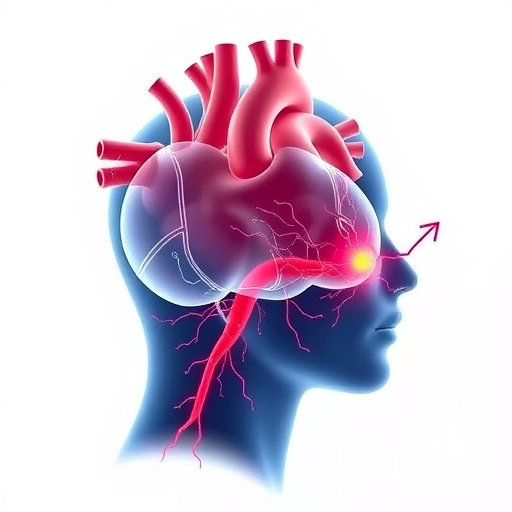
In a groundbreaking study published in Translational Psychiatry in 2026, researchers led by Zhang, Luo, and Wei have unveiled a critical neurobiological pathway that bridges the devastating effects of myocardial ischemia-reperfusion injury with the emergence of anxiety-like behaviors. This research offers a profound insight into how the brain-heart axis operates in pathological states, focusing precisely on the glutamatergic neurotransmission along the nucleus tractus solitarius (NTS) projecting to the periaqueductal gray (PAG) and paraventricular nucleus of the hypothalamus (PVN). By dissecting this intricate neural circuitry, the study elucidates the mechanistic underpinnings that exacerbate cardiac injury and concurrently trigger psychiatric symptoms following ischemic heart events.
Myocardial ischemia-reperfusion (I/R) injury, a condition characterized by the restoration of blood flow after a period of ischemia, paradoxically accelerates cardiac tissue damage through oxidative stress, inflammation, and apoptosis. Beyond the direct cardiac consequences, survivors often develop anxiety and depression, complicating recuperation and long-term prognosis. Previously, the specific neural pathways linking cardiac distress to neuropsychiatric manifestations remained elusive, hampering targeted therapeutic development. This research aims to address that gap by focusing on glutamatergic signaling within the brainstem-to-hypothalamic axis, highlighting the NTS-PAG/PVN pathway’s dual role in cardiac injury and emotional regulation.
The nucleus tractus solitarius (NTS), residing in the dorsal medulla, serves as an integrative hub for visceral sensory information, including cardiac afferents. Activation of the NTS instigates multifaceted responses influencing autonomic control and emotional behaviors through its projections. Zhang and colleagues employed cutting-edge neural tracing techniques combined with optogenetics to map and modulate the glutamatergic neurons projecting from the NTS to the PAG and PVN. Their methodology allowed unprecedented precision in manipulating this neural circuitry to delineate its effects on myocardial I/R outcomes and anxiety-like phenotypes in animal models.
Central to their findings is the demonstration that glutamate release in the NTS-PAG/PVN pathway intensifies myocardial injury during reperfusion phases. The excessive excitatory input appears to provoke maladaptive neuroendocrine responses, including heightened sympathetic nervous system activity and hypothalamic-pituitary-adrenal (HPA) axis dysregulation. This cascade exacerbates cardiac tissue damage through inflammatory and oxidative mechanisms. Concurrently, the same neural activation induces anxiety-like behaviors, suggesting this pathway’s involvement in the neuropsychiatric sequelae of cardiac ischemic episodes. Thus, this dual effect underscores the pathway’s significance as a nexus between physical and emotional pathology.
Electrophysiological recordings revealed that ischemia-reperfusion triggers hyperexcitability in glutamatergic neurons within the NTS, thereby escalating glutamate transmission to downstream centers such as the PAG and PVN. The PAG is renowned for its role in pain modulation and defensive behaviors, while the PVN orchestrates neuroendocrine responses, including stress hormone release. The study implies that pathological glutamatergic signaling in these circuits disrupts homeostasis and precipitates maladaptive cardiac and emotional responses. Blocking glutamate receptors pharmacologically in these regions reduced both myocardial injury markers and anxiety-like behavior, validating the causal role of this excitatory transmission.
Importantly, the researchers employed optogenetic inhibition of the NTS-PAG/PVN glutamatergic pathway during reperfusion, which markedly attenuated cardiac infarct size and improved behavioral outcomes related to anxiety. This manipulation further establishes the therapeutic potential of targeting this pathway to mitigate myocardial damage and psychiatric comorbidities. The elegant use of these advanced neuroscientific tools provides a proof-of-concept for future clinical interventions aiming to modulate specific brain circuits to treat complex somatic and psychological conditions resulting from cardiac injury.
Beyond mechanistic insights, the study highlights the bidirectional communication pathways underpinning cardioneuropsychiatric disorders. It advances the growing paradigm that cardiac disease cannot be isolated from its profound effects on brain function and mental health. By pinpointing precise glutamatergic circuits linking visceral cardiac signals with central stress and emotional centers, Zhang and colleagues open new avenues for integrative therapies combining cardiovascular care with mental health management.
The implications of these findings reverberate through multiple fields, from cardiology to psychiatry and neuroscience. They provoke a reconsideration of post-myocardial infarction protocols, suggesting that neural circuit modulation could complement existing pharmacological treatments aimed at reducing cardiac remodeling and preventing heart failure. Moreover, addressing anxiety and depression as integral components of cardiac rehabilitation could markedly improve patient outcomes, reducing morbidity and mortality associated with combined cardiac-psychiatric syndromes.
The study’s comprehensive approach involved behavioral assays demonstrating heightened anxiety-like behavior in rodents following myocardial I/R, paralleled by neural activation in the NTS-PAG/PVN glutamatergic pathway. This confluence of behavioral, electrophysiological, and histological data presents a robust framework validating the pathway’s pivotal role. Importantly, the authors also explored molecular changes in receptor expression and synaptic plasticity within these regions, linking neurochemical alterations to the observed physiological and behavioral phenomena.
Future directions prompted by this research include exploring whether similar glutamatergic mechanisms operate in humans experiencing myocardial infarction and reperfusion therapy. Given the translational potential, high-resolution neuroimaging and cerebrospinal fluid analysis in clinical populations could verify analogous neurochemical and structural changes, paving the way for novel diagnostics or neuromodulation therapies. Furthermore, dissecting how individual variability in this pathway contributes to susceptibility to post-infarction anxiety could propel personalized medicine approaches.
Ultimately, Zhang et al.’s research establishes the glutamatergic NTS-PAG/PVN pathway as a crucial mediator that bridges myocardial ischemia-reperfusion injury and anxiety-like behavior, revealing a neurobiological substrate that integrates cardiovascular and emotional health. The dual impact of this pathway underscores the necessity of holistic treatment strategies that address both somatic and psychiatric dimensions of heart disease. By unraveling this intricate brain-heart communication, the study sets the stage for innovative interventions capable of transforming outcomes for millions affected by ischemic heart conditions and their psychological aftermaths.
This landmark research enhances our understanding of the neurocircuitry underlying cardiac injury and its neuropsychiatric consequences. It invites the scientific community to consider the brain not merely as a bystander but as an active participant orchestrating the physiological responses that determine recovery trajectories post-myocardial infarction. The therapeutic horizons now extend beyond the myocardium itself to include precise neuromodulation of the glutamatergic pathways within the brainstem and hypothalamus, ushering in an era where treating heart disease encompasses mental health and neural circuit recalibration.
By integrating molecular neuroscience, cardiology, behavioral science, and neuroendocrinology, this study exemplifies a multidisciplinary approach necessary to tackle complex diseases manifesting across organ systems. It also amplifies the importance of excitatory neurotransmission in autonomic and stress-related pathologies, advocating for further research into glutamate receptor modulators as potential clinical tools. As cardiovascular and mental health continue to pose immense global burdens, such translational studies offer hope for groundbreaking therapies that simultaneously heal the heart and mind.
The elucidation of the glutamatergic NTS-PAG/PVN pathway’s role advances a new frontier, emphasizing that emotional and cardiac pathologies are deeply interconnected within shared neural networks. Zhu and colleagues’ work represents a seminal contribution to neuroscience and medicine, one that not only clarifies pathophysiology but also inspires the development of integrative interventions transforming patient care for ischemic heart disease and related anxiety disorders.
Cite Scienmag News
Glenn Wilkins. (May 23, 2026). Glutamatergic NTS Pathway Links Heart Injury, Anxiety. Scienmag. https://scienmag.com/glutamatergic-nts-pathway-links-heart-injury-anxiety/
Glenn Wilkins. "Glutamatergic NTS Pathway Links Heart Injury, Anxiety." Scienmag, 23 May 2026, https://scienmag.com/glutamatergic-nts-pathway-links-heart-injury-anxiety/. Accessed 5 September 2026.
Glenn Wilkins. "Glutamatergic NTS Pathway Links Heart Injury, Anxiety." Scienmag. May 23, 2026. https://scienmag.com/glutamatergic-nts-pathway-links-heart-injury-anxiety/


