


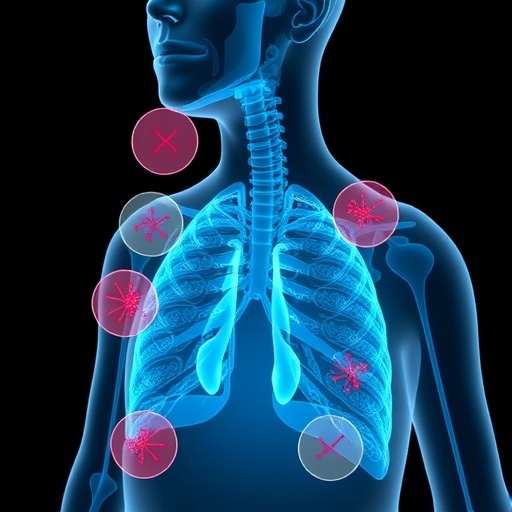
In a groundbreaking development in respiratory medicine, a comprehensive new study has uncovered the complex interplay between severe asthma and multiple coexisting health conditions—often unnoticed yet critically influential—influencing patient outcomes on a vast scale. Researchers conducted an extensive meta-analysis utilizing data from 2,700 patients across 11 European countries, revealing that severe asthma rarely exists in isolation. Instead, it is frequently compounded by a constellation of other chronic health disorders, which collectively affect disease control, exacerbation frequency, and treatment responsiveness.
This pioneering investigation sheds light on multimorbidity phenotypes—distinct clusters of co-occurring diseases—and their significant role in shaping the clinical landscape of severe asthma. The study identifies three reproducible patient profiles that embody the most prevalent disease combinations linked to severe asthma. These include individuals with high corticosteroid usage who manifest drug-induced osteoporosis and associated weight gain; patients burdened with severe allergic manifestations such as eczema and hay fever; and a subgroup characterized by chronic sinusitis accompanied by nasal polyposis.
Understanding this multidimensionality transforms the traditional monolithic view of asthma management. It suggests that asthma should no longer be treated as a siloed respiratory condition but as a systemic disorder with a spectrum of pathological crosstalk. This approach posits that the integration of multimorbidity profiling into clinical pathways could optimize therapeutic interventions, reducing exacerbation rates and improving overall quality of life for those with severe asthma.
The corticosteroid-dependent phenotype underscores a paradox inherent in modern asthma treatment. While corticosteroids remain a mainstay for mitigating airway inflammation, their chronic administration is linked to significant adverse effects including osteoporosis, obesity, and metabolic disruptions. This finding calls for a delicate balance in therapeutic strategies, promoting the exploration of steroid-sparing treatments and vigilant monitoring for systemic complications.
Simultaneously, the allergic phenotype illustrates how immune dysregulation extends beyond the lungs, implicating the skin and upper airway tissues. The concurrence of eczema, hay fever, and allergic rhinitis within this subgroup points to an overarching atopic diathesis driven by complex immunological pathways involving IgE-mediated hypersensitivity and mast cell activation, highlighting potential avenues for targeted biologic therapies.
The third phenotype involving chronic sinusitis and nasal polyps emphasizes the bidirectional relationship between upper and lower airway diseases. The unified airway hypothesis, validated through this research, implicates shared inflammatory mediators and cellular mechanisms bridging sinonasal and bronchial pathology. Addressing sinus pathology in these patients could therefore represent an adjunctive therapeutic angle to alleviate asthma symptoms.
The multidimensional data analysis, conducted under the auspices of the Severe Heterogeneous Asthma Research collaboration: Patient centred (SHARP), lays the groundwork for a paradigm shift. By mapping disease clusters rather than isolated conditions, it challenges the prevailing clinical trials design, urging an integrative patient-centric framework to capture real-world complexities. Such precision phenotyping may facilitate personalized medicine approaches, wherein therapies are tailored not only based on asthma severity but also on the specific constellation of comorbidities.
Importantly, the insights from this meta-analysis extend beyond the immediate clinical arena. They underscore the necessity for multidisciplinary care coordination, where pulmonologists, allergologists, endocrinologists, and otolaryngologists cooperate to address the full spectrum of patient needs. This holistic perspective could curtail cumulative treatment side effects, diminish healthcare resource utilization, and ultimately improve prognosis.
Additionally, the research highlights the pressing need to delve deeper into the molecular and genetic underpinnings of these multimorbidity phenotypes. Integrating omics technologies—genomics, proteomics, metabolomics—could unravel novel biomarkers predictive of phenotype emergence, disease trajectory, and treatment responsiveness, paving the way for earlier interventions and preventive strategies.
The revelation that most severe asthma patients carry an average of three or more accompanying morbidities elucidates why conventional symptom-based management has had limited success. It mandates a re-examination of diagnostic criteria and outcome measures to incorporate comorbidity indices and patient-reported impact assessments, thereby refining clinical trial endpoints and therapeutic benchmarks.
By emphasizing the heterogeneity intrinsic to severe asthma, this study invites a departure from one-size-fits-all protocols. Instead, it advocates for dynamic, adaptive care models that evolve with patient profiles, enabling clinicians to anticipate disease exacerbations and mitigate cumulative morbidity through proactive, multidimensional interventions.
The potential public health implications are profound, as millions across Europe and worldwide living with severe asthma may benefit from improved diagnostic precision and customized treatment regimens informed by this work. The ultimate goal is to enhance quality of life and reduce mortality associated with asthma’s systemic complications.
In conclusion, this seminal research conducted by esteemed teams from the University of Southampton, University Hospital Southampton, and NIHR Southampton Biomedical Research Centre, and published in The Lancet, sets a new standard for understanding severe asthma. It compels the scientific and medical communities to recognize and address the intricate network of comorbid illnesses that amplify disease burden, heralding a new era of integrated respiratory care.
News Publication Date: 30-Apr-2026
Web References:
https://dx.doi.org/10.1016/j.lanepe.2026.101600
References:
Kurukulaaratchy RJ et al. Multimorbidity phenotypes and associated characteristics in severe asthma: An observational study of European severe asthma registries. The Lancet Regional Health – Europe. 2026.
Cite Scienmag News
Denise Maddox. (May 19, 2026). Study Reveals Multiple Health Conditions Common Among Severe Asthma Patients. Scienmag. https://scienmag.com/study-reveals-multiple-health-conditions-common-among-severe-asthma-patients/
Denise Maddox. "Study Reveals Multiple Health Conditions Common Among Severe Asthma Patients." Scienmag, 19 May 2026, https://scienmag.com/study-reveals-multiple-health-conditions-common-among-severe-asthma-patients/. Accessed 4 September 2026.
Denise Maddox. "Study Reveals Multiple Health Conditions Common Among Severe Asthma Patients." Scienmag. May 19, 2026. https://scienmag.com/study-reveals-multiple-health-conditions-common-among-severe-asthma-patients/


