


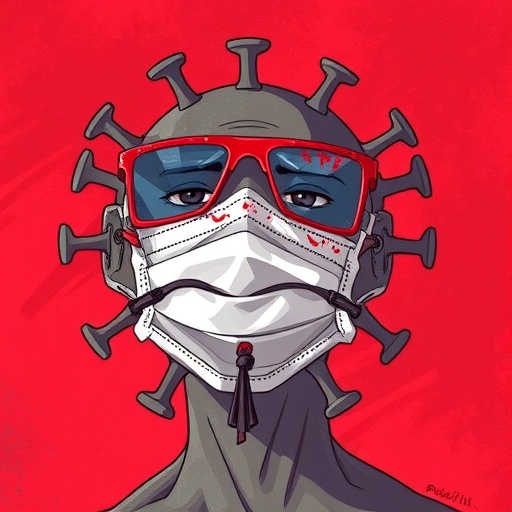
During the COVID-19 pandemic, a disturbing surge in anti-Asian discrimination and violence emerged globally, revealing complex psychological underpinnings beyond the initial fear of infection. Recent research conducted by Murdoch University’s School of Psychology sheds light on the motivational forces driving this phenomenon, notably highlighting the predominance of anger rather than mere pathogen avoidance as a fundamental driver of aggressive anti-Asian behaviors. This nuanced understanding challenges conventional disease-avoidance frameworks and invites a deeper exploration of the emotional and sociocultural factors amplifying discriminatory violence during public health crises.
Historically, epidemic outbreaks have incited fear-based behaviors aimed at avoiding contagion, a behavior rooted in disease-avoidance psychology. This perspective postulates that individuals instinctively distance themselves from those perceived as infectious to minimize the risk of transmission. While this mechanism partly explains social distancing and avoidance behaviors witnessed during COVID-19, it fails to fully account for the surge in overt hostility, confrontations, and even physical attacks directed at Asian communities, often framed erroneously as vectors of the virus.
Dr. Amy Lim from Murdoch University elucidates this paradox by differentiating avoidance behaviors from aggressive confrontational acts. “Avoidance naturally reduces contact and potential transmission, but aggression paradoxically increases risk by provoking conflict and exposure,” Dr. Lim explains. The research highlights that such aggressive responses implicate other psychological drivers, principally anger, which is mobilized in response to perceived threats to communal well-being. This anger manifests as a punitive and exclusionary reaction against the outgroup identified as responsible for the crisis.
The study explores how anger serves as a powerful motivational force that transcends basic pathogen avoidance. When an outgroup is framed as a societal threat, anger motivates individuals not merely to distance but to actively punish or exclude, reinforcing social boundaries and heightening intergroup conflict. This framework aligns with broader intergroup threat theories in social psychology, which argue that perceived threats to in-group security or values provoke hostile emotions and behaviors aimed at mitigating those threats.
Such dynamics were exacerbated by media narratives and political discourses during the pandemic, which frequently linked Asian populations with the origination and spread of COVID-19. These socio-political narratives acted as catalysts, intensifying pre-existing prejudices and stereotypes, and thereby magnifying anger-driven discrimination. The confluence of historical bias, misinformation, and crisis-induced fear created fertile ground for the emotional activation of hostility, particularly within Western societies.
Empirical data collected through surveys reveal intriguing cross-national differences in the intensity of these emotional drivers. The research compared Caucasian participants in the United States and Australia, finding that while anger was a salient motivator of aggressive discrimination in both countries, its intensity was significantly higher in American respondents. This suggests that sociocultural and political contexts modulate not only the prevalence but also the fervor of anger in shaping discriminatory conduct, reflecting divergent national histories, media ecosystems, and political climates.
Importantly, the research emphasizes that these psychological processes should not be construed as attributing inherent prejudice or xenophobia to any racial or ethnic group wholesale. Instead, it advocates for understanding how anger can be strategically activated by societal narratives under specific social and political conditions. Recognition of this mechanism highlights the potential for intervention through the alteration of harmful narratives and reduction of incendiary rhetoric that frames outgroups as existential threats.
The implications of these findings are profound in the context of public health and social cohesion. Addressing anger as a root emotional driver is crucial for developing strategies to combat discrimination and violence during ongoing or future global crises. Public health messaging and media communications must carefully navigate narratives to prevent the stigmatization of vulnerable groups, focusing instead on inclusive and fact-based approaches that do not scapegoat minorities.
Dr. Lim advocates for multidisciplinary collaboration in addressing the psychosocial fallout of pandemics. Engaging experts in social psychology, communication, epidemiology, and policy-making can foster comprehensive approaches that mitigate anger-driven responses. Efforts such as community dialogues, counter-narrative campaigns, and education about the social origins of disease stigma can play pivotal roles in reducing hostility and promoting resilience.
The study’s novel insight into the distinct motivational processes underlying different forms of discrimination enriches the scientific discourse on pandemics and intergroup relations. By delineating the psychological distinction between avoidance motivated by fear and aggression fueled by anger, it offers a refined schema to interpret the complex social dynamics observed during COVID-19. This schema can inform tailored interventions that address specific emotional and cognitive mechanisms rather than adopting one-size-fits-all approaches.
Ultimately, the research compels societies to reflect on the ethical and social dimensions of crisis response. It underscores how fear of disease, when entwined with inflammatory social narratives, can give rise to damaging cycles of exclusion and violence. Recognizing the psychological roots of such behaviors becomes a moral imperative to build more compassionate and equitable communities capable of withstanding future global threats without resorting to scapegoating and division.
This groundbreaking research is documented in the forthcoming article titled “Pathogen avoidance versus anger: the motivation underlying Asian hate,” published in the Journal of Social Psychology. Through rigorous survey methodologies and cross-cultural comparisons, it contributes vital knowledge that can shape future public health strategies and social policies aimed at safeguarding marginalized groups during times of collective crisis.
Cite Scienmag News
Kristina Jarvis. (May 19, 2026). COVID Racism Fueled by Factors Beyond Just Fear of Infection. Scienmag. https://scienmag.com/covid-racism-fueled-by-factors-beyond-just-fear-of-infection/
Kristina Jarvis. "COVID Racism Fueled by Factors Beyond Just Fear of Infection." Scienmag, 19 May 2026, https://scienmag.com/covid-racism-fueled-by-factors-beyond-just-fear-of-infection/. Accessed 3 September 2026.
Kristina Jarvis. "COVID Racism Fueled by Factors Beyond Just Fear of Infection." Scienmag. May 19, 2026. https://scienmag.com/covid-racism-fueled-by-factors-beyond-just-fear-of-infection/


