


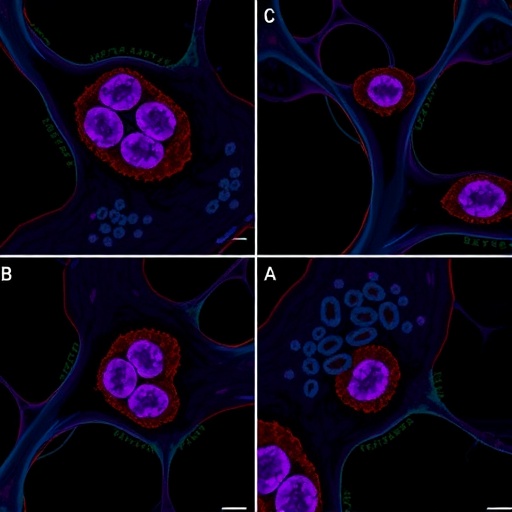
In a groundbreaking advancement that promises to revolutionize the landscape of metastatic breast cancer research, a team of scientists has introduced an innovative preclinical platform derived directly from circulating tumor cells (CTCs). This model, known as a circulating tumor cell-derived xenograft (CTC-xenograft), holds immense potential to deepen our understanding of metastatic disease dynamics and accelerate the development of targeted therapies for patients grappling with this formidable condition. Published in the British Journal of Cancer in May 2026, this novel approach underscores a pivotal shift in oncological research strategies.
Metastatic breast cancer remains a daunting clinical challenge, often characterized by its ability to evade conventional treatments and establish secondary tumors in distant organs. The traditional preclinical models, typically reliant on established cell lines or tumor biopsies, have been limited in their capacity to faithfully mimic the intricacies of metastatic dissemination. The introduction of the CTC-xenograft model marks a transformative moment, as it harnesses the biological material circulating within patients’ own bloodstream, thereby providing a more authentic representation of tumor heterogeneity and metastatic potential.
Circulating tumor cells, which are shed from primary tumors into the bloodstream, have long been recognized as both biomarkers and mediators of metastasis. However, their rarity and fragile nature posed significant obstacles to experimental manipulation. The breakthrough reported by Kahounová, Hrušková, Drápela, and colleagues involves successful isolation and implantation of these elusive cells into immunocompromised mice, leading to the formation of xenografts that recapitulate the donor patient’s metastatic tumor landscape with remarkable fidelity.
One of the major technical triumphs enabling this study was the refinement of microfluidic and immunoaffinity-based isolation techniques, allowing researchers to capture viable CTCs at clinically relevant intervals. Unlike bulk tumor biopsies, which offer a static snapshot often unreflective of tumor evolution, CTCs provide a dynamic window into ongoing metastatic processes and tumor response to therapy. The resultant CTC-xenografts thus represent not only a snapshot but a living model capable of evolving in tandem with the patient’s disease state.
In establishing these xenografts, the researchers meticulously validated their biological relevance through a series of comparative analyses. Histopathological examinations and genomic profiling confirmed that the CTC-derived tumors mirrored key characteristics of the primary metastatic lesions, including morphology, mutational burden, and gene expression signatures related to invasiveness and therapy resistance. This validation solidifies the CTC-xenograft as an indispensable tool bridging preclinical studies and patient reality.
Beyond the biological insights, the CTC-xenograft platform heralds a paradigm shift in therapeutic testing. Conventional drug screening in cell lines or PDX (patient-derived xenograft) models often fails to predict clinical response accurately, primarily due to lack of representation of metastatic traits. With CTC-xenografts, researchers can perform drug efficacy studies on models that faithfully recapitulate metastatic heterogeneity, thereby refining treatment regimens to be more personalized and effective.
Moreover, the temporal accessibility of CTCs means that sequential sampling from patients during their treatment course can be used to generate updated xenografts. This dynamic approach opens unprecedented doors to monitoring tumor evolution, understanding mechanisms of acquired drug resistance, and tailoring real-time therapeutic interventions. It brings the cancer research community closer than ever to the concept of truly precision oncology.
The clinical implications of these revelations are profound. With breast cancer being one of the most prevalent malignancies worldwide and metastatic disease accounting for the majority of breast cancer-related deaths, innovations like CTC-xenografts bear the promise of dramatically altering patient prognoses. The ability to model metastasis accurately in vivo provides a critical platform for identifying novel drug targets, testing combination therapies, and evaluating immunomodulatory strategies.
Despite the promise, several hurdles remain before this platform can be fully integrated into routine research pipelines or clinical decision-making. The technical demands of isolating sufficient viable CTCs, institutional capacities for xenograft generation, and the ethical considerations inherent in working with patient-derived materials require further attention. Nonetheless, the study paves the way for resolving these challenges through interdisciplinary collaboration and technological innovation.
The research team also explored the molecular underpinnings of metastatic propensity by comparing CTC populations with respective primary tumors and established xenografts. They identified distinct subpopulations within the CTCs exhibiting differential expression of genes linked to epithelial-mesenchymal transition (EMT), stemness, and immune evasion, highlighting the complex heterogeneity within circulating tumor compartments. Such insights could direct future strategies aiming to disrupt early steps of metastasis.
Importantly, the CTC-xenograft platform offers a unique opportunity for biomarker discovery. By longitudinally assessing CTCs and corresponding xenografts, investigators can identify signatures predictive of disease progression or therapeutic susceptibility. This capability could refine patient stratification and guide adaptive trials that optimize treatment outcomes while minimizing toxicities.
The enthusiasm for this technology is reflected in ongoing collaborations aiming to extend its application beyond breast cancer. Given that metastasis is the leading cause of mortality across multiple cancer types, leveraging the CTC-xenograft methodology could catalyze similar breakthroughs for lung, prostate, and colorectal cancers. Such cross-cancer applications could unify metastatic research under a common, versatile toolkit.
In conclusion, the advent of circulating tumor cell-derived xenografts represents a stunning leap forward in modeling and understanding metastatic breast cancer. By faithfully capturing and propagating the biology of disseminated tumor cells, this platform injects new vigor into efforts to decode metastasis and devise more effective, patient-specific interventions. As the field embraces this innovation, the prospects for transforming metastatic breast cancer from a terminal diagnosis into a manageable condition become increasingly tangible.
Future research developing this platform will likely emphasize scalability, automation of CTC isolation, and integration with multi-omic profiling. These advancements will not only increase throughput but also deepen biological insight, fueling a cycle of discovery and clinical translation. The study by Kahounová et al. epitomizes how marrying cutting-edge technology with clinical relevance can lay the foundation for a new era in cancer therapeutics.
As this field evolves, so too will the hope of millions battling metastatic breast cancer worldwide. The CTC-derived xenograft model may well become the cornerstone of personalized metastasis research, charting a course toward durable remissions and, eventually, cures. With such transformative tools at hand, the battle against metastatic breast cancer is gaining both momentum and newfound strategic clarity.
Cite Scienmag News
Nathaniel Bowman. (May 18, 2026). Circulating Tumor Cell Xenografts Advance Breast Cancer Research. Scienmag. https://scienmag.com/circulating-tumor-cell-xenografts-advance-breast-cancer-research/
Nathaniel Bowman. "Circulating Tumor Cell Xenografts Advance Breast Cancer Research." Scienmag, 18 May 2026, https://scienmag.com/circulating-tumor-cell-xenografts-advance-breast-cancer-research/. Accessed 4 September 2026.
Nathaniel Bowman. "Circulating Tumor Cell Xenografts Advance Breast Cancer Research." Scienmag. May 18, 2026. https://scienmag.com/circulating-tumor-cell-xenografts-advance-breast-cancer-research/


