


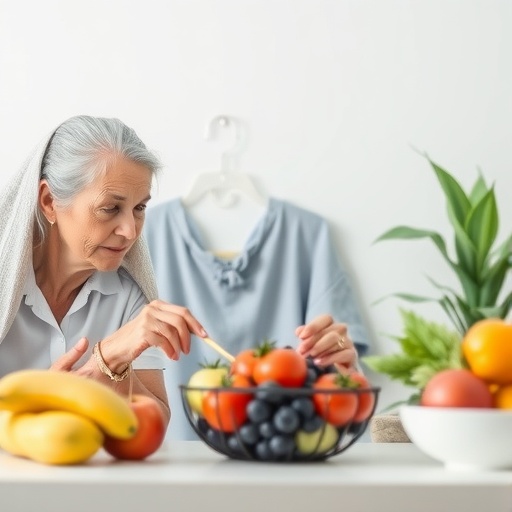
As our global population ages rapidly, understanding the intricate relationship between nutrition and aging physiology becomes increasingly critical. In a groundbreaking cross-sectional study published in BMC Geriatrics, researchers reveal a compelling link between malnutrition and reduced oxygen radical absorbance capacity (ORAC) in older adults. This discovery sheds new light on the oxidative stress vulnerabilities that malnourished elderly individuals face, an issue with potentially profound clinical implications.
Oxidative stress occurs when the body’s production of reactive oxygen species (ROS) overwhelms its antioxidant defenses, leading to cellular damage and accelerated aging processes. The oxygen radical absorbance capacity is a key biomarker that quantifies the antioxidant potential of plasma, reflecting the body’s ability to neutralize harmful free radicals. A diminished ORAC signal indicates a compromised antioxidant defense, which can exacerbate age-related degenerative conditions. The new research conducted by Polat and colleagues meticulously details how malnutrition—a prevalent yet often overlooked condition in older populations—significantly correlates with reduced ORAC levels.
Malnutrition in older adults emerges from an intricate web of physiological, psychological, and social factors. Age-associated decreases in appetite, altered taste perception, chronic illnesses, and reduced absorption efficiencies converge, compromising nutritional intake. This nutritional insufficiency subsequently disrupts the optimal balance of endogenous antioxidants such as glutathione, superoxide dismutase, and catalase, as well as dietary antioxidants provided by fruits, vegetables, and vitamins. Polat et al.’s study comprehensively establishes that malnourished seniors display a stark reduction in their circulating antioxidant capacity, rendering their cells more vulnerable to oxidative injury.
The study’s methodology features a robust cross-sectional design incorporating both clinical nutritional assessments and precise biochemical quantifications of ORAC in plasma samples. By employing validated nutritional screening tools alongside advanced spectrophotometric assays to measure antioxidant capacity, the research team was able to draw statistically significant correlations between nutritional status and oxidative resilience. These data underscore the importance of nutritional optimization as a strategic intervention to bolster antioxidant defenses in the aging population.
From a mechanistic perspective, the attenuation of ORAC in malnourished older adults can be attributed to multiple biochemical pathways. Deficiencies in essential micronutrients such as vitamins C and E, zinc, and selenium impair the enzymatic antioxidant systems. Simultaneously, protein-energy malnutrition reduces the synthesis of endogenous antioxidant enzymes, exacerbating oxidative imbalance. The resultant surge in ROS initiates damage to nucleic acids, lipids, and proteins, fueling a cascade of cellular dysfunction implicated in neurodegeneration, sarcopenia, and cardiovascular diseases.
Importantly, the study provides fresh insights into how malnutrition not only affects antioxidant capacity but also may contribute indirectly to a decline in overall physiological resilience. Compromised ORAC levels can weaken immune function, amplify inflammatory responses, and impair mitochondrial efficiency—factors that collectively accelerate morbidity and mortality in elderly populations. Polat et al. argue for an integrated clinical approach whereby routine nutritional evaluation and antioxidant capacity monitoring guide personalized interventions.
This research advances the concept that therapeutic nutrition should extend beyond caloric sufficiency to encompass the optimization of antioxidant defenses. Tailored dietary supplementation with antioxidant-rich foods, micronutrient repletion, and possibly pharmacological enhancement of endogenous antioxidant systems may constitute critical components in geriatric care. The study’s findings highlight an urgent need for healthcare providers to prioritize nutritional screening as a vital sign of aging health, especially in institutionalized or frail elderly.
Malnutrition’s insidious effects on oxidative stress also have significant public health implications. With the aging demographic ballooning worldwide, the burden of oxidative damage-linked diseases is poised to escalate dramatically. Recognizing malnutrition as a modifiable risk factor linked to diminished ORAC offers a feasible target for early intervention strategies designed to prolong healthspan and preserve functional independence among seniors.
The investigators further discuss potential avenues for longitudinal studies to explore causality and therapeutic efficacy rigorously. While their cross-sectional design elucidates strong associations, prospective trials incorporating nutritional therapeutics and serial ORAC measurement could establish definitive clinical protocols. Moreover, integrating genetic and metabolomic profiling may unravel inter-individual variability in antioxidant capacity responses to nutritional interventions.
Tapping into cutting-edge antioxidant research, the study invites exploration of novel biomolecules such as polyphenols, carotenoids, and flavonoids alongside traditional vitamins and minerals. Emerging evidence suggests that these compounds can modulate redox signaling and inflammation, offering a multipronged approach to combat oxidative stress in malnourished elderly patients. Incorporating bioavailability considerations and personalized nutrition frameworks will be paramount in translating these findings into practice.
Beyond the clinical realm, this research emphasizes the urgency of addressing elder malnutrition with holistic strategies encompassing social, psychological, and dietary dimensions. Food insecurity, depression, and cognitive decline often accompany nutritional deficits in aging individuals, creating a vicious cycle of deteriorating health and function. Thus, community-based programs promoting nutritional education, meal support, and antioxidant-rich dietary access could dramatically alter the trajectory of age-associated oxidative stress-related pathologies.
In conclusion, Polat et al. present compelling evidence positioning malnutrition as a significant determinant of reduced antioxidant capacity in older adults. Their study enhances our understanding of the oxidative stress nexus in aging and lays the groundwork for novel integrative interventions targeting nutritional restoration and antioxidant defense enhancement. As the elderly population swells globally, these insights may pave the way for improving quality of life and mitigating chronic disease burden through targeted nutritional therapeutics.
The ultimate takeaway resonates deeply: nutrition profoundly influences the body’s intrinsic capacity to stave off oxidative damage, especially in advanced age. Prioritizing nutritional well-being emerges not only as a strategy for survival but as a fundamental pillar for sustaining vitality and independence into later years. This research beckons for a paradigm shift—viewing malnutrition not merely as a symptom but as a central contributor to molecular aging processes that can be actively and effectively countered.
As science continues to unravel the complex interactions between diet, antioxidants, and the aging process, this study provides a vital link that bridges nutritional science and geriatric medicine. Embracing the challenge to detect and rectify malnutrition early could yield transformative benefits, staving off the detrimental impacts of oxidative stress and ushering in a new era of healthy aging.
Cite Scienmag News
Daisy Hatcher. (May 15, 2026). Malnutrition Lowers Antioxidant Capacity in Older Adults. Scienmag. https://scienmag.com/malnutrition-lowers-antioxidant-capacity-in-older-adults/
Daisy Hatcher. "Malnutrition Lowers Antioxidant Capacity in Older Adults." Scienmag, 15 May 2026, https://scienmag.com/malnutrition-lowers-antioxidant-capacity-in-older-adults/. Accessed 5 September 2026.
Daisy Hatcher. "Malnutrition Lowers Antioxidant Capacity in Older Adults." Scienmag. May 15, 2026. https://scienmag.com/malnutrition-lowers-antioxidant-capacity-in-older-adults/


