


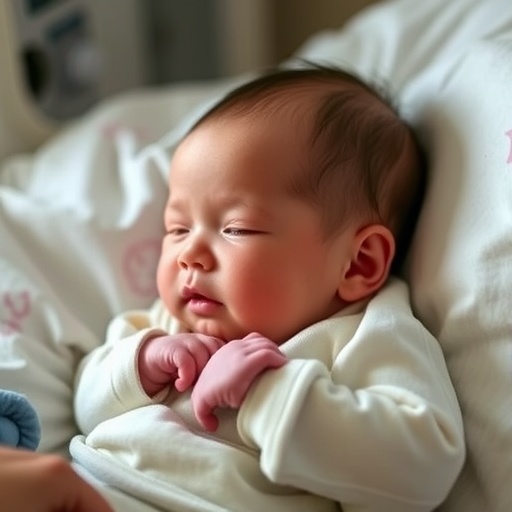
In the delicate arena of neonatal intensive care, the auditory environment surrounding very preterm (VP) infants is emerging as a critical factor influencing early brain development. These infants, born weeks before their expected due dates, navigate a vulnerable phase where their neurological systems are rapidly maturing outside the womb. Recent research has thrown light on how the quality and type of sounds these infants experience can profoundly shape their cognitive and sensory outcomes, underscoring an aspect of neonatal care that has previously received limited attention.
Very preterm infants often spend weeks in NICUs, environments traditionally designed for medical stability rather than sensory enrichment. However, the natural auditory experiences that typically begin in utero continue to play an essential role postnatally, contributing to the unfolding architecture of the brain. Researchers are now exploring the dynamic shifts in auditory exposure that VP infants face during their hospitalization, focusing especially on the time before they reach term-equivalent age—a milestone marking the developmental stage they would have reached if born at full term.
The study, conducted by Côté-Corriveau, Cherkerzian, Inder, and colleagues and published in Pediatric Research in 2026, meticulously charted the auditory environments of VP infants. By analyzing how different room types in NICUs and varying parental presences affect auditory stimulation, they revealed profound insights into the sensory challenges and opportunities these infants encounter. Their findings emphasize not just the presence of sound but the nature and trajectory of auditory experiences during a crucial window of brain development.
NICUs generally have two main room types: open wards, which accommodate multiple infants in a single space, and single-family rooms designed to minimize clinical noise and promote individualized care. This distinction is pivotal because each environment offers a unique acoustic landscape. Open wards tend to be noisier with unpredictable interruptions, whereas single-family rooms can provide more controlled, quieter surroundings. However, quieter does not necessarily mean more beneficial when it comes to auditory stimulation for preterm infants.
The investigation highlighted that although single-family rooms reduce noxious noise, they also present a paradox: a potential decrease in meaningful auditory stimuli. Meaningful sound, such as parental speech and naturalistic environmental noises, plays an instrumental role in shaping neural circuits responsible for language, attention, and emotional regulation. Thus, the absence of appropriate auditory inputs, even in quieter settings, might inadvertently hinder optimal neural development.
Parental presence emerged as a crucial modulator of these auditory environments. Infants whose parents were regularly present experienced markedly different soundscapes compared to those with less frequent visits. Parental voices, singing, and gentle interactions enrich the auditory milieu with complex, patterned sounds that foster early language acquisition and emotional bonding. The study demonstrated a positive correlation between parental engagement and enriched auditory exposure, underscoring the significance of family-centered care models in NICUs.
Furthermore, the research explored the temporal changes in auditory exposure, revealing that as VP infants approached term-equivalent age, there was a natural increase in both the quantity and quality of meaningful auditory experiences, especially in rooms that supported parental presence. This trajectory aligns with critical periods of brain plasticity, suggesting that targeted interventions during this window can maximize neurodevelopmental benefits.
Technologically, the researchers employed sophisticated auditory monitoring tools capable of differentiating between types of sounds—whether mechanical noises from medical devices, infant cries, parental speech, or ambient environmental sounds. This granularity allowed for a nuanced understanding of the complex acoustic ecosystem surrounding these infants. The study found that mechanical and high-frequency noises, often associated with stress responses, were less beneficial compared to low-frequency, rhythmic, and human-produced sounds.
Given these findings, the study advocates for an integrated approach to NICU design and care protocols. This includes optimizing room acoustics to balance necessary clinical sounds with enriching auditory stimuli, promoting strategies to increase parental presence and involvement, and incorporating technologies that deliver developmentally appropriate soundscapes. Such approaches could recalibrate the sensory experiences of VP infants to better mimic the natural in utero environment, which is rich in maternal voice and subtle environmental cues.
Moreover, the implications extend beyond auditory development. Early sound environments influence broader brain networks, including those governing attention, memory, and emotional regulation. Thus, enriching auditory experiences may contribute to improved long-term cognitive outcomes, reduced behavioral disorders, and enhanced social-emotional development in children born prematurely.
This research resonates deeply with the paradigm shift in neonatology, where family involvement and developmental care are gaining recognition as essential complements to medical interventions. The study’s evidence suggests that auditory enrichment should be a standard element of NICU protocols, implemented through staff training, parental education, and environmental modifications.
Importantly, the study also cautions against excessive noise exposure, which can be detrimental. Loud, erratic noises typical of bustling NICUs can induce stress responses, disrupt sleep cycles, and potentially impair neurological outcomes. The challenge lies in striking an optimal balance—reducing harmful sounds while promoting beneficial, meaningful auditory experiences.
The next frontier in this field involves leveraging advances in neuroimaging and auditory neuroscience to correlate sound exposure patterns with specific brain development markers in preterm infants. Such interdisciplinary research could refine guidelines for NICU sound environments and lead to personalized auditory care strategies tailored to each infant’s developmental trajectory.
In conclusion, the evolution of the auditory environment during a preterm infant’s stay in the NICU plays an indispensable role in shaping early neurodevelopment. By illuminating how room design and parental presence influence the soundscape, the work by Côté-Corriveau and colleagues opens promising avenues for improving neonatal care. Their findings remind us that the essence of healing in the NICU extends beyond medical technology—it embraces the power of sound to nurture fragile beginnings and foster resilient futures.
Cite Scienmag News
Harold Sullivan. (May 13, 2026). Auditory Environment of Preterm Infants: Room and Parents Impact. Scienmag. https://scienmag.com/auditory-environment-of-preterm-infants-room-and-parents-impact/
Harold Sullivan. "Auditory Environment of Preterm Infants: Room and Parents Impact." Scienmag, 13 May 2026, https://scienmag.com/auditory-environment-of-preterm-infants-room-and-parents-impact/. Accessed 3 September 2026.
Harold Sullivan. "Auditory Environment of Preterm Infants: Room and Parents Impact." Scienmag. May 13, 2026. https://scienmag.com/auditory-environment-of-preterm-infants-room-and-parents-impact/


