


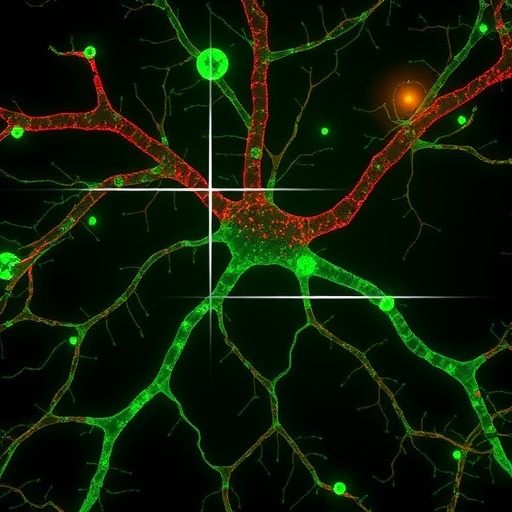
In a groundbreaking study published in Nature Communications, researchers have uncovered a pivotal molecular mechanism that may redefine our understanding of neuromyelitis optica spectrum disorders (NMOSD). This devastating autoimmune condition, characterized by inflammation and demyelination primarily in the optic nerves and spinal cord, has long puzzled scientists due to its complex pathology involving astrocytes, the central nervous system’s star-shaped glial cells. The research led by Cui, Gong, Wang, and colleagues reveals how endothelial cell-secreted SPARC (Secreted Protein Acidic and Rich in Cysteine) profoundly influences astrocyte function by suppressing CD59 expression, thereby exacerbating astrocytopathy and tissue damage in a mouse model of NMOSD.
The intricate cellular crosstalk between endothelial cells and astrocytes emerges as a critical frontier in neuroimmunology. Endothelial cells, which line the interior surface of blood vessels, not only form the blood-brain barrier but also actively mediate immune responses in the brain. SPARC, a matricellular protein secreted by endothelial cells, has been implicated in various physiological and pathological processes, including tissue remodeling, angiogenesis, and immune regulation. This study now positions SPARC as a negative regulator of astrocytic CD59, a membrane-bound complement inhibitor essential for protecting cells from complement-mediated lysis.
The authors utilized a sophisticated mouse model mimicking NMOSD to demonstrate that aberrant secretion of SPARC by endothelial cells leads to a marked downregulation of CD59 on astrocytes. This loss renders astrocytes vulnerable to complement attack, which in turn promotes astrocytopathy characterized by cellular dysfunction and structural disruption. Given that astrocytes are vital for neuronal support, blood-brain barrier maintenance, and neuroinflammation modulation, their impairment can precipitate widespread neuropathology seen in NMOSD.
Delving into the mechanistic depths, the research team employed state-of-the-art molecular biology techniques, including in vivo gene expression analysis, immunohistochemistry, and electron microscopy, to delineate the spatial and temporal dynamics of SPARC-CD59 interplay. Their data elucidate a cascade whereby endothelial stress or activation triggers SPARC secretion, which then binds to yet unidentified cell surface receptors or interacts with the extracellular matrix to suppress CD59 transcription and/or protein stability in astrocytes. This multi-level inhibition compromises the astrocytes’ inherent defense against the complement system, a crucial effector pathway in NMOSD pathology.
The complement system’s role in NMOSD has been a focal point of research, with therapies nowadays targeting complement components, such as C5, to mitigate disease activity. However, understanding upstream modulators of complement susceptibility in astrocytes remained elusive until now. The identification of SPARC as a modulator of CD59 expands the therapeutic landscape, suggesting that targeting endothelial SPARC or its downstream signaling pathways could potentially restore astrocytic protection and halt disease progression.
Intriguingly, the study also highlights a feedback loop wherein damaged astrocytes further induce endothelial cells to augment SPARC secretion, perpetuating a vicious cycle of complement-mediated injury. This reciprocal interaction emphasizes the importance of microvascular-astrocyte communication in neuroinflammatory diseases and opens avenues for multi-target therapeutic strategies that address both endothelial and glial cell dysfunctions concurrently.
To validate these findings, the authors performed functional assays demonstrating that genetic ablation or pharmacological inhibition of SPARC in mice significantly ameliorates astrocytic CD59 expression loss and reduces complement deposition and astrocyte degeneration in experimental NMOSD. Behavioral analyses paralleled these molecular improvements, revealing diminished motor deficits and visual impairments, hallmarks of NMOSD symptomatology in murine models.
From a translational perspective, these results provide a compelling rationale to investigate SPARC levels and astrocytic CD59 expression in human NMOSD patients. Preliminary patient data, although not the primary focus of this paper, suggest concordant patterns of SPARC upregulation and astrocytic complement vulnerability in biopsied central nervous system tissues. This concordance reinforces the clinical relevance of the murine findings and their potential implications for patient stratification and targeted therapy development.
Beyond NMOSD, the implications of SPARC-mediated astrocytic vulnerability may extend to other neuroinflammatory and neurodegenerative disorders where complement dysregulation and astrocyte pathology are implicated, such as multiple sclerosis, Alzheimer’s disease, and ischemic stroke. Understanding the molecular switches that render astrocytes susceptible to immune attack could revolutionize approaches to protect the central nervous system’s homeostasis and repair mechanisms.
The study further underscores the evolving appreciation of the neurovascular unit’s complexity, where endothelial cells, pericytes, astrocytes, neurons, and immune cells continuously interact to maintain brain integrity. Dysregulation of any component can have cascading effects, as elegantly demonstrated by the SPARC-CD59 axis in this NMOSD model. This model exemplifies the necessity of integrative research that considers brain pathology in the context of multicellular dynamics rather than isolated cellular defects.
Technical insights into how SPARC suppresses CD59 at a molecular level remain partially uncharted territory, but the authors provide compelling evidence that transcriptional repression and altered post-translational modification might both contribute. They propose further research into SPARC’s interaction with signaling pathways like TGF-beta or NF-kB, known regulators of immune responses and cell survival, which might mediate CD59 downregulation.
The research exemplifies the power of combining genetic mouse models with cutting-edge molecular pathology to unravel disease-specific mechanisms. It also highlights the importance of glial biology in neuroimmunology, an often underappreciated yet crucial piece of the neurological disease puzzle. Given that astrocytes are critical players in brain function and immune regulation, protecting their integrity could represent a paradigm shift in treating autoimmune neuroinflammatory diseases.
In conclusion, this seminal study offers a revolutionary perspective on NMOSD pathogenesis by identifying endothelial SPARC as a suppressor of astrocytic CD59 expression, thus amplifying complement-mediated damage and astrocytopathy. The findings pave the way for novel therapeutic approaches focused on modulating the neurovascular unit’s microenvironment to confer astrocyte resilience. Such strategies could dramatically improve outcomes for patients suffering from NMOSD and potentially other neurodegenerative diseases marked by glial and vascular dysfunction.
As the scientific community continues to decipher the complexities of NMOSD and related disorders, this study stands out as a beacon, illuminating the intricate cellular dialogues that underlie devastating neurological conditions. Future research anchored on these discoveries promises to bring us closer to highly effective, targeted interventions that not only blunt immune attacks but also restore neural network integrity and function.
Cite Scienmag News
Cassandra Pierce. (May 13, 2026). Endothelial SPARC Drives Astrocyte Damage in NMOSD. Scienmag. https://scienmag.com/endothelial-sparc-drives-astrocyte-damage-in-nmosd/
Cassandra Pierce. "Endothelial SPARC Drives Astrocyte Damage in NMOSD." Scienmag, 13 May 2026, https://scienmag.com/endothelial-sparc-drives-astrocyte-damage-in-nmosd/. Accessed 6 September 2026.
Cassandra Pierce. "Endothelial SPARC Drives Astrocyte Damage in NMOSD." Scienmag. May 13, 2026. https://scienmag.com/endothelial-sparc-drives-astrocyte-damage-in-nmosd/


