


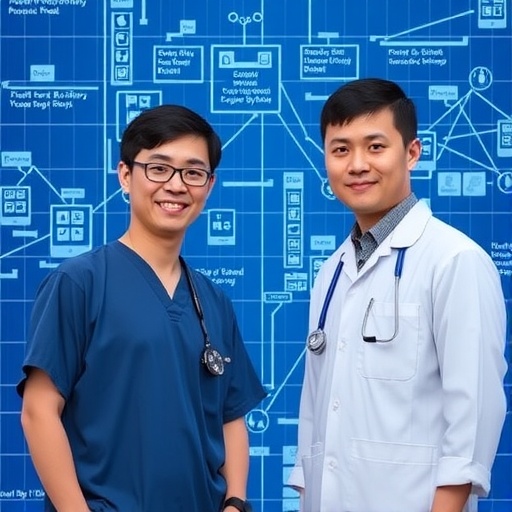
Singapore is witnessing a transformative evolution in medical education through the innovative expansion of Duke-NUS Medical School’s Pathways to Medicine programme. This pioneering initiative now inclusively opens doors to students from diverse academic disciplines, notably including Chinese medicine and honours college curricula. Such broadening of entry routes signifies Duke-NUS’s strategic commitment to cultivating a new generation of clinicians adept at navigating the complex and rapidly evolving healthcare landscape of the future.
Building on its robust partnerships with major educational institutions such as Nanyang Technological University (NTU) and the National University of Singapore (NUS), Duke-NUS has enriched its collaborative frameworks. The Pathways to Medicine initiative is particularly notable for allowing exceptional undergraduates the flexibility to immerse themselves in interdisciplinary academic pursuits before embarking on the rigors of graduate-level medical studies. This model transcends traditional medical education by integrating broader intellectual inquiry and experiential learning.
The integration with NTU’s School of Biological Sciences stands out as a critical development. Under this expanded pathway, students enrolled in NTU’s Bachelor of Chinese Medicine and Bachelor of Science in Biological Sciences with Second Major, alongside CN Yang Scholars specializing in Biological Sciences, will complete their four-year undergraduate programmes before qualifying for conditional admission into the Duke-NUS Doctor of Medicine (MD) programme. This structural design underscores the importance of a strong foundational knowledge in both Eastern and Western medical sciences, promoting a more integrative approach to healthcare.
Simultaneously, Duke-NUS has inaugurated a groundbreaking pathway with NUS College—the university’s pioneering honours college that amalgamates students from over sixty disciplines. This arrangement empowers students pursuing any bachelor’s degree at NUS—including fields as varied as law, computer science, and the humanities—to eventually transition to the MD programme. This innovative structure fosters a uniquely interdisciplinary cohort of future medical professionals who bring diverse intellectual perspectives and problem-solving approaches to clinical practice.
Admission to the MD programme maintains rigorous selectivity, emphasizing a holistic evaluation process that transcends pure academic metrics. Prospective students must demonstrate exemplary prior academic performance, robust Medical College Admission Test (MCAT) scores, meaningful co-curricular engagement, and succeed in comprehensive interviews. This multi-dimensional assessment ensures that admitted candidates exemplify both intellectual rigor and the personal qualities necessary for successful medical practice.
Duke-NUS further enriches the student experience through a purposeful blend of mentorship and clinical involvement during undergraduate studies. Structured mentorship is provided by Duke-NUS faculty, SingHealth clinicians, and alumni, offering students invaluable insights and real-world perspectives on medical career pathways. These engagements are complemented by clinical attachments and tailored workshops that prepare students for the demanding academic and professional journey ahead.
A marquee feature of this preparatory phase is the ‘Mini Medical School’ programme, which immerses students in simulated clinical scenarios that mirror the School’s distinctive TeamLEAD learning methodology. Participants actively engage in patient simulations, clinical shadowing, and hands-on first aid training. This practical exposure enables students to internalize the realities of medical education early on, fostering professional identity formation and a deeper understanding of patient care dynamics.
These preparatory experiences serve a dual function: they contextualize the students’ academic studies within real-world clinical settings and simultaneously cultivate resilience and adaptability. Such early immersion enhances students’ readiness for the intellectual rigour and emotional demands of medical school, bolstering their likelihood of successful transition into the Doctor of Medicine programme.
Duke-NUS Dean Professor Patrick Tan articulates the strategic vision behind these collaborations, highlighting the School’s goal to embrace students from diverse backgrounds united by a shared commitment to redefining medicine. This inclusive ethos aims to nurture medical leaders who are not only clinically proficient but also visionary and empathetic agents of healthcare innovation and reform.
Associate Professor Linda Zhong from NTU underscores the transformative potential of incorporating students trained in Chinese medicine into mainstream biomedical education. This integrative paradigm leverages the synergies between traditional Eastern practices and Western medical science, enriching the clinical armamentarium and fostering internationally competitive expertise in integrative medicine.
Professor Simon Chesterman, Dean of NUS College, emphasizes the value of interdisciplinary foundation in equipping students to address complex, real-world healthcare challenges creatively. The pathway linking NUS College and Duke-NUS promises to cultivate medical leaders whose agility and insight are primed for global impact, reflecting an educational philosophy that transcends conventional disciplinary silos to embrace holistic problem-solving.
Since its inception in 2021, Duke-NUS’ Pathways to Medicine programme has embraced a rich spectrum of academic collaborators, from institutions like Singapore Management University and Duke Kunshan University to prestigious entities like King’s College London. The expansion to include NTU’s Chinese medicine students and the comprehensive NUS College honours cohort marks a significant milestone in diversifying the pipeline of future medical professionals.
Applicants interested in these novel pathways should note that application windows open annually in June and July, aligning seamlessly with undergraduate academic calendars and ensuring a smooth progression into the MD programme. This cycle offers well-prepared students a timely opportunity to embark on a medical education journey designed for excellence and innovation.
Duke-NUS’s four-year MD curriculum is distinguished by its rigorous integration of research, clinical training, and team-based learning, with clinical experiences predominantly situated within SingHealth institutions—the nation’s largest healthcare cluster. Graduates earn a joint MD degree conferred by Duke University and the National University of Singapore, embodying a global standard of medical education and preparedness.
Through this bold expansion of the Pathways to Medicine programme, Duke-NUS continues to cement its role as Singapore’s premier graduate medical school, dedicated to nurturing clinicians, researchers, and healthcare innovators endowed with diverse perspectives and compassionate care philosophies. The School’s commitment to educational excellence and interdisciplinary collaboration promises to shape the future of medicine, driven by leaders equipped to tackle emerging global health challenges with creativity and integrity.
News Publication Date: 13 May 2026
Web References:
https://www.duke-nus.edu.sg/admissions/pathways-to-medicine
http://www.duke-nus.edu.sg/
Cite Scienmag News
Courtney Benton. (May 13, 2026). Expanding Medical Frontiers: Duke-NUS Integrates Chinese Medicine and Computing to Broaden Healthcare Access. Scienmag. https://scienmag.com/expanding-medical-frontiers-duke-nus-integrates-chinese-medicine-and-computing-to-broaden-healthcare-access/
Courtney Benton. "Expanding Medical Frontiers: Duke-NUS Integrates Chinese Medicine and Computing to Broaden Healthcare Access." Scienmag, 13 May 2026, https://scienmag.com/expanding-medical-frontiers-duke-nus-integrates-chinese-medicine-and-computing-to-broaden-healthcare-access/. Accessed 3 September 2026.
Courtney Benton. "Expanding Medical Frontiers: Duke-NUS Integrates Chinese Medicine and Computing to Broaden Healthcare Access." Scienmag. May 13, 2026. https://scienmag.com/expanding-medical-frontiers-duke-nus-integrates-chinese-medicine-and-computing-to-broaden-healthcare-access/


