


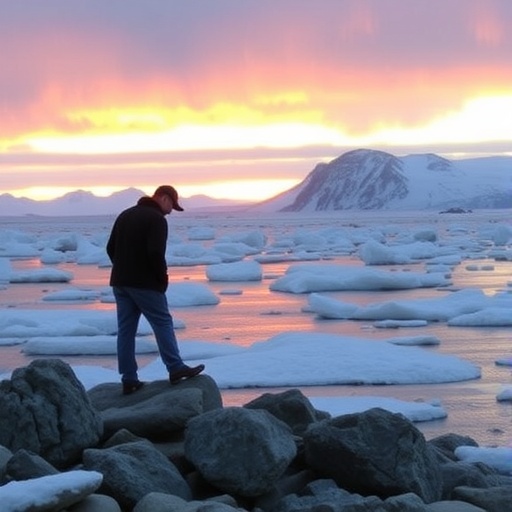
In a groundbreaking study set to reshape our understanding of Earth’s climatic past and its ongoing impact on biodiversity, researchers have unveiled compelling geohistorical evidence pointing to a previously unrecognized ice age refugium. This sanctuary, which offered a haven for myriad species during the harsh glaciations of the Pleistocene epoch, holds profound implications for contemporary conservation strategies aimed at combating the global biodiversity crisis. By piecing together extensive geomorphological, paleobotanical, and geochemical data, the team has reconstructed a detailed narrative of survival and resilience that transcends millennia.
The study dives deep into the intricate dynamics of climatic variability during the ice ages, focusing on how certain geographic zones functioned as refugia—localized pockets where species endured prolonged periods of environmental stress. Historically, it was believed that glaciated regions rendered large swathes of land uninhabitable, forcing fauna and flora to retreat to peripheral locations. This latest research, however, disrupts that simplistic view by demonstrating that some areas, previously assumed inhospitable, played critical roles as biodiversity reservoirs, fostering evolutionary continuity.
To establish their case, the researchers employed state-of-the-art sediment core analysis techniques combined with radiocarbon dating and isotopic studies. These methods allowed precise chronological alignment of climatic events with biological markers preserved in soil and sediment layers. Furthermore, advancements in ancient DNA extraction enabled the identification of species compositions that thrived within the refugium, revealing a rich tapestry of organisms including endemic plants and cryptic animal species that had lain undetected until now.
One of the pivotal revelations lies in the microclimatic conditions maintained within the refugium. Despite overarching glacial conditions that dominated the Northern Hemisphere, localized geographic features such as complex mountain topographies and thermal gradients created microhabitats with markedly different temperature and moisture regimes. These conditions not only buffered resident species from extreme cold but also fostered unique ecological niches that allowed for evolutionary innovation and genetic refuges.
The implications extend beyond mere academic interest. Conservation biologists are increasingly attentive to the lessons embedded in Earth’s deep past as they formulate strategies to counteract habitat loss and fragmentation in the Anthropocene. Understanding the spatial and temporal dynamics of natural refugia offers a blueprint for identifying and prioritizing contemporary sites of ecological resilience amidst accelerating climate change. These refugia could serve as critical lifeboats for species endangered by habitat shifts and extreme weather events.
Moreover, the study provides a cautionary tale about the fragility of these refugia in the face of human activity. While geological time allowed slow shifts and adaptations, the rapid pace of modern habitat alteration threatens to obliterate these sanctuaries before their protective roles can be fully understood or leveraged. The researchers emphasize the urgency of integrating geohistorical insights into conservation planning, suggesting that such ancient refugia must be conserved as living laboratories of biodiversity survival.
This newly uncovered refugium also challenges the prevailing paradigms about species distribution and biogeographic patterns during the ice ages. It suggests that recolonization processes post-glaciation may have been far more complex, involving multidirectional migrations and intermingling of genetic lineages. Such complexity has implications for understanding the phylogeography of current populations and may necessitate revisions of species range maps and conservation units.
The interdisciplinary nature of the research exemplifies the emergent paradigm in Earth sciences, where integration of paleoclimate modeling, field data, and molecular biology converges to solve longstanding mysteries. By crossing traditional disciplinary borders, the researchers have developed an innovative framework that not only unravels past ecological dynamics but also equips scientists and policymakers with actionable insights for the future.
Intriguingly, the research underscores the importance of temporal scale in ecological studies. Short-term observations often miss the slow, nuanced processes underlying ecosystem persistence and transformation. This study’s geohistorical approach reveals how periodic climatic fluctuations were absorbed and mitigated at local scales, allowing life to endure through extended adversity—a lesson paramount for today’s conservation endeavors confronting rapid anthropogenic change.
The confidence in the study’s conclusions is bolstered by the extensive spatial sampling across various geologic formations and ecological zones. By comparing data sets from multiple sites within and surrounding the refugium, the researchers were able to distinguish endemic survival patterns from transient glacial effects. This level of detail enriches the predictive models used to identify other possible refugia globally.
Critically, the data also hints at the evolutionary innovations that may have arisen within such refugia due to isolated conditions and population bottlenecks. These environments are likely hotspots of speciation and genetic diversification, contributing significantly to modern biodiversity. Protecting these areas is thus essential not only for preserving current species but for enabling future evolutionary processes.
As part of their comprehensive analysis, the scientists employed advanced climate simulation tools which recreated paleoenvironmental conditions with high resolution. These simulations revealed how atmospheric circulation patterns and localized geothermal activity influenced refugium stability, offering mechanistic insights into why certain regions remained biologically viable amid glacial maxima.
The discovery of this refugium stands as a testament to the enduring legacy of Earth’s ice age history and its continued influence on the present-day biosphere. It bridges the gap between ancient climate perturbations and modern conservation, serving as a beacon for future research endeavors seeking to decode the interplay between climate, geography, and life.
This seminal work ultimately illustrates the power of interdisciplinary geohistorical research to illuminate hidden stories of survival etched into the landscape. It invites the scientific community and conservationists alike to re-evaluate their approaches, embracing historical context as a key to safeguarding the planet’s biological heritage in an era of unprecedented change.
By revealing a sanctuary where life found refuge against the brutal forces of glaciation, the researchers provide hope that, with informed action, humanity too can carve pathways to resilience in the face of ongoing environmental challenges. Their findings are poised to resonate not only through academic circles but also broadly within public discourse, inspiring renewed commitment to preserving the delicate balance of Earth’s ecosystems for generations to come.
Cite Scienmag News
Margaret Porter. (May 11, 2026). Ice Age Refuge Offers Insights for Modern Conservation. Scienmag. https://scienmag.com/ice-age-refuge-offers-insights-for-modern-conservation/
Margaret Porter. "Ice Age Refuge Offers Insights for Modern Conservation." Scienmag, 11 May 2026, https://scienmag.com/ice-age-refuge-offers-insights-for-modern-conservation/. Accessed 5 September 2026.
Margaret Porter. "Ice Age Refuge Offers Insights for Modern Conservation." Scienmag. May 11, 2026. https://scienmag.com/ice-age-refuge-offers-insights-for-modern-conservation/


