


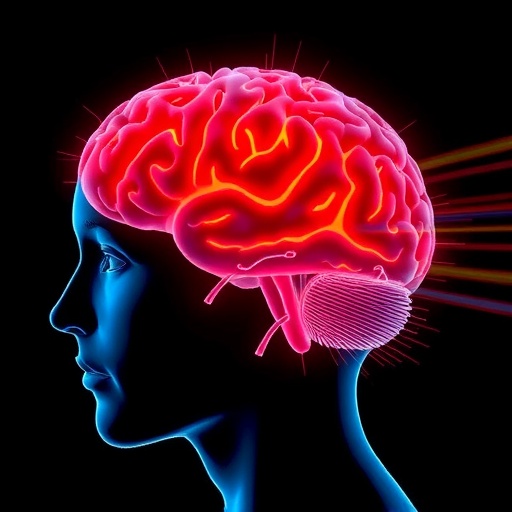
In a groundbreaking advance that could reshape the future of pain management, researchers led by Clarke, Mugglestone, and Lojkiewiez have demonstrated the capacity of multi-focal ultrasound neuromodulation to selectively disrupt both behavioral and neural components of pain processing in the brain. Published in Nature Communications in 2026, this pioneering study targets the dorsal anterior cingulate cortex (dACC)—a key hub in the brain’s pain matrix—offering an innovative non-invasive technique that modulates pain perception and response at a neural level.
Pain, a complex and multifaceted experience, has long evaded precise modulation without the side effects of systemic pharmacotherapies. The dorsal anterior cingulate cortex is central to the affective and cognitive dimensions of pain, integrating sensory input with emotional and behavioral responses. The challenge for neuroscientists and clinicians has been to develop interventions that can finely tune this brain region’s activity without compromising adjacent neural functions or causing collateral damage.
The research team addressed this challenge by harnessing the power of multi-focal ultrasound neuromodulation, a non-invasive technique that employs precisely targeted acoustic energy to transiently modify neural excitability in deep brain structures. Unlike transcranial magnetic or electrical stimulation, ultrasound waves can be focused at millimeter accuracy to reach subcortical regions such as the dACC, offering a unique opportunity to modulate intricate neural circuits involved in pain processing.
Technically, the investigators utilized a sophisticated multi-element transducer array capable of delivering simultaneous ultrasound beams converging on the dACC from multiple angles. This multi-focal strategy not only enhances spatial specificity but also increases the modulatory effects by synchronizing stimulation across the targeted region. Recordings from functional neuroimaging and electrophysiological monitoring during and after stimulation sessions confirmed the disruption of neural activity patterns known to underlie pain perception.
Behaviorally, subjects underwent standardized pain stimuli before, during, and after dACC neuromodulation. Strikingly, the intervention attenuated pain thresholds and decreased unpleasantness ratings, demonstrating a direct influence on the affective dimension of pain. These behavioral changes correlated strongly with neural indices, as post-stimulation imaging revealed diminished connectivity and altered activation patterns within the broader pain matrix, including reduced functional coupling between the dACC and insular cortices.
The implications of these findings transcend basic neuroscience, offering promising translational potential for clinical pain management. Chronic pain conditions, notoriously difficult to treat, might be ameliorated through tailored neuromodulation protocols that minimize dependence on opioids and other pharmacological agents. The non-invasive nature of multi-focal ultrasound neuromodulation also opens the door to repeated or even home-based therapeutic applications, enhancing patient accessibility and compliance.
From a technical standpoint, the study meticulously addressed key challenges such as real-time targeting, safety thresholds, and reproducibility. The authors implemented advanced neuronavigation systems integrated with MRI to guide and confirm targeting fidelity, ensuring that energy delivery remained confined to brain tissue without overheating or damage. Moreover, the ultrasound parameters were optimized within FDA safety limits, aligning with emerging standards for therapeutic neuromodulation.
Importantly, the multi-focal approach allowed modulation without eliciting overt motor or cognitive side effects, highlighting the precision of this method. This specificity suggests that neural networks underlying pain can be selectively tuned while sparing neighboring circuits involved in executive functions or sensory processing—a limitation that has historically hampered broader adoption of neuromodulatory interventions.
The study also embarked on comprehensive analyses of neural oscillations and connectivity dynamics. Results revealed that ultrasound stimulation induced transient disruptions in theta and gamma band activities within the dACC, oscillatory patterns intimately linked to pain anticipation and emotional regulation. These electrophysiological signatures provide critical mechanistic insights, suggesting that ultrasound modulates pain by interfering with the rhythmic synchronization of neurons that coordinate pain-related processing.
Beyond pain, these findings illuminate new frontiers in understanding the dorsal anterior cingulate cortex’s role in emotional and cognitive states. The ability to dynamically tune this brain region could one day impact a range of neuropsychiatric disorders characterized by dysregulated affect and cognition, including depression and anxiety. Thus, this study’s methodological advancements lay the groundwork for broader therapeutic innovations.
Of equal significance is the study’s demonstration of repeatability and tolerance among human participants. No adverse events or lasting discomfort were reported, supporting the feasibility of multi-focal ultrasound applications in clinical settings. Furthermore, the modulatory effects dissipated after a defined window, indicating reversible and controllable interventions—a critical attribute for clinical neuromodulation.
Future research avenues highlighted by the authors include refining spatiotemporal stimulation patterns to further enhance efficacy and exploring combinatory strategies integrating ultrasound modulation with behavioral therapies or pharmacological agents. Investigations into inter-individual variability of response could unlock personalized medicine approaches, tailoring neuromodulation regimens to patient-specific neural architectures and pain phenotypes.
In essence, the Clarke et al. study represents a paradigm shift in neuroscience and pain medicine, combining cutting-edge engineering with clinical insights to achieve non-invasive, targeted neuromodulation of a deeply embedded cerebral locus. It exemplifies the synergy of multidisciplinary efforts spanning neurobiology, acoustics, imaging, and computational modeling.
As global pain burdens escalate, innovations like multi-focal ultrasound neuromodulation herald a transformative era. By directly manipulating the neural substrates of pain without drugs or surgery, this technique promises safer, more effective, and customizable pain therapies. The scientific community eagerly anticipates follow-up studies to validate and expand upon these findings, potentially ushering in a new standard of care for millions suffering worldwide.
The authors’ intricate approach not only demonstrates technical rigor but also conceptual originality, opening unexplored avenues to decode the neural language of pain. Their work encapsulates the quintessence of modern neuroscience: precise intervention, mechanistic understanding, and societal benefit. As this technology matures, it may well revolutionize how we perceive and treat not only pain but the fundamental processes underlying human experience.
The fast-evolving landscape of ultrasound neuromodulation technology, as evidenced in this research, challenges prior assumptions that deep brain targets require invasive approaches. Instead, the study’s success affirms the growing potential of acoustic neuromodulation to safely and effectively reach elusive brain areas, expanding the therapeutic toolbox beyond the traditional realms.
Ultimately, the convergence of multi-focal ultrasound stimulation with advanced brain imaging and neural monitoring technologies underscores a future where neurotherapeutics are precisely tailored, minimally invasive, and dynamically adjustable. This landmark publication is poised to inspire a torrent of research aimed at fine-tuning brain circuits implicated in myriad neuropsychiatric and neurological disorders, beginning with the perennially vexing challenge of pain.
Cite Scienmag News
Cassandra Pierce. (May 9, 2026). Ultrasound Neuromodulation Disrupts Pain Processing in Brain. Scienmag. https://scienmag.com/ultrasound-neuromodulation-disrupts-pain-processing-in-brain/
Cassandra Pierce. "Ultrasound Neuromodulation Disrupts Pain Processing in Brain." Scienmag, 9 May 2026, https://scienmag.com/ultrasound-neuromodulation-disrupts-pain-processing-in-brain/. Accessed 4 September 2026.
Cassandra Pierce. "Ultrasound Neuromodulation Disrupts Pain Processing in Brain." Scienmag. May 9, 2026. https://scienmag.com/ultrasound-neuromodulation-disrupts-pain-processing-in-brain/


