


In a groundbreaking study that bridges the gap between microbiology, neuroscience, and organ system communication, researchers have unraveled a captivating mechanism by which the gut microbiota influences bladder function through neural pathways. The study, published in Experimental & Molecular Medicine, unveils how the bacterium Akkermansia muciniphila orchestrates an intricate inter-organ crosstalk between the gut and bladder, mediated by a specific serotonin receptor, 5-HT3aR. This discovery sheds new light on the enigmatic ways the microbiome modulates visceral sensory pathways and could pave the way for novel therapeutic approaches targeting bladder disorders.
The human body has long been recognized as a complex ecosystem where multiple organ systems interact dynamically. However, the intimate communication channels that link the gut with distant organs such as the bladder have remained elusive. The research team led by Sun, Gao, Zheng, and colleagues has now demonstrated that Akkermansia muciniphila, a mucin-degrading bacterium residing in the gut, plays a pivotal role in shaping the sensory properties of neurons that innervate both the gut and bladder.
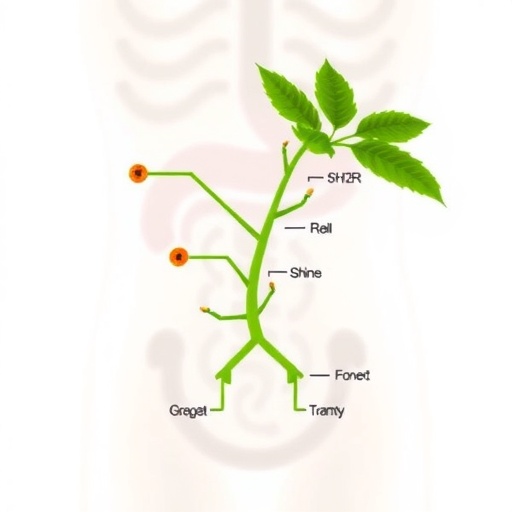
Central to the discovery is the identification of a specialized subset of sensory neurons termed ‘dichotomizing gut–bladder neurons.’ These neurons possess dual projections, innervating both the gut and the bladder, thus serving as critical conduits for cross-organ communication. Utilizing advanced neuroanatomical tracing techniques combined with single-cell transcriptomics, the researchers delineated this distinct neuronal population and characterized their molecular signature.
At the heart of this viscero-visceral communication lies the serotonin receptor 5-HT3aR. The receptor’s unique expression on these dichotomizing neurons provides a mechanistic link for how gut microbiota-derived signals can directly influence bladder function. Intriguingly, the presence of Akkermansia muciniphila upregulates the expression and activity of 5-HT3aR, thereby sensitizing these neurons to serotonin, a key neurotransmitter synthesized and released in the gut environment.
The study delves deep into the molecular cascade triggered by Akkermansia muciniphila. Experimental models revealed that colonization by this bacterium increases mucin degradation, thereby stimulating gut epithelial cells and enterochromaffin cells to release higher levels of serotonin. This surplus serotonin acts on the 5-HT3aR, heightening the excitability of dichotomizing neurons. Consequently, this neuromodulatory effect leads to enhanced sensory signaling from the gut to the bladder, effectively creating a feedback loop that impacts bladder sensitivity and function.
One of the most striking implications of these findings lies in the potential reinterpretation of bladder disorders often categorized as idiopathic. Conditions such as overactive bladder and interstitial cystitis, which lack definitive etiology, may involve dysregulated microbiota-neuron interactions. The study’s insights into how Akkermansia muciniphila influences sensitization of neural pathways provide a biological basis for these disorders and suggest that microbiome modulation could emerge as a novel treatment strategy.
The researchers employed a sophisticated blend of electrophysiological recording and behavioral assays to validate their findings. These approaches confirmed that enhanced serotoninergic signaling via 5-HT3aR contributed to increased neuronal firing rates and heightened bladder reflexes in vivo. Furthermore, pharmacological blockade of 5-HT3aR abrogated these effects, underscoring the therapeutic relevance of targeting this receptor in controlling viscero-visceral sensory crosstalk.
This revelation opens a new frontier in understanding the gut–brain–bladder axis. Previously, the gut microbiome was predominantly studied for its metabolic and immunomodulatory roles, but this research extends its influence to direct neuronal sensitization and cross-signaling between organs. It highlights an unprecedented dimension whereby microbial metabolites and host neurotransmitters converge to orchestrate complex neurophysiological outcomes.
From a clinical perspective, these findings advocate for a paradigm shift. Instead of treating bladder disorders in isolation, physicians might consider the broader microbiome and neuronal context. Interventions aimed at enriching or modifying Akkermansia muciniphila populations, or modulating the serotonergic system pharmacologically, could offer personalized and more effective therapeutic avenues.
Moreover, the implications transcend bladder health. The concept of dichotomizing neurons providing bidirectional channels of communication between visceral organs may apply to other organ systems as well. This could inform investigations into gut–kidney, gut–lung, or gut–heart axes, hinting at a generalized model of microbiome-mediated neural regulation.
The study’s methodological rigor is noteworthy. Cutting-edge imaging and molecular profiling technologies were harnessed to map neuron projections with unprecedented precision. Combined with in vitro and in vivo functional assays, the research demonstrates a comprehensive approach to unravel an intricate biological phenomenon. Such multidisciplinary strategies exemplify the future directions of neuroscience and microbiome research.
Interestingly, Akkermansia muciniphila has previously been associated with metabolic health benefits, including improved glucose metabolism and anti-inflammatory effects. This new role adds complexity to its functional repertoire and suggests that microbial influences on host physiology are multifaceted and context-dependent. Understanding the balance between beneficial and potentially sensitizing effects will be crucial.
The discovery also touches on the broader theme of serotonergic signaling beyond the central nervous system. Serotonin’s role in peripheral nervous system plasticity and sensory transmission is increasingly recognized, and this study consolidates its importance in mediating microbiota-host interactions at the visceral level, further expanding the classical view of neurotransmitter function.
In summary, the work by Sun and colleagues propels the scientific community toward a nuanced appreciation of how gut microbiota, through molecular mediators like serotonin acting on 5-HT3a receptors, modulate neural circuits linking the gut and bladder. This intricate communication system exemplifies the symbiotic relationship within the human body and opens unexplored therapeutic landscapes in managing visceral sensory disorders.
As research continues to venture into the dense networks connecting microbes, neurons, and organs, the potential for microbiota-targeted therapeutics in treating complex diseases grows ever more compelling. The future may hold microbiome engineering as a mainstream approach for not only gastrointestinal ailments but also distant organ dysfunctions influenced by neural interplays.
The implications for personalized medicine are profound, with microbial and receptor expression profiles potentially guiding individualized interventions. By decoding the language of microbial metabolites and their neural targets, science moves closer to holistic treatments that embrace the integrative nature of human physiology.
This study not only sparks excitement for its immediate findings but also sets a foundation for interdisciplinary exploration that harmonizes microbiology, neurobiology, and clinical medicine in unprecedented and transformative ways.
Cite Scienmag News
Morgan Morrow. (May 9, 2026). Akkermansia Boosts Gut-Bladder Nerve Sensitivity via 5-HT3aR. Scienmag. https://scienmag.com/akkermansia-boosts-gut-bladder-nerve-sensitivity-via-5-ht3ar/
Morgan Morrow. "Akkermansia Boosts Gut-Bladder Nerve Sensitivity via 5-HT3aR." Scienmag, 9 May 2026, https://scienmag.com/akkermansia-boosts-gut-bladder-nerve-sensitivity-via-5-ht3ar/. Accessed 3 September 2026.
Morgan Morrow. "Akkermansia Boosts Gut-Bladder Nerve Sensitivity via 5-HT3aR." Scienmag. May 9, 2026. https://scienmag.com/akkermansia-boosts-gut-bladder-nerve-sensitivity-via-5-ht3ar/


