


In the relentless battle against cancer, one of the most daunting challenges has been the phenomenon of multidrug resistance (MDR), where cancer cells develop the ability to actively expel chemotherapeutic agents before these drugs can inflict their intended damage. This defense mechanism, primarily driven by the overexpression of P-glycoprotein (P-gp) pumps on the cancer cell membranes, significantly reduces the intracellular concentrations of anticancer drugs, rendering chemotherapy largely ineffective. While conventional strategies have attempted to counter this resistance either by escalating drug dosages or by deploying alternative drugs, these measures have often been met with limited success and significant toxicity to healthy tissues. However, a groundbreaking study recently published in the Journal of Controlled Release introduces an innovative approach to overcoming MDR through the design of multifunctional, amino acid-based nanoparticles capable of sequential drug delivery.
This pioneering work, spearheaded by Professor Eijiro Miyako at Tohoku University in collaboration with researchers from the French National Centre for Scientific Research (CNRS) and the University of Strasbourg, represents a conceptual leap forward in the realm of nanomedicine and cancer therapy. Rather than delivering the P-gp inhibitors and chemotherapeutic drugs simultaneously, the researchers engineered nanoparticles to first disable the drug expulsion mechanism before releasing the anticancer agents. This temporal control over drug release exploits the concept that repairing or neutralizing a cell’s drug resistance pumps must precede the effective deployment of chemotherapy. The analogy Miyako draws is apt: “You need to patch up a hole in a leaky bucket before adding more water, instead of trying to do both at the same time.”
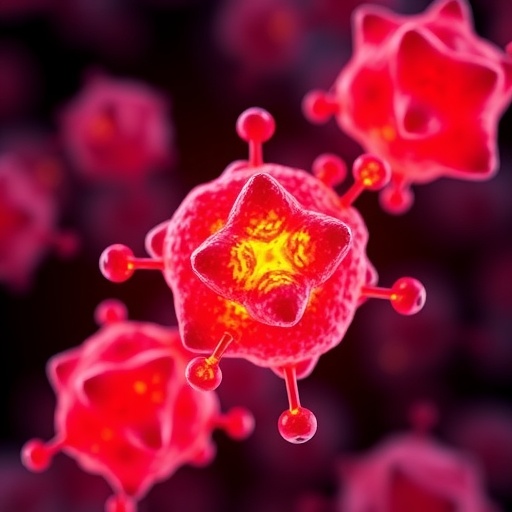
The design of these nanoparticles is both elegant and intricate. Constructed from porous amino acid-based materials, these nanoparticles encapsulate two key therapeutic agents: the P-gp inhibitor quinidine and the chemotherapeutic drug doxorubicin (Dox). Their structure allows for controlled, sequential release—initially liberating quinidine to inhibit P-gp activity, followed by a delayed release of doxorubicin once the drug efflux pumps are effectively neutralized. This sequential approach is complemented by an integrated photothermal therapy function, where near-infrared (NIR) laser irradiation heats the tumor locally, enhancing cytotoxicity and facilitating tumor destruction while sparing normal tissues.
The nanoplatform’s capability for active tumor targeting further enhances its therapeutic index. This targeting is achieved by functionalizing the nanoparticle surface, ensuring preferential accumulation within tumor microenvironments. Such specificity minimizes systemic exposure and adverse side effects, a critical factor in clinical oncology. The exquisite control over spatiotemporal drug release, combined with tumor-specific targeting and adjunct photothermal therapy, establishes a multifaceted assault against MDR cancers.
In vitro assays validate the superiority of this approach. Cancer cells exposed to the sequential delivery system exhibited markedly higher accumulation of doxorubicin compared to cells treated with chemotherapy or photothermal therapy alone. The inhibition of P-gp pumps prior to drug release significantly elevated intracellular drug concentrations, overcoming MDR at the cellular level. These findings were bolstered by in vivo studies in a mouse model bearing drug-resistant tumors. Mice receiving the combined nanoparticle therapy demonstrated complete tumor regression and achieved 100% survival, with no signs of toxicity to normal organs—outcomes that far outstrip conventional treatments.
The photothermal component, activated by near-infrared laser light, serves dual purposes. It not only directly induces tumor cell death via hyperthermia but also enhances nanoparticle permeability and drug penetration within tumors. This synergistic effect magnifies the therapeutic impact, fostering an environment unfavorable to tumor survival and recurrence. Importantly, the use of amino acid-derived building blocks in nanoparticle construction underscores the potential biocompatibility and clinical translatability of this system, addressing a significant hurdle in nanoparticle-based drug delivery.
Multidrug resistance remains a pervasive and complex challenge across many cancer types, often leading to treatment failure and disease progression. The strategy presented in this research transcends traditional methodologies by employing a rational, mechanistically informed sequence of therapeutic actions. Targeting the resistance mechanism at its root, prior to administering cytotoxic agents, re-sensitizes tumors to chemotherapy and allows for the reinstitution of effective cancer cell eradication.
Professor Miyako envisions this work as a foundational step toward developing clinically viable nanoparticle systems that can revolutionize treatment paradigms for resistant cancers. The ability to program drug release kinetics and integrate multiple therapeutic modalities within a single nanoscale platform offers unprecedented control over treatment efficacy and safety. Such advancements are poised to dramatically improve patient outcomes and expand the arsenal against cancers that have eluded conventional therapies.
The convergence of nanotechnology, pharmacology, and photothermal therapy exemplified in this study reflects the cutting edge of personalized and precision medicine. By tailoring therapy not only to the molecular profile of cancer cells but also to the temporal dynamics of drug resistance, this approach represents a beacon of hope for the oncology community. As this platform advances toward clinical translation, it holds the promise of transforming once intractable cancers into manageable or even curable conditions.
This remarkable study underscores the critical importance of multidisciplinary collaboration in addressing complex biomedical challenges. The synergy between Japanese and French research teams combined expertise in materials science, molecular biology, and clinical oncology to design a solution that could redefine therapeutic strategies against MDR cancer. Such cooperation paves the way for future innovations that harness the versatility of nanomaterials and the precision of modern biomedical engineering.
Beyond its immediate therapeutic implications, this research sets a precedent for the future design of nanoparticle-based drug delivery systems that can achieve sequenced and multi-modal interventions. The principles elucidated here can be extended to other diseases characterized by cellular resistance mechanisms, opening new frontiers in nanomedicine. This platform’s modularity and adaptability render it a versatile tool in the ongoing quest to overcome cellular drug resistance across a broad spectrum of medical conditions.
In summary, the development of multifunctional amino acid-based nanoparticles capable of sequential drug delivery, combined with photothermal therapy and active tumor targeting, offers a revolutionary strategy to surmount multidrug resistance in cancer. Achieving complete tumor regression and 100% survival in animal models heralds a new era of promise for effective and safe cancer treatment. As this technology advances towards clinical application, it promises to deliver transformative benefits to patients worldwide grappling with resistant malignancies.
News Publication Date: 6-May-2026
Web References:
http://dx.doi.org/10.1016/j.jconrel.2026.114954
Cite Scienmag News
Nathaniel Bowman. (May 8, 2026). Nanoparticles Combat Drug-Resistant Cancer Through Sequential Drug Delivery and Photothermal Therapy. Scienmag. https://scienmag.com/nanoparticles-combat-drug-resistant-cancer-through-sequential-drug-delivery-and-photothermal-therapy/
Nathaniel Bowman. "Nanoparticles Combat Drug-Resistant Cancer Through Sequential Drug Delivery and Photothermal Therapy." Scienmag, 8 May 2026, https://scienmag.com/nanoparticles-combat-drug-resistant-cancer-through-sequential-drug-delivery-and-photothermal-therapy/. Accessed 3 September 2026.
Nathaniel Bowman. "Nanoparticles Combat Drug-Resistant Cancer Through Sequential Drug Delivery and Photothermal Therapy." Scienmag. May 8, 2026. https://scienmag.com/nanoparticles-combat-drug-resistant-cancer-through-sequential-drug-delivery-and-photothermal-therapy/


