


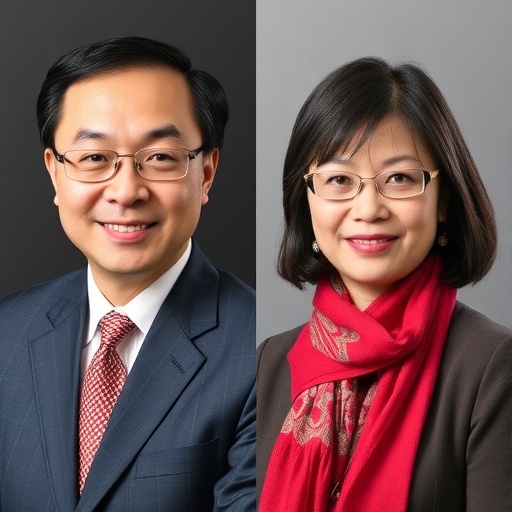
On January 30, 2026, Elsevier unveiled its prestigious 2025 “Highly Cited Chinese Researchers” list, a definitive benchmark spotlighting China’s foremost academics who have demonstrated exceptional research impact across various disciplines. This year, the field of Education highlighted 22 distinguished scholars nationwide, each recognized for their influential contributions to educational theory, practice, and policy. Among these elite researchers, Professors Cui Yunhuo and Lei Hao from East China Normal University (ECNU) were prominently featured, underscoring their sustained academic excellence and leadership in shaping curriculum reform and educational development in China.
Professor Cui Yunhuo’s inclusion marks the fourth consecutive year he has been honored with this distinction, an indicator of his deep-rooted influence and consistent scholarly output. Serving as the Director of ECNU’s Institute of Curriculum and Instruction (ICI) and the Executive Director of the National Center for School Curriculum and Textbook Development, Professor Cui occupies a pivotal role in the national education landscape. His extensive work intertwines curriculum theory with practical application, driving forward the modernization and scientific grounding of China’s educational frameworks.
Cui’s impact extends beyond national boundaries; as the Editor-in-Chief of Global Education, he facilitates scholarly dialogues on curricular innovations worldwide. His membership in the National Textbook Committee reflects his integral role in overseeing and endorsing curricular standards and textbook policies that directly shape classroom instruction across China. Recognized as a National Leading Talent in Philosophy and Social Sciences, his leadership is instrumental in aligning China’s curriculum reforms with global pedagogical trends while addressing indigenous educational contexts.
The scholarly corpus produced by Professor Cui includes the acclaimed monograph Effective Teaching and School-Based Curriculum in China: Conceptions and Practices to Unleash School Vitality, a seminal work that synthesizes theoretical rigor with practical insights into how curricula can empower schools to generate dynamic and contextually relevant learning environments. His oeuvre encompasses over 200 published papers, contributing substantial empirical research and theoretical models that inform both policy-making and classroom practice. His accolades, including multiple National Teaching Achievement Awards and a First Prize for Outstanding Scientific Research in Higher Education, further cement his standing as a visionary who bridges research excellence with practical educational reforms.
Parallel to Cui’s accomplishments, Professor Lei Hao exemplifies the rising cadre of educational scholars whose research intersects curriculum reform, textbook utilization, and systemic curriculum development. Lei, a Professor, PhD Supervisor at ICI, and Vice Dean of ECNU’s Institute of Humanities and Social Sciences, merges administrative acumen with rigorous scholarship. His inclusion on the Elsevier list marks three consecutive years of recognition, paralleling his 2024 placement on Stanford University’s influential “World’s Top 2% Scientists” list, which annually identifies global research leaders across scientific disciplines.
Professor Lei has directed multiple projects funded by the National Social Science Fund, a testament to his ability to secure competitive research grants addressing critical issues in education. His prolific output exceeds 60 papers published in high-impact international journals such as Educational Psychology Review, Journal of Research in Science Education (JRSE), and Educational Research. These publications delve into empirical investigations on curriculum effectiveness, teacher perception and implementation of textbooks, and the interplay between curriculum design and educational outcomes, reflecting his multidisciplinary approach.
Beyond research production, Lei serves as a reviewer for top-tier journals including Child Development, underscoring his engagement with the broader scientific community and his role in maintaining scholarly rigor in education research worldwide. His recognition through awards such as the National Teaching Achievement Award (First Prize) and the Shanghai Philosophy and Social Science Outstanding Achievement Award speaks to his dual commitment to advancing theoretical scholarship and practical pedagogical advancements.
The Elsevier “Highly Cited Chinese Researchers” list, compiled in partnership with Shanghai Ranking Consultancy and powered by Scopus data, employs multiple quantitative indicators to delineate researchers whose scholarly works have significantly influenced their respective fields. Scopus, one of the largest abstract and citation databases, aggregates bibliometric data enabling comprehensive analyses of publication impact, citation frequencies, and research quality. By leveraging such metrics, the list provides a transparent and data-driven acknowledgment of academic leadership, serving as a vital reference for universities, policymakers, and research institutions.
This ranking is more than a mere honorific; it functions as a strategic barometer for assessing institutional academic strength and researchers’ global standing. For education, a field traditionally underrepresented in global impact rankings relative to STEM disciplines, the list’s recognition of innovators like Professors Cui and Lei demonstrates the maturation and increasing international relevance of Chinese educational research. Their work not only advances theoretical frameworks but also informs policy implementation and practice that can drive educational transformation in China and beyond.
Researchers included on such lists often become focal points for international collaboration, enabling cross-disciplinary inquiries that address complex challenges in curriculum design, teacher training, and student learning outcomes. The global academic community’s growing attention to Chinese educational research highlights the dynamic evolution of educational sciences in contexts marked by rapid modernization and a quest for equitable access to quality education.
Ultimately, Professors Cui Yunhuo and Lei Hao symbolize the dynamic fusion of theoretical innovation, empirical rigor, and policy relevance that characterizes contemporary educational scholarship in China. Their sustained influence and recognition by Elsevier’s 2025 “Highly Cited Chinese Researchers” list signify the critical role education research plays in driving national development goals, cultivating pedagogical excellence, and contributing to the global knowledge economy. Through their leadership, research, and vision, they continue to shape the contours of 21st-century education both within China’s unique socio-cultural landscape and the broader international arena.
News Publication Date: January 30, 2026
Cite Scienmag News
Courtney Benton. (May 7, 2026). ECNU Scholars Prof. Cui Yunhuo and Prof. Lei Hao Featured in Elsevier’s 2025 Highly Cited Researchers in Education List. Scienmag. https://scienmag.com/ecnu-scholars-prof-cui-yunhuo-and-prof-lei-hao-featured-in-elseviers-2025-highly-cited-researchers-in-education-list/
Courtney Benton. "ECNU Scholars Prof. Cui Yunhuo and Prof. Lei Hao Featured in Elsevier’s 2025 Highly Cited Researchers in Education List." Scienmag, 7 May 2026, https://scienmag.com/ecnu-scholars-prof-cui-yunhuo-and-prof-lei-hao-featured-in-elseviers-2025-highly-cited-researchers-in-education-list/. Accessed 3 September 2026.
Courtney Benton. "ECNU Scholars Prof. Cui Yunhuo and Prof. Lei Hao Featured in Elsevier’s 2025 Highly Cited Researchers in Education List." Scienmag. May 7, 2026. https://scienmag.com/ecnu-scholars-prof-cui-yunhuo-and-prof-lei-hao-featured-in-elseviers-2025-highly-cited-researchers-in-education-list/


