


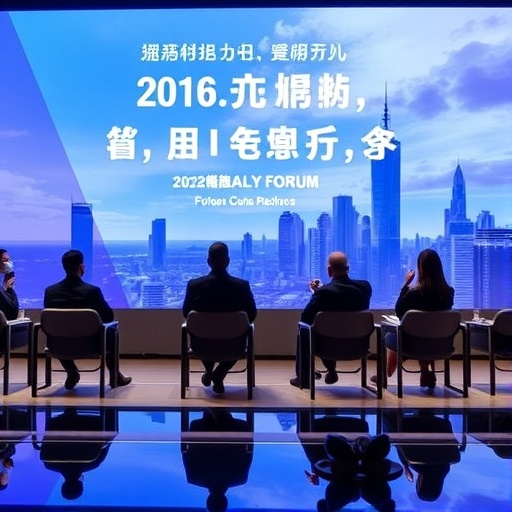
The 10th iteration of the HKU Quarterly Forum on the Chinese Economy, convened by the Institute of China Economy (ICE) at the University of Hong Kong Business School in collaboration with the Zhejiang University Alumni Association (Hong Kong), took place on April 23, 2026, at the HKU iCube in Central, Hong Kong. This gathering came at a critical juncture, amid escalating geopolitical strains accentuated by the ongoing conflict involving the United States, Israel, and Iran. The forum’s discourse centered on the multifaceted repercussions of these tensions on the global economic architecture and the distinctive challenges confronting the Chinese Mainland and Hong Kong’s economies. Eminent scholars and industry leaders shared incisive perspectives on geopolitical risk, shifts in international maritime trade, evolving macroeconomic strategies, and the momentum toward new growth paradigms within China.
More than 280 registrants converged for the on-site event, complemented by a substantial digital audience exceeding 7,500 participants, reflecting the forum’s wide-ranging influence and the global community’s vested interest in China’s economic trajectory. Professor Hongbin CAI, Dean and Chair of Economics at HKU Business School and ICE Director, opened the forum by underscoring the enduring commitment of HKU Business School to rigorous economic research with a particular emphasis on China. Professor CAI emphasized the forum’s role as a catalyst for scholarly interaction and industrial collaboration, aiming to distill nuanced understandings of China’s evolving economic landscape, especially during periods marked by geopolitical uncertainty.
One of the keynote addresses by Professor Zhenhua MAO, a Practitioner Professor in Economics at HKU Business School and advisor to the HKSAR Chief Executive’s Policy Unit, provided a comprehensive evaluation of the impact of the US–Israel–Iran conflict on China’s economy. Contrary to expectations of pronounced disruption, Professor MAO pointed out that China’s domestic industrial output remains robust, buoyed by vigorous investment inflows into artificial intelligence and other high-technology sectors. This sustained growth in technology-driven industries functions as a stabilizing force, buffering the economy against external shocks. Additionally, proactive infrastructure spending and early adoption of central macroeconomic policies have successfully mitigated the contraction risks associated with global instability.
The keynote elaboration extended to analyze China’s export dynamics amid these geopolitical disturbances. While recognizing the dampening effect of volatile external demand and the cost implications of disrupted shipping routes, Professor MAO highlighted China’s resilient and comprehensive industrial base. This resilience enables China to effectively absorb redirected global orders, a phenomenon that offsets some adverse trade pressures. A striking observation concerned the accelerated trend toward de-dollarization in global trade settlements, with the renminbi surpassing the euro in Middle Eastern oil trade settlements in March 2026, positioning it as the world’s second most dominant settlement currency after the US dollar.
Hong Kong’s financial markets emerged as a beacon of stability within this turbulent context. Professor MAO noted an upsurge in capital inflows from Middle Eastern investors who view Hong Kong as a safe harbor amid regional instability. This renewed confidence is manifested in growing inquiries and investments in Hong Kong equities and the expansion of family office structures. Hong Kong’s continued role as a “super-connector” serves not only the local economy but also strengthens its position within the broader global financial ecosystem by fostering capital mobility and risk diversification.
Expanding on the macroeconomic policy narrative, Professor Xianhai HUANG of Zhejiang University addressed the imperative for China’s economy to expedite the transition between fading traditional growth engines and emergent drivers. He proposed the establishment of a third macroeconomic policy pillar focused explicitly on innovation-led development, complementing existing fiscal and monetary tools. This policy pillar would encompass government-backed innovation funds, a robust venture capital ecosystem, technology-centric financial instruments, differentiated intellectual property protections, and incentive mechanisms that directly link researchers with entrepreneurial activities. Professor HUANG’s framework anticipates positioning China at the forefront of technological advancements globally while accelerating the transformation of its industrial export structure.
The discourse also spotlighted the metamorphosis of China’s industrial composition, with the automotive sector surpassing real estate as an economic mainstay. The proliferation of the so-called “new trio”—new energy vehicles, lithium batteries, and photovoltaic components—and the emergent “new new trio” industries encompassing biotechnology, robotics, and drone technology, underscores China’s strategic pivot toward innovation and high-tech manufacturing. A shift away from cost competitiveness toward innovation-driven electromechanical products has redefined China’s export profile, signaling a maturation of its industrial economy.
Professor Richard Weixing HU from the University of Macau contributed a reflective analysis on the international trade landscape, particularly the implications of the 2026 APEC China Year. He articulated the growing tension between the United States’ trade paradigm, which emphasizes reciprocity and strategic competition, and the multilateral free trade framework championed by China and its allies. This divergence not only complicates bilateral trade but also reshapes the geopolitical architecture in the Asia-Pacific region. Professor HU advocates for a synthesis of these competing logics to evolve the Free Trade Area of the Asia-Pacific (FTAAP) concept through innovative institutional arrangements and policy innovation.
Maritime transport, a critical vector of global trade, has not been spared the conflict’s impact. Mr. Xianxiang YANG, Chairman of SITC International Holdings, delineated the operational challenges in international shipping resulting from the US–Israel–Iran war. The Persian Gulf remains a hotspot with significant disruptions, including vessel delays and supply constraints. Mounting fuel prices have escalated operational expenses, intensifying financial strain on shipping companies and potentially inducing ripple effects throughout global supply chains.
The forum culminated in a dynamic roundtable discussion moderated by Professor Hongbin CAI, featuring leaders and experts spanning finance, investment, and economic policy. The panel examined the multifaceted economic outlook grappling with geopolitical volatility. Consensus emerged around China’s economic fortitude and adaptability amidst external uncertainties. The dialogue encompassed critical topics such as the renminbi’s exchange rate dynamics, bilateral trade tensions, sector-specific growth differentials, and evolving consumption patterns influenced by inflationary trends. Notably, the panel identified unconventional indicators like inbound tourism patterns and the sports economy as proxy measures for gauging broader economic health and consumer confidence.
By convening leading minds across academia and industry, the 10th HKU Quarterly Forum on Chinese Economy offered a panoramic view of the geopolitical and economic shifts shaping China’s future. The forum not only highlighted the challenges wrought by escalating tensions but also illuminated pathways for resilience through innovation, strategic policy recalibration, and enhanced international cooperation. As geopolitical fault lines continue to realign, such intellectual forums remain indispensable for distilling insights that inform adaptive strategies in China and beyond.
News Publication Date: April 23, 2026
Web References: HKU Business School Website
Cite Scienmag News
Courtney Benton. (May 7, 2026). The 10th HKU Quarterly Forum Explores Innovations in the Chinese Economy. Scienmag. https://scienmag.com/the-10th-hku-quarterly-forum-explores-innovations-in-the-chinese-economy/
Courtney Benton. "The 10th HKU Quarterly Forum Explores Innovations in the Chinese Economy." Scienmag, 7 May 2026, https://scienmag.com/the-10th-hku-quarterly-forum-explores-innovations-in-the-chinese-economy/. Accessed 3 September 2026.
Courtney Benton. "The 10th HKU Quarterly Forum Explores Innovations in the Chinese Economy." Scienmag. May 7, 2026. https://scienmag.com/the-10th-hku-quarterly-forum-explores-innovations-in-the-chinese-economy/


