


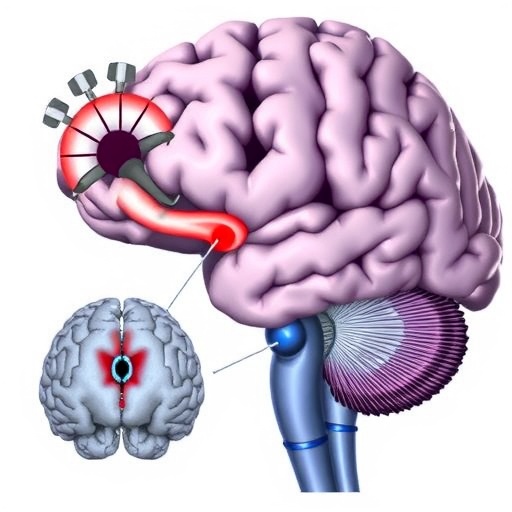
In a groundbreaking study published in Nature, researchers have unveiled surprising neural dynamics in the human hippocampus under anesthesia, revealing that complex language processing and neural plasticity persist despite the absence of consciousness. This revelation challenges long-held assumptions about the hippocampus’s activity during unconscious states and opens new avenues for understanding how the brain processes information beyond awareness.
Previous research largely focused on sensory response suppression during anesthesia. However, the team led by Katlowitz et al. demonstrated that the hippocampus exhibits neural signatures characteristic of plasticity and semantic processing even when consciousness is pharmacologically inhibited. These findings were derived from prolonged recordings, which showed a gradual enhancement in the brain’s ability to detect auditory oddball stimuli over ten minutes. Such slow timescales do not align with common explanations like repetition suppression or sensory adaptation, typically occurring rapidly, suggesting higher-level cognitive functions are at work beneath the surface of unconsciousness.
The intricate processing of semantic features during passive speech listening further supports the notion that the hippocampus operates beyond elementary acoustic analysis under anesthesia. This observation indicates a preserved capacity for integrating complex sensory input, albeit in a state where memory consolidation is likely impaired. Hence, the hippocampus’s ability to maintain language-related neural activity under anesthesia may underlie previously documented implicit recall phenomena following sedation, adding critical insight into subconscious memory mechanisms.
This seminal work also bridges findings from animal models and conscious human studies, extending the scope to include multi-minute neural changes akin to wakeful learning. Unlike previous models that emphasize executive control, which anesthesia likely diminishes, the hippocampal responses were aptly modeled by a recurrent neural network (RNN) framework that bypasses such higher-order manipulations. Notably, these hippocampal responses encompassed language information beyond mere auditory processing, suggesting that semantic contextualization and lexical representation—previously observed in awake epilepsy patients—are not exclusively tied to conscious awareness.
Electrophysiological data revealed a meaningful correlation between local field potential (LFP) signals, particularly in the gamma frequency band, and single-unit neuronal activity, although this relationship fluctuated. Gamma oscillations closely tracked the firing patterns of individual neurons, positing LFP as a viable surrogate for unit-level activity in studies constrained by data volume or technical limitations. Yet the imperfect coupling and occasional alignment with other frequency bands highlight a nuanced relationship between field potentials and discrete neuronal events, warranting further investigation.
Despite the hippocampus not being a canonical region within the core language network, its role in language processes is multifaceted and increasingly recognized. The hippocampus contributes to temporal mapping, multisensory integration, and predictive coding—functions central to semantic contextualization. Its involvement extends to memory systems intricately linked with linguistic comprehension. The scarcity of direct hippocampal imaging data and the rarity of lesions confined to this structure have historically obscured its contributions within cognitive neuroscience.
Nevertheless, the study acknowledges several constraints. The unique neurochemical milieu under propofol anesthesia may limit the generalizability to other unconscious states, such as natural sleep or comatose conditions. Patient numbers were insufficient to explore hemispheric lateralization effects rigorously. Moreover, plasticity observed in tone identity decoding during the oddball paradigm could be confounded by other neural phenomena like stimulus-specific adaptation, complicating interpretations about compensatory mechanisms. The experimental choice of temporally unpredictable tones might also have muted tone-related neural responses, suggesting further refinement in stimulus presentation is necessary for maximal effect elucidation.
These findings provoke profound questions about the nature of consciousness itself. Hippocampal cognitive coding, traditionally viewed as dependent on consciousness, appears alive and well beneath the anesthetic veil, implying these higher-order processes can occur subconsciously. This proposition reframes consciousness not as a prerequisite but possibly as an enhancer or modulator of such cognitive operations. The results resonate with everyday experiences of subliminal sensory monitoring, akin to overhearing conversations amid ambient noise without awareness.
The hippocampus’s anatomical position deep within cortical hierarchies, far from primary sensory inputs and motor outputs, has fostered assumptions of its attenuated activity during unconsciousness. Yet, the robust neural patterns documented here suggest a potential reevaluation of these assumptions. Instead of a dormant hub, the hippocampus may serve as an active integrator and context builder even when conscious processing is offline.
Contemporary theories of consciousness intersect intriguingly with these findings. Hypotheses positing that consciousness arises from widespread cross-area coordination, global signal propagation, or recurrent neural loops may accommodate preserved hippocampal unit activity but require integration of these signals across networks. Alternatively, consciousness might arise not solely from instantaneous neural patterns but from continuous reprocessing and narrative construction over time—a mechanism seemingly disrupted by anesthesia.
This paradigm-shifting research opens new possibilities for clinical and fundamental neuroscience. Understanding how high-level cognitive processes endure unconscious states informs anesthetic practices, memory theory, and cognitive rehabilitation post-anesthesia. The demonstration that hippocampal semantic processing and plasticity signatures survive sedation forces a reassessment of consciousness’s neural correlates and compels the scientific community to rethink the boundaries between conscious and subconscious cognition.
As these insights permeate the neuroscience field, they underscore the resilience and complexity of brain function. More research integrating multi-modal imaging, electrophysiology, and computational models across varying states of consciousness will be essential to map the intricate landscape where cognition and awareness diverge and converge.
Cite Scienmag News
Cassandra Pierce. (May 6, 2026). Language Plasticity in Anaesthetized Human Hippocampus. Scienmag. https://scienmag.com/language-plasticity-in-anaesthetized-human-hippocampus/
Cassandra Pierce. "Language Plasticity in Anaesthetized Human Hippocampus." Scienmag, 6 May 2026, https://scienmag.com/language-plasticity-in-anaesthetized-human-hippocampus/. Accessed 3 September 2026.
Cassandra Pierce. "Language Plasticity in Anaesthetized Human Hippocampus." Scienmag. May 6, 2026. https://scienmag.com/language-plasticity-in-anaesthetized-human-hippocampus/


