


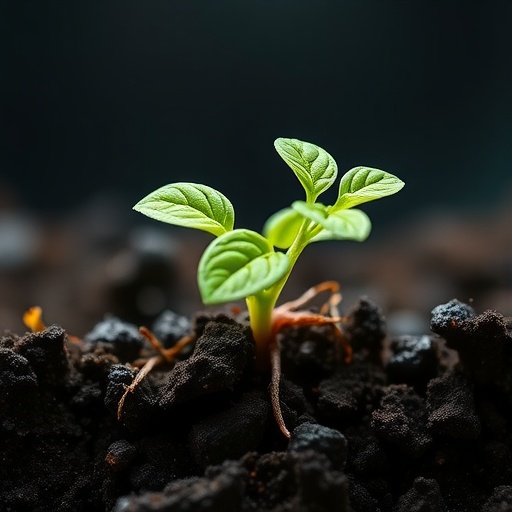
In a groundbreaking study published in Nature Plants, researchers have uncovered a novel mechanism by which plants harness transition metals to bolster their immune defenses against pathogens. This discovery unveils a sophisticated interplay between metal ion sensing and immune receptor activation in Arabidopsis roots, illuminating a critical aspect of plant biology that has remained poorly understood until now. Plant health and productivity are constantly threatened by a myriad of biotic stresses, such as bacterial infections, as well as abiotic factors including heavy metal contamination in soil. Understanding how plants integrate these stress signals to mount effective defenses is paramount for agricultural innovation and environmental adaptation.
This study focuses on a unique pair of intracellular immune receptors known as nucleotide-binding leucine-rich repeat proteins, or NLRs, which are pivotal in pathogen recognition and activation of plant immunity. The researchers identified that this NLR gene pair, expressed specifically in the root endodermis of Arabidopsis thaliana, operates in a finely tuned antagonistic relationship to modulate defense signaling in response to transition metals. Transition metals, such as cadmium (Cd²⁺), copper (Cu²⁺), and zinc (Zn²⁺), are known to influence plant immunity, but the molecular underpinnings and receptor-level interactions driving this effect were elusive until the identification of this NLR pair.
At the heart of the interaction lies STM2, an NLR receptor that has been shown to directly bind various transition metal ions via its leucine-rich repeat (LRR) domain. This binding event enhances STM2’s enzymatic activity, specifically boosting its ability to hydrolyze NAD⁺ molecules, which is a key biochemical step in the activation of downstream immune signaling pathways. The enzymatic activation of STM2 triggers an immune cascade involving the EDS1/PAD4/ADR1 signaling node, known to be crucial for mounting resistance responses against pathogens, including the devastating bacterial wilt pathogen Ralstonia solanacearum.
Contrastingly, the STM1 receptor acts as a negative regulator of this process, forming an antagonistic pair with STM2. STM1 suppresses the activity of STM2, thereby dampening the immune response when transition metals are in excess. This suppression is critical to prevent hyperactivation of the immune system, which can lead to growth inhibition and other detrimental effects on the plant. The delicate balance maintained by STM1 and STM2 exemplifies the evolutionary trade-off plants face between defense and growth, especially within metal-rich environments, where enhanced immune activation could otherwise impair development.
The study meticulously characterized metal binding to STM2’s LRR domain using advanced biochemical assays, revealing high-affinity interactions with several transition metals. These findings suggest a direct molecular link between metal ion availability in the root environment and immune receptor modulation. This is particularly fascinating because it extends the functional repertoire of NLRs beyond traditional pathogen-derived effector recognition, positioning them as sensors of abiotic signals in the rhizosphere. This dual functionality underscores the adaptability of plant immune systems in responding to multifaceted environmental challenges.
Further functional assays demonstrated that exposure to transition metals significantly increased STM2-mediated resistance to Ralstonia solanacearum infection. This pathogen poses a substantial threat to crop stability globally, and the discovery that transition metals can enhance defense via STM2 offers promising avenues for biotechnological interventions. The findings highlight how strategic manipulation of metal ion concentrations or NLR receptor activity could potentially be harnessed to confer durable disease resistance in agriculturally important species.
However, the presence of STM1 tempers this increased immunity, providing a protective mechanism against overactivation of immune responses under excessive metal stress. This antagonism elucidates an important aspect of plant survival strategy: prioritizing resource allocation between defense activation and growth maintenance. The balance orchestrated by STM1 and STM2 is a prime example of how cellular signaling networks integrate environmental status to fine-tune physiological outputs, preventing deleterious autoimmunity-like conditions that would otherwise jeopardize plant fitness.
The discovery that NLR receptors can directly detect abiotic signals such as metal ions expands our understanding of the versatility and complexity inherent in plant innate immunity. It also raises intriguing questions about the evolutionary pressures that may have shaped NLR diversification, enabling plants to perceive a broader range of environmental cues. This research challenges the traditional perception of NLRs as solely pathogen sensors and invites further exploration into other abiotic stimuli they might recognize.
In ecological contexts, transition metal ions are often variable in concentration depending on soil composition and pollution levels. This study’s revelations may have profound implications for how plants adapt to heavy metal-contaminated soils, potentially using these metals as signals to preemptively ramp up disease resistance or modify root physiology. Such a mechanism provides an elegant way for plants to integrate chemical signals from their environment into immune regulation, thus enhancing their resilience in challenging habitats.
From an agricultural perspective, leveraging the mechanisms uncovered in this research could revolutionize crop protection strategies. Breeding or engineering plants with optimized STM2 activity or fine-tuned STM1 repression could give rise to cultivars capable of enhanced disease resistance without compromising growth under varied soil metal conditions. Moreover, soil amendment techniques that modulate transition metal bioavailability might be designed to synergistically boost plant immunity in sustainable and eco-friendly ways.
The molecular insights into NAD⁺ hydrolysis activation by metal-bound STM2 also open new research avenues in understanding plant metabolism-immunity crosstalk. NAD⁺ metabolism is an emerging focal point in both plant and animal immunity studies, and the linkage to metal sensing enriches this field by providing a novel molecular nexus. This could stimulate a wave of investigations into how metabolic status and environmental metal availability jointly influence immune competence in plants.
The authors’ approach combined genetic, biochemical, and physiological analyses, establishing a comprehensive framework for dissecting NLR function in metal-enhanced immunity. Their use of Arabidopsis as a model sets the stage for translational studies in crop species, where similar NLR pairs may exist. Given the ubiquitous presence of transition metals in soils around the world, the universality of this mechanism across plant taxa is a compelling hypothesis for future testing.
This research underscores the intricate balance plants maintain in their immune system, where both activation and suppression are finely coordinated by antagonistic receptor pairs. It illustrates a paradigm shift in our understanding of how plants perceive and integrate diverse environmental signals beyond pathogen attack alone. As global agriculture faces mounting challenges from climate change, soil contamination, and emerging pathogens, insights into such natural immune modulations are invaluable.
The identification of STM2 as an NLR receptor activated by transition metals fundamentally enriches the canon of plant immunity. This work not only deepens basic biological knowledge but also pinpoints tangible targets for enhancing crop resilience in metal-stressed environments. Ultimately, this research promises to inform innovative strategies that balance plant growth, defense, and environmental adaptation in an increasingly uncertain world.
By bridging the fields of plant immunology and metal biology, Gao and colleagues offer a rare glimpse into the complex molecular dialogues occurring in the subterranean world of plant roots. Their findings highlight the sophistication of plant defense mechanisms and pose fascinating questions about the evolutionary origins and functional diversification of immune receptors in plants. This study sets the stage for a new era of research where abiotic factors are considered integral components of immune regulation, reshaping how scientists approach plant health and disease mitigation.
Cite Scienmag News
Kristina Jarvis. (May 6, 2026). Transition Metals Boost Arabidopsis Root Immunity via NLR. Scienmag. https://scienmag.com/transition-metals-boost-arabidopsis-root-immunity-via-nlr/
Kristina Jarvis. "Transition Metals Boost Arabidopsis Root Immunity via NLR." Scienmag, 6 May 2026, https://scienmag.com/transition-metals-boost-arabidopsis-root-immunity-via-nlr/. Accessed 6 September 2026.
Kristina Jarvis. "Transition Metals Boost Arabidopsis Root Immunity via NLR." Scienmag. May 6, 2026. https://scienmag.com/transition-metals-boost-arabidopsis-root-immunity-via-nlr/


