


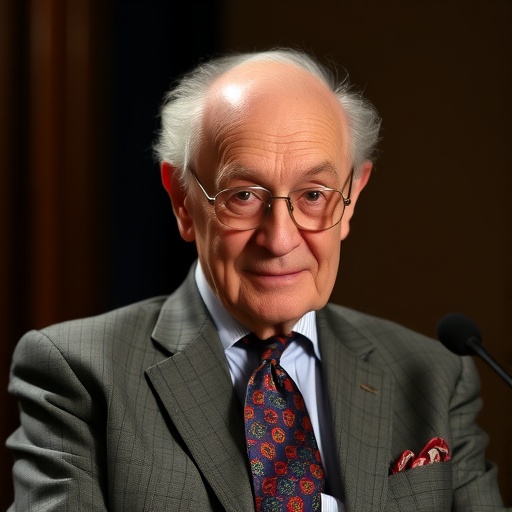
A comprehensive new review published in the cutting-edge journal Immunity & Inflammation sheds light on four decades of groundbreaking research into Toll-like receptors (TLRs), the pivotal sentinels of innate immunity. Authored by a team of leading immunologists—including Nobel laureate Jules A. Hoffmann, Chinese Academy of Engineering academician Xuetao Cao, and Associate Professor Cheng Qian—this authoritative synthesis articulates how fundamental discoveries in TLR biology have transformed our understanding of immune defense, inflammation, and disease pathogenesis.
The story of TLR research begins with the identification of the Toll gene in Drosophila embryogenesis during the 1980s, originally investigated for its role in developmental patterning. This early insight radically shifted in 1996 when Toll was repurposed as a critical regulator of antifungal immunity, validating the concept of pattern recognition receptors (PRRs). This revelation ignited a wave of exploration culminating in the discovery of human TLR4 in 1997 and the genetic confirmation of its role as the endotoxin receptor in 1998. Subsequent research throughout the late 1990s systematically elucidated ligand specificities across TLR family members, alongside the identification of MyD88, a central adaptor molecule indispensable for signal transduction in most TLR pathways.
Since these foundational discoveries, the research landscape has dramatically expanded, as evidenced by an exponential rise in scientific publications dedicated to TLRs and inflammation. The first decade of the 21st century was a particularly productive era marked by the complete mapping of the TLR family, their ligand repertoires, and downstream signaling networks. Groundbreaking studies identified endogenous damage-associated molecular patterns (DAMPs), thereby integrating TLRs into the broader framework of sterile inflammation and the “danger theory.” This period culminated in the 2011 Nobel Prize awarded to Hoffmann and Beutler, celebrating their pioneering insights into innate immunity.
The decade following the Nobel milestone shifted focus toward elucidating the intricate regulatory circuits that modulate TLR activation. It became clear that TLR signaling is not a binary on/off switch but a highly nuanced system modulated at multiple levels. Post-translational modifications—phosphorylation, ubiquitination, methylation, acetylation, SUMOylation, succinylation, and nitrosylation—were discovered to fine-tune the intensity and duration of TLR-induced responses. Concurrently, epigenetic regulation came into view, where DNA methylation, histone modifications, chromatin remodeling, and RNA editing orchestrated the chromatin landscape governing TLR-responsive gene expression patterns over extended periods.
Emerging as an exciting frontier, metabolic reprogramming unveiled bidirectional crosstalk linking cellular energy metabolism and TLR signaling. Fatty acid oxidation, lipid metabolism, and amino acid pathways dynamically interact with innate immune signaling, establishing feedback loops that choreograph immune cell function. Even more revolutionary is the identification of biomolecular condensates driven by phase separation, representing an entirely novel layer of spatial and temporal regulation underlying the assembly and coordination of TLR signaling complexes. This discovery opens new vistas in understanding how cells coordinate innate immune signaling with subcellular architecture.
The review highlights five fundamental modes of cross-regulation that confer remarkable plasticity on TLR pathways. These include the interplay between various post-translational modifications responsive to a single pathogen stimulus, synergistic convergence of metabolic and epigenetic mechanisms forming a stable yet adaptive response framework, the cooperative amplification arising from simultaneous activation of multiple distinct TLRs, mutual regulation among downstream effector pathways, and extensive crosstalk with other pattern recognition receptor systems. Collectively, these layers of regulation ensure that TLR-driven inflammation is both potent against infection and tightly controlled to avoid collateral tissue damage.
Beyond cell-intrinsic events, TLR signaling is deeply embedded within the tissue microenvironment, integrating diverse extrinsic cues. Cytokine milieus, oxygen gradients, nutrient availability, neuroimmune signals, mechanical forces, cell death modalities, and pH fluctuations all converge on TLR networks to tailor context-appropriate immune outcomes. This ecological perspective is crucial for understanding how TLRs govern host responses under varying pathophysiological conditions including infectious diseases, autoimmune disorders, cancer progression, and the chronic low-grade inflammation associated with aging (inflammaging).
The evolutionary arms race between hosts and pathogens adds another layer of complexity. Many microbes have evolved sophisticated strategies to evade TLR surveillance, including masking pathogen-associated molecular patterns (PAMPs), degrading or hijacking key TLR signaling components, exploiting immune dysfunction, and even manipulating phase separation processes. These microbial evasion strategies paradoxically illuminate critical regulatory nodes within the TLR pathway that are essential for effective immune defense.
Clinically, aberrant TLR signaling underpins a broad spectrum of human diseases. Genetic polymorphisms in TLR genes influence susceptibility to infectious agents. Dysregulation and hyperactivation of endosomal TLRs (notably TLR7, TLR8, and TLR9) drive pathogenesis in autoimmune diseases such as systemic lupus erythematosus, rheumatoid arthritis, psoriasis, and inflammatory bowel disease. In oncology, TLRs exhibit dichotomous roles, simultaneously promoting antitumor immune surveillance and facilitating tumor initiation, metastasis, and immune evasion. Moreover, age-related alterations in TLR functions form a nexus linking immunosenescence with chronic inflammatory conditions and multiple age-associated pathologies.
From a therapeutic standpoint, the potential of targeting TLR pathways is now a vibrant area of clinical investigation. Several compounds like monophosphoryl lipid A (MPLA), imiquimod, and CpG-1018 have secured approval as vaccine adjuvants or immunotherapeutic agents. Nevertheless, systemically administered TLR agonists or antagonists have faced translational challenges, with high-profile failures underscoring the necessity for precise treatment timing, patient stratification via biomarkers, and advanced delivery systems. The future trajectory of TLR-targeted therapies is shifting from broad immune activation to precision modulation, leveraging biased ligands, allosteric modulators, nanoparticle-based delivery, and incorporation of host-microbiome interactions to fine-tune immune responses for specific diseases.
Looking forward, the review anticipates that continued convergence of systems immunology, structural biology, artificial intelligence, and nanotechnology will enable unprecedented control of TLR pathways. Such advances promise to revolutionize immunotherapy for a diverse array of conditions including infectious diseases, autoimmune disorders, cancer, neurodegenerative diseases, and transplant rejection. The unfolding narrative of TLR biology exemplifies how fundamental scientific inquiry can spur transformative clinical innovations and herald a new era of precision medicine.
This seminal review, appearing in Immunity & Inflammation on April 27, 2026, therefore stands as both a definitive resource and a roadmap guiding the next frontier in innate immune research. By uniting historical insights with contemporary mechanistic understanding and translational perspectives, it affirms the centrality of TLRs at the crossroads of immunity, inflammation, and human health.
Cite Scienmag News
Drew Townsend. (May 6, 2026). Nobel Laureate Jules Hoffmann Heads Comprehensive Review Celebrating 40 Years of Toll-Like Receptor Research. Scienmag. https://scienmag.com/nobel-laureate-jules-hoffmann-heads-comprehensive-review-celebrating-40-years-of-toll-like-receptor-research/
Drew Townsend. "Nobel Laureate Jules Hoffmann Heads Comprehensive Review Celebrating 40 Years of Toll-Like Receptor Research." Scienmag, 6 May 2026, https://scienmag.com/nobel-laureate-jules-hoffmann-heads-comprehensive-review-celebrating-40-years-of-toll-like-receptor-research/. Accessed 4 September 2026.
Drew Townsend. "Nobel Laureate Jules Hoffmann Heads Comprehensive Review Celebrating 40 Years of Toll-Like Receptor Research." Scienmag. May 6, 2026. https://scienmag.com/nobel-laureate-jules-hoffmann-heads-comprehensive-review-celebrating-40-years-of-toll-like-receptor-research/


