


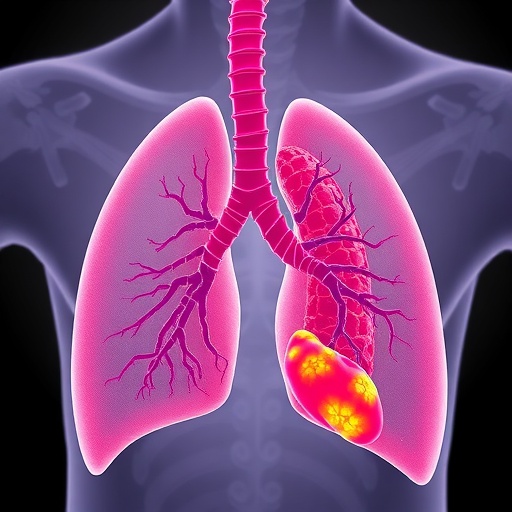
Pulmonary arterial remodeling is a hallmark of several severe cardiovascular diseases, including pulmonary arterial hypertension (PAH), which continues to challenge researchers with its complex pathophysiology and limited therapeutic options. A groundbreaking study recently published in Cell Death Discovery sheds new light on the molecular and metabolic mechanisms driving this critical pathological process. The research, led by Meng Z.Y., Lu C.H., and Liao J., elucidates the role of YWHAZ-mediated metabolic reprogramming through HIF1A/LDHA signaling, marking a significant advancement in our understanding of pulmonary arterial remodeling.
Metabolic reprogramming is increasingly recognized as a central contributor to vascular remodeling, altering cellular energy production and biosynthetic pathways to support pathological cellular phenotypes. In this study, the investigators zeroed in on YWHAZ, a gene encoding 14-3-3 zeta, a protein known to orchestrate various signaling cascades. Their findings reveal that YWHAZ acts as a pivotal regulator, modulating downstream HIF1A (Hypoxia-Inducible Factor 1-Alpha) and LDHA (Lactate Dehydrogenase A) to promote the metabolic shift characteristic of pulmonary arterial smooth muscle cells (PASMCs) during disease progression.
The authors meticulously demonstrate that YWHAZ expression is markedly upregulated in remodeled pulmonary arteries obtained from disease models and PAH patients, pinpointing a correlation between YWHAZ and pathological changes. Functional assays indicate that YWHAZ reprograms cellular metabolism by stabilizing HIF1A under hypoxic conditions, a microenvironmental hallmark of pulmonary hypertension. The stabilized HIF1A in turn activates LDHA expression, driving anaerobic glycolysis and enhanced lactate production, which fuels aberrant cell proliferation and resistance to apoptosis in PASMCs.
This upregulation of aerobic glycolysis, often referred to as the “Warburg effect” in cancer metabolism, represents a shared pathogenic mechanism in pulmonary vascular remodeling, fostering a proliferative and anti-apoptotic cellular phenotype. Meng and colleagues provide compelling evidence that the YWHAZ-HIF1A-LDHA axis is indispensable for this metabolic reprogramming, positioning this signaling cascade as a crucial nodal point orchestrating vascular remodeling at both molecular and metabolic levels.
Advancing beyond correlative observations, the team applied genetic and pharmacological inhibition strategies to disrupt YWHAZ expression or function in vivo and in vitro. These interventions significantly mitigated pulmonary arterial remodeling, evidenced by restored vascular architecture, reduced PASMC proliferation, and normalized metabolic profiles. These results firmly establish YWHAZ as a therapeutic target with the potential to amend disease progression by reversing metabolic dysregulation in pulmonary hypertension.
The study further enriches this narrative by dissecting downstream molecular consequences linked to YWHAZ signaling. Notably, YWHAZ-mediated metabolic shifts induce alterations in reactive oxygen species (ROS) production, mitochondrial integrity, and cellular redox states. These metabolic perturbations contribute to a vicious cycle of vascular injury and repair, compounding maladaptive remodeling. The intricate cross-talk between metabolism and cell fate governed by the YWHAZ-HIF1A-LDHA axis underscores the complexity and adaptability of vascular cells in pathologic states.
Importantly, this metabolic axis does not operate in isolation; the research illuminates how YWHAZ integrates signals from hypoxia and extracellular stimuli, transducing these cues into metabolic reprogramming that supports hyperproliferative and migratory behavior of PASMCs. This cross-layer signaling interplay advances the paradigm that vascular remodeling involves tightly regulated metabolic and signaling networks, offering new vistas for intervention.
These findings hold immense translational promise in the context of PAH and potentially other forms of pulmonary vascular disease. By targeting key metabolic modulators such as YWHAZ, it may be possible to develop next-generation therapies that curb pathological remodeling without the systemic side effects of current vasodilatory treatments. The metabolic-centric approach advocates for precision medicine strategies that tackle the root cellular dysfunction strategy of remodeling diseases.
Moreover, the detailed molecular characterization of the YWHAZ-HIF1A-LDHA axis adds a new dimension to biomarker discovery efforts. Elevated levels of YWHAZ or its downstream effectors could serve as early diagnostic or prognostic indicators in patients at high risk of pulmonary arterial remodeling, thereby enabling timely therapeutic intervention before irreversible vascular damage ensues.
Beyond pulmonary hypertension, the concept of metabolic reprogramming via YWHAZ signaling might illuminate pathologies in other hypoxia-implicated disorders, including certain cancers and fibrotic diseases. The mechanistic insights gathered here about hypoxia-driven metabolic adaptation may thus have broader biomedical relevance, potentially inspiring novel research lines across diverse disciplines.
This study exemplifies the power of integrating metabolic biology with vascular pathology, leveraging contemporary molecular tools and disease models to unravel complex cellular landscapes. The rigorous experimental methodology, spanning gene expression profiling, metabolic flux analyses, and in vivo functional assessments, lends robust credibility to the findings and sets a benchmark for future research efforts.
In summary, the identification of YWHAZ as a master regulator of metabolic reprogramming through HIF1A/LDHA signaling represents a paradigm shift in understanding pulmonary arterial remodeling. By revealing how metabolic and hypoxic signaling converge to drive pathological vascular remodeling, Meng, Lu, Liao, and colleagues chart a new course toward innovative metabolic interventions and precision therapeutics in pulmonary vascular diseases.
The implications of this research resonate deeply in translational science, offering hope that targeting key metabolic nodes may ultimately improve clinical outcomes for patients suffering from debilitating pulmonary hypertension. As further studies build on this foundational work, the vision of metabolism-centered therapies for cardiovascular remodeling moves closer to clinical reality, heralding a transformative era in the treatment of pulmonary vascular diseases.
Cite Scienmag News
Ophelia Keating. (May 5, 2026). YWHAZ Drives Pulmonary Artery Remodelling via HIF1A. Scienmag. https://scienmag.com/ywhaz-drives-pulmonary-artery-remodelling-via-hif1a/
Ophelia Keating. "YWHAZ Drives Pulmonary Artery Remodelling via HIF1A." Scienmag, 5 May 2026, https://scienmag.com/ywhaz-drives-pulmonary-artery-remodelling-via-hif1a/. Accessed 3 September 2026.
Ophelia Keating. "YWHAZ Drives Pulmonary Artery Remodelling via HIF1A." Scienmag. May 5, 2026. https://scienmag.com/ywhaz-drives-pulmonary-artery-remodelling-via-hif1a/


