


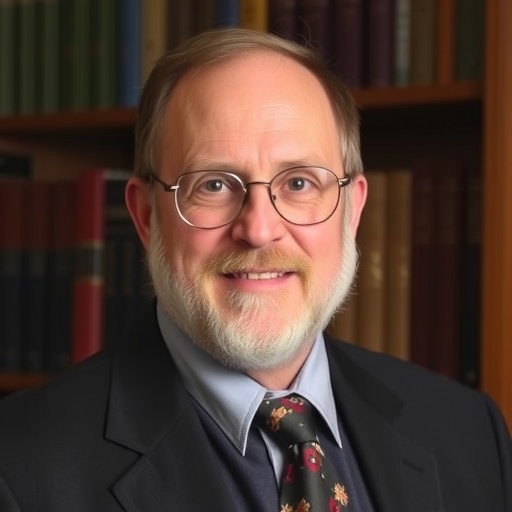
Dr. Gerald Joyce, President of the Salk Institute for Biological Studies, has recently been honored with election to the American Philosophical Society, one of the most prestigious and oldest learned societies in the United States, established in 1743 by Benjamin Franklin. This distinction reflects Joyce’s lifelong dedication to foundational questions in molecular biology and evolutionary science and recognizes his profound influence on modern biomedicine. The Society’s mission to foster the advancement of useful knowledge across disciplines resonates deeply with Joyce’s interdisciplinary research, which bridges molecular evolution, synthetic biology, and biomedical innovation.
Joyce has been a pioneering force behind the development of directed evolution techniques. This breakthrough technology allows scientists to mimic natural selection processes in a controlled laboratory setting by evolving molecules to acquire new properties and functions. Through iterative cycles of mutation and selection, directed evolution serves as a powerful method to engineer nucleic acids and proteins with customized activities, significantly advancing synthetic biology and molecular medicine. Joyce’s work has not only pushed the boundaries of how we understand molecular evolution but has also generated novel molecular tools with potential therapeutic applications.
One cornerstone of Joyce’s research has been the elucidation of mechanisms underlying the origin of life. His experiments have offered critical insights into how early biomolecules, particularly RNA, could have spontaneously emerged and self-replicated in prebiotic environments. By reconstructing plausible chemical pathways and testing them through in vitro evolution, Joyce’s studies bridge biochemistry and evolutionary theory, shedding light on the RNA world hypothesis — a pivotal concept suggesting RNA was fundamental to the earliest forms of life. This fundamental research informs both evolutionary biology and the ongoing quest to recreate life’s molecular origins in the laboratory.
Joyce’s innovative approach extended to the creation of the first synthetic DNA enzymes, or DNAzymes, engineered to catalyze specific biochemical reactions. These synthetic enzymes hold great promise in clinical settings, with several DNAzyme candidates undergoing trials for treating complex diseases like cancer, asthma, and dermatological conditions. By combining principles of molecular evolution with chemical synthesis, Joyce’s work exemplifies the translation of basic research discoveries into practical biomedical technologies, illustrating the far-reaching impacts of synthetic biology.
Before assuming his role as president in 2023, Joyce’s academic journey traversed multiple esteemed institutions. He began his scientific training as a PhD student and postdoctoral researcher at the Salk Institute itself. Later, he served as dean of the faculty at Scripps Research, a leading biomedical research institution, and directed the Genomics Institute at the Novartis Research Foundation. These diverse leadership experiences across top-tier research organizations reflect his capacity to drive both scientific innovation and institutional excellence.
Throughout his career, Joyce has been recognized with numerous awards attesting to his scientific leadership and innovation. Among these are the National Academy of Sciences Award in Molecular Biology and the Dannie Heineman Prize from the Göttingen Academy of Sciences. He is also a member of elite scholarly groups, including the US National Academy of Sciences, the National Academy of Medicine, the American Academy of Arts and Sciences, and is a foreign member of the Royal Swedish Academy of Sciences. Such accolades highlight his towering contributions to molecular biology and evolutionary sciences.
The election of Dr. Joyce to the American Philosophical Society places him among a distinguished cadre of Salk scientists who have shaped modern biology. This list includes Nobel laureates and pioneers such as Elizabeth Blackburn, Sydney Brenner, Francis Crick, and Joanne Chory. Their collective achievements underscore the Salk Institute’s legacy as a crucible for transformative science, particularly at the interface of molecular biology, genetics, and neuroscience. Joyce’s inclusion perpetuates this tradition of excellence and intellectual breadth.
The American Philosophical Society itself maintains a venerable history as a multidisciplinary forum that promotes scholarly interaction across various fields. Founded by Benjamin Franklin, it champions rigorous inquiry and the free exchange of ideas, embodying the spirit of scientific progress and public engagement. Joyce’s election is a recognition not only of his research achievements but also of his role as a scientific leader committed to advancing knowledge for global impact.
Directed evolution, the method Joyce advanced, involves leveraging molecular diversity and selective pressure to optimize biomolecules for desired functions. This approach has revolutionized protein engineering and synthetic biology, enabling the design of enzymes with enhanced specificity, stability, and catalytic efficiency. The technique has broad applications spanning industrial biotechnology, environmental remediation, and therapeutic development, making it one of the most transformative innovations in contemporary molecular science.
Joyce’s work on RNA catalysis provides foundational evidence for RNA’s dual role as both a genetic material and a catalyst, reinforcing the concept of an RNA-based early life form. His experiments have demonstrated that RNA molecules can undergo self-replication and evolutionary adaptation without protein enzymes, a property critical to understanding life’s emergence from chemical evolution. These insights have deep implications not just for evolutionary biology but also for synthetic biology efforts to construct minimal life forms.
The clinical potential of Joyce’s synthetic DNA enzymes exemplifies the translational power of directed evolution. By engineering catalytic DNA molecules capable of targeting disease-related RNA sequences or modulating cellular pathways, these DNAzymes represent a new class of precision therapeutics. Their ongoing clinical trials for cancers and inflammatory diseases highlight a future where molecular evolution-inspired therapies can be customized and rapidly developed, revolutionizing personalized medicine paradigms.
As president of the Salk Institute, Joyce now spearheads an institution renowned for its groundbreaking research in molecular biology, neuroscience, and plant science. Founded by Jonas Salk in 1960 with a mission to tackle humanity’s most pressing health challenges, the Institute continues to prioritize bold and collaborative science. Under Joyce’s leadership, Salk aims to expand its pioneering research on cancer, neurodegeneration, and agricultural resilience, bringing foundational discoveries closer to clinical and societal application.
The honor bestowed upon Dr. Gerald Joyce by the American Philosophical Society strengthens ongoing efforts to recognize and support visionary scientists whose work changes paradigms. Joyce’s journey exemplifies how curiosity-driven research into the origins and evolution of life molecularly intertwines with practical innovations that impact patient care and biotechnology. His election highlights a bright horizon for biology, where the boundaries between basic discovery and translational purpose continuously merge in the quest to unravel life’s deepest mysteries.
News Publication Date: May 4, 2026
Web References:
Cite Scienmag News
Drew Townsend. (May 5, 2026). Gerald Joyce Elected to Prestigious American Philosophical Society. Scienmag. https://scienmag.com/gerald-joyce-elected-to-prestigious-american-philosophical-society/
Drew Townsend. "Gerald Joyce Elected to Prestigious American Philosophical Society." Scienmag, 5 May 2026, https://scienmag.com/gerald-joyce-elected-to-prestigious-american-philosophical-society/. Accessed 4 September 2026.
Drew Townsend. "Gerald Joyce Elected to Prestigious American Philosophical Society." Scienmag. May 5, 2026. https://scienmag.com/gerald-joyce-elected-to-prestigious-american-philosophical-society/


