


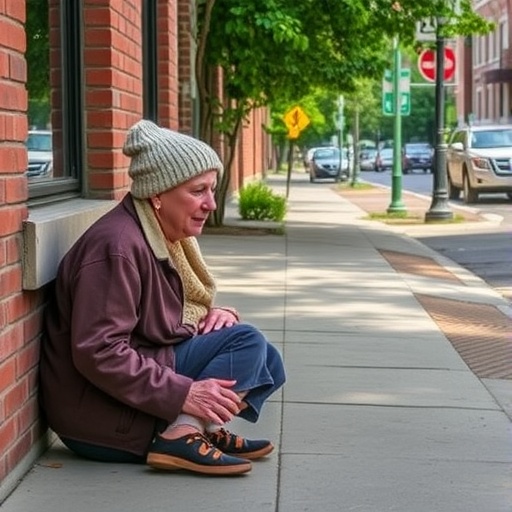
In the sprawling urban landscapes of the United States, homelessness remains a complicated and growing crisis, with older women in their 50s representing a particularly vulnerable and overlooked subgroup. Unlike typical narratives of homelessness focused on younger individuals or families, this demographic faces unique challenges that are often invisible within the frameworks of current social services and research. A groundbreaking study conducted by researchers from Boston University School of Social Work and the University of Vermont has delved into the lived experiences of these women, shedding light on their daily realities and calling for systemic changes in how emergency housing programs address their needs.
The study, published in the peer-reviewed journal Frontiers in Global Women’s Health, highlights that homelessness for women in their 50s transcends the basic necessity of securing shelter each night. It encompasses a fraught navigation through shelter systems that frequently fail to accommodate their specific health conditions, emotional vulnerabilities, and needs for safety. Shelters are often designed with younger populations in mind, leaving older homeless women contending not only with the harsh conditions of the streets but also with environments that exacerbate their health challenges and psychological trauma.
One of the principal insights of the research is how the shelter system’s architecture and operational rules induce feelings of dehumanization and loss of agency. Participants reported being reduced to mere bed numbers, a metaphor that encapsulates their sense of invisibility and depersonalization within institutional settings. Such experiences foster a climate of hypervigilance, as women constantly monitor their surroundings to avoid bullying, theft, and violence—factors that create a pervasive atmosphere akin to incarceration rather than refuge.
Physiologically, these women are often prematurely aged, displaying medical conditions commonly associated with much older populations. This accelerated aging results partly from prolonged exposure to substandard nutrition, stress, and inadequate healthcare access. Bunk beds, communal sleeping arrangements, and rigid schedules within shelters are ill-suited to their physical limitations, aggravating chronic illnesses and impairing their ability to maintain basic levels of comfort and dignity.
The research methodology employed qualitative interviews with 15 women over 50 years old, predominantly women of color, revealing shared narratives punctuated by trauma histories and complex health issues. These narratives expose the collision between institutional protocols designed for efficiency and a fundamental neglect of individualized care, especially regarding trauma-informed and age-responsive accommodations. The rigid policies often strip these women of autonomy, contributing to deteriorating mental health and a diminished sense of self-worth.
Importantly, the women interviewed exhibited remarkable resilience and creativity in preserving their identity and humanity despite these adversities. They found subtle ways to maintain their personal appearance and care for their belongings, acts of self-respect that serve as psychological bulwarks against the relentless erosion of dignity. Such resilience points to the critical importance of fostering environments in shelters that support, rather than undermine, personal agency and well-being.
The findings underscore a pressing need for systemic reform in how emergency housing shelters operate. Current models that enforce authoritarian and one-size-fits-all rules need to be supplanted by approaches that are sensitive to the intersections of age, health, and trauma. Age-responsive practices could include modifying physical infrastructure, implementing flexible daily routines, and training staff to recognize and react appropriately to the complex experiences of older homeless women.
Moreover, the absence of stability and normalcy plays a profound role in hampering recovery and reintegration efforts. The unpredictability of shelter schedules and the forced daytime displacement of residents onto the streets disrupt any semblance of routine, exacerbating feelings of hopelessness. The study’s authors argue for transformative solutions that foster safety and predictability within shelters, critical elements to restoring a sense of control and optimism among occupants.
The invisibility of older homeless women within policy dialogues and research agendas is a glaring omission noted by the investigators. Despite being one of the fastest-growing subpopulations of homelessness globally, they remain marginalized from policy making and service design discussions. Integrating their voices and lived experiences is essential to creating effective remedies and preventing further marginalization in a system already strained by increasing demand.
As the demographic landscape of homelessness shifts toward an aging population, this research provides compelling evidence for rethinking social safety nets. By adopting trauma-informed, gender- and age-sensitive frameworks, emergency housing programs can move closer to honoring the dignity and complexity of the lives of women experiencing homelessness in midlife and beyond. Such reforms not only address immediate safety and health needs but also have the potential to facilitate pathways toward permanent housing and improved quality of life.
The implications of this study are broad-reaching, urging funders, policymakers, and service providers to reconsider entrenched assumptions about who needs help and how that help should be delivered. Recognizing the interplay between trauma, accelerated aging, and institutional failings calls for a multidimensional strategy that bridges social work, public health, and housing policy. It is an invitation to reconstruct shelter environments from sites of survival into true sanctuaries of recovery.
In conclusion, the study titled “Walk in our shoes: older homeless women’s perceptions of the challenges of navigating streets and shelter life” serves as a clarion call. It advocates for the visibility and inclusion of older homeless women in the discourse on homelessness, emphasizing that behind every statistic is a person negotiating complex intersections of health, trauma, and social exclusion. Their resilience offers hope that with tailored support and systemic change, these women need not remain invisible or voiceless but can be central architects of their own pathways out of homelessness.
Cite Scienmag News
Courtney Benton. (May 4, 2026). New Study Reveals Experiences of Older Homeless Women Navigating Streets and Shelters. Scienmag. https://scienmag.com/new-study-reveals-experiences-of-older-homeless-women-navigating-streets-and-shelters/
Courtney Benton. "New Study Reveals Experiences of Older Homeless Women Navigating Streets and Shelters." Scienmag, 4 May 2026, https://scienmag.com/new-study-reveals-experiences-of-older-homeless-women-navigating-streets-and-shelters/. Accessed 3 September 2026.
Courtney Benton. "New Study Reveals Experiences of Older Homeless Women Navigating Streets and Shelters." Scienmag. May 4, 2026. https://scienmag.com/new-study-reveals-experiences-of-older-homeless-women-navigating-streets-and-shelters/


