


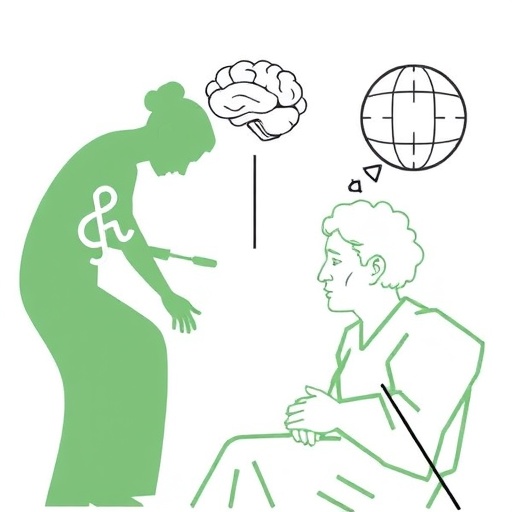
In the evolving landscape of geriatric healthcare, a groundbreaking study has emerged, shedding new light on the intricate relationships between physical disorders, cognitive function, depression, and activities of daily living (ADLs) among nursing home residents. This research, recently published in BMC Geriatrics, offers a sophisticated parallel mediation analysis that elucidates how these factors interplay in the elderly population residing in long-term care facilities. The study’s findings carry profound implications for clinical practice, policy-making, and future research in aging and mental health.
The study begins by addressing the pervasive impact of physical disorders on the wellbeing of nursing home residents. Chronic physical ailments are common in this demographic, severely limiting their functional abilities and independence. What makes this investigation particularly revolutionary is its approach to dissecting the mechanisms through which physical disorders contribute to declining mental health and impaired ADLs, crucially differentiating direct effects from mediated pathways. By employing a parallel mediation analytical framework, the researchers have mapped out the simultaneous influences of cognition and depression as intermediate processes connecting physical health and daily functioning.
Central to this analysis is the notion that physical disorders do not merely exert a straightforward detrimental effect on ADLs. Instead, the impact is partially or even predominantly mediated by cognitive decline and depressive symptoms, which stem from the physical impairments themselves. This dual mediation concept highlights the multifaceted nature of aging-related disabilities. Cognitive deficits might reduce an individual’s ability to plan, execute, and adapt daily activities, whereas depression often saps motivation and energy, compounding difficulties in managing personal care and mobility.
The study’s cohort included a representative sample of nursing home residents aging with varying degrees of physical health challenges, cognitive status, and psychological wellbeing. Methodologically, the authors applied rigorous statistical controls for confounding variables, ensuring robustness and credibility in their findings. Structural equation modeling was utilized to estimate the strength and significance of each mediating pathway simultaneously, creating a nuanced portrait of the lived experience of elderly individuals within institutional settings.
One of the standout revelations from the data is the magnitude of the indirect effects mediated through cognition and depression. The research demonstrates that interventions solely targeting physical health neglect the crucial mental health dimensions that sustain or impair functional independence. This recognition calls for holistic approaches in nursing home care, integrating physical rehabilitation with cognitive stimulation and mental health support to preserve or improve ADLs.
Further, the study argues for the prioritization of early identification and treatment of depressive symptoms in conjunction with strategies to maintain or enhance cognitive functioning. Given the demonstrated pathways, alleviating depression could unlock better adherence to physical therapy and self-care activities, while cognitive interventions might empower residents to navigate the challenges imposed by physical limitations more effectively.
Importantly, this research illuminates the bidirectional and interactive dynamics among these variables. The deterioration in physical health can lead to cognitive decline and depression, but these psychological consequences can also feedback to exacerbate physical symptoms, creating a vicious cycle. Recognizing these feedback loops opens avenues for novel preventative measures and multidisciplinary care models targeting both physical and mental domains simultaneously.
The implications extend beyond individual care to inform policy makers about resource allocation in long-term care settings. Staffing models might require recalibration to include mental health professionals as essential members of the care team, ensuring that psychiatric and neuropsychological assessments become standard components of resident evaluations. Moreover, this integrated model challenges the traditional siloed approach often seen in elder care systems.
Critically, the study’s use of a parallel mediation framework represents an advance over previous unidimensional analyses that considered either cognition or depression in isolation. This statistical innovation allows for a more comprehensive understanding of the overlapping and independent paths linking physical disorders to functional decline, highlighting the importance of multifactorial treatment plans that reflect the complex reality of geriatric health.
The authors also emphasize the importance of tailoring interventions to the heterogeneity of nursing home populations. Factors such as age, baseline cognitive capacity, the severity of physical disorders, and comorbid psychological conditions all modulate the observed relationships. Personalized medicine approaches within geriatric care that adapt to individual profiles could maximize health outcomes and quality of life.
Moreover, this research underscores the pressing need for longitudinal investigations that track these variables across time. Such studies could affirm causal directions and identify critical windows for intervention, potentially transforming how healthcare providers anticipate, monitor, and manage decline in nursing home populations.
From a technological perspective, possibilities for integrating digital health tools—such as cognitive training apps, telepsychiatry, and wearable health monitors—emerge as promising complements to traditional interventions. These tools could facilitate continuous assessment and tailored support, reducing the risk of functional loss and enhancing the mental health of residents.
The study’s findings also have profound bioethical and societal implications. Ensuring comprehensive care that addresses both physical and mental aspects of health reflects a commitment to dignity and holistic wellbeing for the elderly, counteracting tendencies toward neglect or undertreatment of mental health conditions in older adults.
In summary, the research by He, Guo, Wang, and colleagues offers a pivotal advance in understanding how physical disorders, cognition, and depression intersect to influence daily functioning among nursing home residents. The parallel mediation analysis provides a compelling argument for integrated, multidisciplinary strategies that transcend traditional boundaries in geriatric healthcare. As the global population ages, these insights will be instrumental in shaping future clinical practice, research, and policy aimed at promoting healthier, more independent lives for our elders.
Cite Scienmag News
Glenn Wilkins. (May 2, 2026). Physical Disorders, ADLs, Cognition, Depression in Nursing Homes. Scienmag. https://scienmag.com/physical-disorders-adls-cognition-depression-in-nursing-homes/
Glenn Wilkins. "Physical Disorders, ADLs, Cognition, Depression in Nursing Homes." Scienmag, 2 May 2026, https://scienmag.com/physical-disorders-adls-cognition-depression-in-nursing-homes/. Accessed 1 September 2026.
Glenn Wilkins. "Physical Disorders, ADLs, Cognition, Depression in Nursing Homes." Scienmag. May 2, 2026. https://scienmag.com/physical-disorders-adls-cognition-depression-in-nursing-homes/


