


In a groundbreaking advancement for science education and public engagement, the Boyce Thompson Institute (BTI) announces the launch of an ambitious new initiative funded by a multi-year grant from the U.S. Department of Agriculture’s Food and Agriculture Non-Formal Education (FANE) program. Spearheaded by Dr. Georg Jander and Delanie Sickler, the Education and Outreach Director at BTI, this initiative, known as P-BIOTEK, stands poised to revolutionize biotechnology education for K-12 students, particularly those in underserved rural communities throughout Upstate New York. The project’s comprehensive approach interweaves biotechnology innovation with outreach, training, and education, fostering a deeper connection between scientific research and community understanding.
P-BIOTEK’s mission revolves around democratizing access to cutting-edge plant biotechnology education by integrating hands-on learning and immersive scientific experiences. The program is designed to build a bridge between laboratory discoveries and public awareness, nurturing a generation of young learners who are well-versed in contemporary bioengineering techniques. This initiative aims to empower youth to critically engage with biotechnological advancements, understand the scientific principles behind genetically engineered crops, and participate actively in conversations about the future of agriculture.
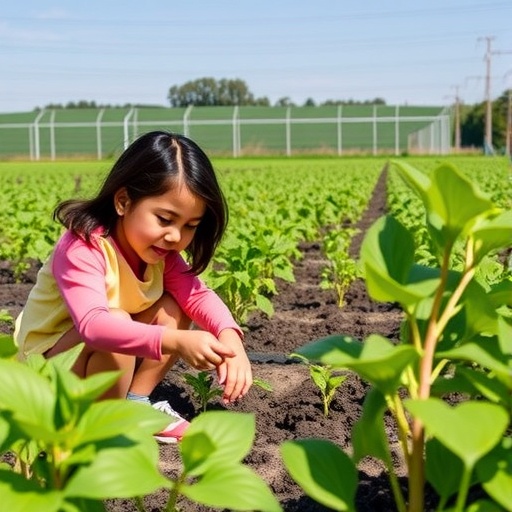
Central to P-BIOTEK is a unique community science program where approximately 100 students annually cultivate and analyze the bioengineered Purple Tomato™, a cultivar enhanced to be rich in anthocyanins—a class of antioxidants linked to various health benefits. These students are not merely passive observers but active contributors: they are involved in evaluating the traits of these genetically modified tomatoes, learning about the principles of gene editing, and gaining insight into the developmental processes of bioengineered crops. The program’s modules thoroughly explain the scientific methodologies used in plant biotechnology, blending molecular biology with applied agricultural sciences in an accessible manner.
The Purple Tomato™ serves as both a scientific subject and an educational tool, offering a tangible example of how genetic modifications can enhance nutritional content and promote health. By engaging with this crop, students invariably delve into complex topics such as genetic transformation, anthocyanin biosynthetic pathways, and the regulatory frameworks governing genetically modified organisms (GMOs). Furthermore, the program tackles nuanced discussions about the ethical considerations and societal impacts of bioengineering, encouraging a balanced and informed perspective among young learners.
Collaborating with esteemed institutions such as Cornell University, New York State 4-H, Norfolk Healthy Produce LLC, and Science in Real Life, P-BIOTEK integrates expertise from academia, agriculture, youth development, and science communication. This multifaceted partnership enriches the educational content and outreach strategies, ensuring that the program is grounded in scientific rigor while remaining accessible and relatable to a diverse audience. The collaborative framework also enables the creation of publicly available educational modules, which will extend the program’s reach far beyond its immediate participants.
A hallmark feature of P-BIOTEK is the immersive summer internship opportunity offered to a carefully selected cohort of six high school students each year. These interns undergo an intensive seven-week research experience at both BTI and Cornell University, where they engage in authentic molecular biology research projects. Under the mentorship of experienced scientists, these students acquire hands-on skills in techniques such as DNA extraction, polymerase chain reaction (PCR), gene cloning, and phenotypic analysis of genetically modified plants. This immersive experience not only builds technical competence but also cultivates scientific thinking and problem-solving abilities.
In addition to laboratory work, these internships emphasize science communication—a critical component in bridging scientific knowledge and public understanding. Interns undertake projects designed to translate complex biotechnological concepts into engaging narratives for diverse audiences. This dual focus on research and communication equips students with a comprehensive skill set highly relevant to careers in biotechnology, agriculture, and STEM education. Notably, the program contributes to workforce development by preparing students for future roles in rapidly evolving scientific fields.
The P-BIOTEK initiative leverages a rich legacy of community science, reinforcing participatory approaches that integrate public collaboration into scientific research. Building on successful models such as those pioneered by the Cornell Lab of Ornithology, which effectively engaged citizen scientists in data collection and conservation, P-BIOTEK adapts these principles to the realm of plant biotechnology. By positioning community involvement as a cornerstone, the program fosters inclusivity and democratizes science, thereby dismantling barriers that traditionally hinder access to STEM education.
Dr. Joyce Van Eck’s work on groundcherry community science projects at BTI exemplifies this ethos. Her initiatives invited nationwide participants to contribute data and insights, directly influencing research on underutilized fruit crops. Such participatory models have demonstrated their potential to expand scientific horizons while empowering non-expert contributors. P-BIOTEK builds on these foundations, aiming to create a sustainable ecosystem where education, research, and public engagement converge seamlessly.
The timing of P-BIOTEK’s launch is particularly crucial. As biotechnology continues to transform agriculture with innovations such as CRISPR gene editing and synthetic biology, public understanding lags behind scientific progress. Regulatory landscapes are becoming increasingly sophisticated, and consumer debates over GMO safety and ethics remain contentious. This educational program seeks to fill the knowledge gap by framing biotechnology within a context of scientific evidence and societal benefits, cultivating critical thinking and informed dialogue among young audiences.
By equipping students with direct experience and comprehensive knowledge, P-BIOTEK aspires to inspire future leaders who will shape the trajectory of agricultural innovation. The program’s impact is projected to reach over 400 youth participants directly throughout the grant period, with broader influence anticipated through the dissemination of educational resources and engagement activities. Such broad outreach underscores the program’s potential to catalyze long-term cultural shifts toward science literacy and acceptance of biotechnological advancements.
In summary, the P-BIOTEK initiative embodies an integrative approach to biotech education, blending scientific inquiry with community-centric teaching. Through its innovative use of the Purple Tomato™ bioengineered crop as a living classroom, the program offers a rare and effective means for students to engage deeply with the molecular and societal dimensions of plant biotechnology. The collaboration among academic institutions, agricultural producers, and science communicators highlights the interdisciplinary nature of contemporary STEM education and its necessity in cultivating an informed public.
As this ambitious endeavor unfolds, it stands as a testament to the transformative power of education when paired with real-world scientific applications. P-BIOTEK not only enriches the educational landscape of Upstate New York but also serves as a replicable model for similar initiatives nationwide, signaling a promising future for community-engaged biotechnology education.
News Publication Date: Not specified (based on source content timeline)
Web References:
- https://btiscience.org/faculty/georg-jander/
- https://mediasvc.eurekalert.org/Api/v1/Multimedia/51412e91-0ae6-429c-b02b-6cf2dade3ace/Rendition/low-res/Content/Public
Cite Scienmag News
Gregory Coleman. (May 1, 2026). Boyce Thompson Institute Secures USDA Grant to Enhance Youth Education in Plant Biotechnology Across New York. Scienmag. https://scienmag.com/boyce-thompson-institute-secures-usda-grant-to-enhance-youth-education-in-plant-biotechnology-across-new-york/
Gregory Coleman. "Boyce Thompson Institute Secures USDA Grant to Enhance Youth Education in Plant Biotechnology Across New York." Scienmag, 1 May 2026, https://scienmag.com/boyce-thompson-institute-secures-usda-grant-to-enhance-youth-education-in-plant-biotechnology-across-new-york/. Accessed 31 August 2026.
Gregory Coleman. "Boyce Thompson Institute Secures USDA Grant to Enhance Youth Education in Plant Biotechnology Across New York." Scienmag. May 1, 2026. https://scienmag.com/boyce-thompson-institute-secures-usda-grant-to-enhance-youth-education-in-plant-biotechnology-across-new-york/


