


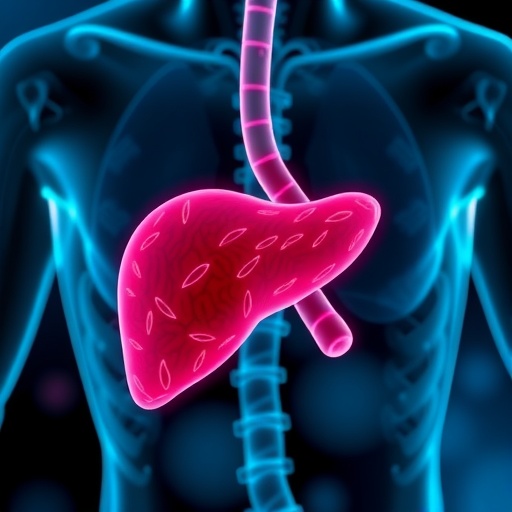
In a groundbreaking advancement poised to reshape approaches in hepatology and microbiome research, scientists have unveiled a novel therapeutic avenue to combat alcoholic liver disease (ALD) using nanoparticles derived from the probiotic bacterium Bifidobacterium bifidum. This pioneering study, spearheaded by Gu, Meng, Yao, and colleagues, elucidates a sophisticated biophysical mechanism by which these biologically derived nanoparticles exert a potent protective effect on liver function. Published in Nature Communications in 2026, this work introduces an innovative paradigm combining microbiology, nanotechnology, and immunology to address a critical global health challenge that has, until now, lacked effective targeted therapies.
Alcoholic liver disease remains a leading cause of morbidity and mortality worldwide, characterized by progressive liver damage due to chronic excessive ethanol consumption. Current treatment modalities are limited largely to lifestyle modification and supportive care, as pharmacological interventions have struggled to confer robust therapeutic efficacy without significant side effects. This study capitalizes on the unique symbiotic relationship between humans and their gut microbiota, harnessing Bifidobacterium bifidum-derived nanoparticles to modulate key pathological processes underpinning ALD. The research marks a significant stride from conceptual microbiota-based interventions to tangible, engineered biotherapeutics.
Central to the study’s findings is the elucidation of the nanoparticles’ capacity to enhance hepatic phagocytosis, a critical immunological process whereby resident liver macrophages—the Kupffer cells—engulf and clear endotoxins, damaged hepatocytes, and other pro-inflammatory stimuli induced by chronic alcohol exposure. By augmenting this phagocytic activity, the nanoparticles effectively reduce hepatic inflammation and fibrosis, thereby preserving liver architecture and function. The researchers employed an array of cutting-edge imaging technologies and in vivo murine models mimicking ALD pathology to affirm this enhanced phagocytic response at cellular and tissue levels.
Beyond liver-specific effects, the nanoparticles markedly contributed to restoring gastrointestinal homeostasis, a facet often overlooked in ALD pathology but increasingly recognized for its pivotal role in disease progression. Chronic alcohol intake disrupts gut microbiota balance and increases intestinal permeability, facilitating translocation of harmful microbial products into circulation. The study demonstrates that B. bifidum nanoparticles promote the integrity of the gut epithelial barrier and rebalance microbial communities, thereby mitigating systemic endotoxemia—a key driver of hepatic injury.
Intriguingly, the physicochemical characterization of these biologically derived nanoparticles revealed a unique lipid-protein composition mirroring the natural outer membrane vesicles secreted by Bifidobacterium bifidum. These vesicles were bioengineered to optimize stability and bioavailability in the harsh gastrointestinal environment, allowing targeted delivery to the liver via portal circulation. Detailed analyses using mass spectrometry and electron microscopy highlighted specific protein domains responsible for preferential recognition and uptake by Kupffer cells, enhancing the specificity and efficacy of the intervention.
The translational implications of this research are profound. By leveraging a naturally occurring probiotic bacterium as a source for therapeutic nanovesicles, this approach sidesteps many of the immunogenic and toxicity concerns commonly associated with synthetic nanoparticle platforms. Moreover, the dual action on hepatic immune modulation and gut barrier restoration offers a holistic treatment perspective that could outperform monotherapies targeting isolated disease components.
This work also shines a light on the broader potential of microbiota-derived nanotherapeutics for systemic diseases beyond the liver. The concept that gut-resident microbes can be harnessed not only as live biotherapeutic agents but also as sources for precisely engineered nanoparticles opens exciting avenues for personalized medicine. The modular nature of bacterial vesicles suggests possibilities for customizing cargo molecules to tackle diverse pathologies with enhanced selectivity.
From a mechanistic standpoint, the study further deepens our understanding of Kupffer cell biology and the intricate crosstalk between the liver immune niche and the gut microbiome. The researchers report upregulation of phagocytosis-related receptors and anti-inflammatory signaling cascades post-nanoparticle treatment, indicating a reprogramming of macrophage phenotype towards a tissue-protective state. This finding augments growing evidence that modulating innate immune cells can recalibrate chronic inflammation and facilitate tissue repair.
Moreover, the safe and effective attenuation of ALD symptoms in preclinical models by these bacterially-derived nanoparticles underscores their therapeutic promise. Markers of liver injury, including transaminases and histopathological scores, showed significant improvement, alongside normalized metabolic function and reduced oxidative stress. These endpoints collectively affirm the multifaceted benefits of this innovative strategy.
While the research delivers a tantalizing proof-of-concept, the authors acknowledge several challenges on the path toward clinical translation. Large-scale production and standardization of the nanoparticle formulation require optimization, alongside rigorous safety evaluations in diverse animal models. Furthermore, the pharmacokinetics, biodistribution, and long-term effects of repeated dosing warrant comprehensive investigation to mitigate off-target risks.
Nevertheless, the potential to integrate this approach with existing therapeutic regimens, such as abstinence programs and nutritional support, holds promise for enhancing patient outcomes in ALD. Given the escalating global burden of alcohol-related liver disease, such novel biotherapeutics could revolutionize current clinical practice. The study paves the way for future clinical trials and inspires broader exploration into probiotic-derived nanomedicine.
In conclusion, the discovery that Bifidobacterium bifidum-based nanoparticles can attenuate alcoholic liver disease through enhanced hepatic phagocytosis and restoration of gastrointestinal homeostasis represents a milestone in hepatology and microbiome science. By bridging microbiology, nanotechnology, and immunology, this research sets a precedent for next-generation therapeutics that harmonize with the body’s intrinsic microbial and immune ecosystems. As efforts to translate this innovation into human medicine accelerate, the prospect of microbial nanotherapeutics heralds a promising frontier against one of the most challenging forms of chronic liver disease.
This elegant convergence of natural bacterial products and engineered nanomedicine not only illuminates new biological principles but also offers hope for millions afflicted by alcohol-related liver dysfunction worldwide. It underscores a critical shift in biomedical research, embracing the microbiome’s complexity as a reservoir of untapped therapeutic potential. As science continues to unravel these intricate interdependencies, we edge closer to sustainable, effective solutions for diseases rooted in the interplay between lifestyle, immunity, and microbial ecology.
Cite Scienmag News
Morgan Morrow. (May 1, 2026). Bifidobacterium Nanoparticles Combat Alcoholic Liver Disease. Scienmag. https://scienmag.com/bifidobacterium-nanoparticles-combat-alcoholic-liver-disease/
Morgan Morrow. "Bifidobacterium Nanoparticles Combat Alcoholic Liver Disease." Scienmag, 1 May 2026, https://scienmag.com/bifidobacterium-nanoparticles-combat-alcoholic-liver-disease/. Accessed 31 August 2026.
Morgan Morrow. "Bifidobacterium Nanoparticles Combat Alcoholic Liver Disease." Scienmag. May 1, 2026. https://scienmag.com/bifidobacterium-nanoparticles-combat-alcoholic-liver-disease/


