


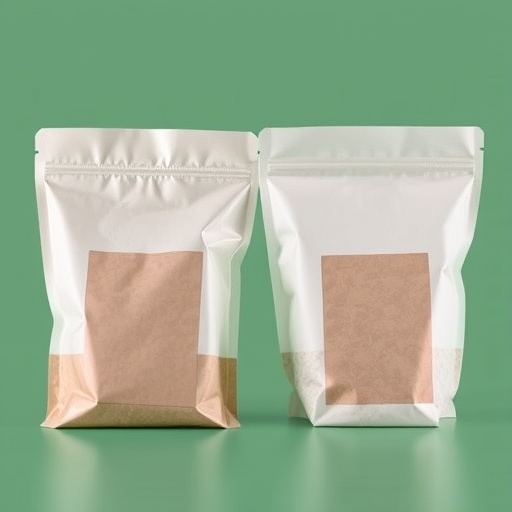
In an era where the environmental toll of petroleum-based plastics presents a daunting global challenge, a revolutionary advancement offers a beacon of hope. A team of interdisciplinary researchers has engineered a novel thermoplastic sourced from cannabidiol (CBD), the non-psychoactive compound abundantly found in the hemp plant. This innovation emerges as a promising substitute for conventional plastics, delivering impressive mechanical and thermal properties comparable to those of polyethylene terephthalate (PET), a ubiquitous material in single-use plastic products.
The newly developed hemp-derived poly(cannabidiol carbonate) thermoplastic exhibits remarkable elasticity, capable of stretching up to 1,600% of its original length. Such extensibility is a rare characteristic among plastics, especially those derived from natural sources. This exceptional stretchability is complemented by a high glass transition temperature, ensuring the material maintains structural integrity and resistance even upon exposure to boiling hot water. Unlike many bioplastics that falter at elevated temperatures or lack durability when wet, this hemp-based thermoplastic maintains its robustness, positioning it as a strong contender in applications demanding thermal and moisture resilience.
One of the driving motivations behind this innovation is the environmental and health concerns associated with bisphenol-A (BPA), the petrochemical component traditionally used in polycarbonate plastics. BPA is widely recognized as an endocrine disruptor, raising alarms about its impact on human health and ecological systems. By leveraging CBD as a bio-based building block, the researchers aim to mitigate these risks, aligning plastic production with sustainable and non-toxic paradigms. Gregory Sotzing of the University of Connecticut, a principal author of the study, emphasizes that substituting BPA with CBD could mark a transformative shift in how plastics are manufactured worldwide.
Beyond environmental sustainability, the technical capabilities of this CBD-derived plastic are compelling. It exhibits transparency suitable for producing films and coatings, fulfilling the optical requirements of packaging and flexible electronics substrates. Its melt processability—the capacity to be melted, reshaped, and reformed efficiently—is finely tuned through meticulous control of molecular architecture. This fundamental understanding bridges the gap between laboratory-scale synthesis and feasible industrial manufacturing, an often-overlooked hurdle in bioplastic commercialization.
Mukerrem Cakmak from Purdue University highlights that their systematic exploration of processing parameters has forged a comprehensive framework linking polymer structure to practical manufacturability. This approach ensures that the newfound hemp-based thermoplastic not only matches but could outperform conventional plastics such as PET, especially in applications requiring medium to high-temperature stability without compromising mechanical strength. Achieving this balance is critical for scaling sustainable materials into widespread commercial use without sacrificing performance.
The prevalent reliance on fossil fuels for producing PET contributes significantly to greenhouse gas emissions and environmental degradation. Moreover, the persistence of PET in aquatic environments leads to the formation of microplastics—minute particles that infiltrate water sources, air, and food supplies, posing profound risks to biological health. The introduction of a hemp-derived alternative addresses these challenges on multiple fronts: it reduces dependency on depleting fossil resources while curtailing microplastic pollution due to its bio-based origin and enhanced degradability profile.
Historically, efforts to create bio-based polymers have faced limitations such as elevated production costs, insufficient thermal properties, and complex catalyst systems requiring harsh conditions. These barriers have stymied the transition from petroleum-based plastics to greener counterparts. The research team’s strategy involved deftly employing commercial triphosgene with CBD under milder conditions, simplifying catalyst handling and product purification. Such innovation in chemical processing underscores the practicality of hemp plastics for large-scale synthesis, an essential consideration for future industrial adoption.
The intrinsic high contact angle of the poly(cannabidiol carbonate) film reveals hydrophobic surface properties superior to many polyolefins. This observation suggests potential beyond structural plastics; for instance, the material could be engineered into nanoparticles for targeted drug delivery systems or used as biocompatible coatings on medical devices like catheters. This versatility exemplifies the broader implications of the research, wherein sustainable materials could revolutionize multiple sectors including biomedicine and electronics.
While global hemp cultivation is increasing due to its expanding utility in textiles, construction, and food industries, current CBD production levels remain insufficient to replace PET entirely. Nevertheless, the agricultural benefits of hemp—such as its adaptability to diverse climates, minimal water requirements, and low pesticide dependency—render it a sustainable resource for future bio-based economies. Moreover, its compatibility with crop rotation practices involving staples like corn and soybeans enhances its attractiveness to farmers seeking sustainable and profitable crop options.
Cost reductions for CBD production are anticipated as hemp farming scales up, thereby reducing the economic barriers that have historically impeded widespread adoption of bio-based plastics. The climate-friendly footprint, coupled with anticipated economic feasibility, holds promise for a paradigm shift in plastic manufacturing practices worldwide. This advancement aligns with growing consumer and regulatory pressures to adopt environmentally responsible materials while maintaining high-performance standards.
The research team continues to investigate the chemical interactions during synthesis, particularly the products formed when CBD is reacted with triphosgene, to further optimize the material’s properties. Concurrently, efforts to augment the mechanical strength of the hemp-derived thermoplastic are underway, along with scaling trials to translate laboratory methods to industrial manufacturing seamlessly. Such initiatives are critical for validating the commercial and ecological viability of these next-generation plastics.
Overall, the development of a high molecular weight hemp-based poly(cannabidiol carbonate) thermoplastic marks a significant stride toward sustainable materials engineering. By addressing key challenges such as thermal stability, mechanical resilience, and processability, this innovation opens new avenues for reducing our dependency on fossil-fuel-based plastics. As environmental concerns mount and demand for greener alternatives intensifies, hemp-derived plastics could play an instrumental role in reshaping the future of materials science and environmental stewardship.
Cite Scienmag News
Denise Maddox. (April 30, 2026). Hemp-Based Thermoplastic Presents Sustainable Alternative for Plastic Packaging. Scienmag. https://scienmag.com/hemp-based-thermoplastic-presents-sustainable-alternative-for-plastic-packaging/
Denise Maddox. "Hemp-Based Thermoplastic Presents Sustainable Alternative for Plastic Packaging." Scienmag, 30 April 2026, https://scienmag.com/hemp-based-thermoplastic-presents-sustainable-alternative-for-plastic-packaging/. Accessed 1 September 2026.
Denise Maddox. "Hemp-Based Thermoplastic Presents Sustainable Alternative for Plastic Packaging." Scienmag. April 30, 2026. https://scienmag.com/hemp-based-thermoplastic-presents-sustainable-alternative-for-plastic-packaging/


