


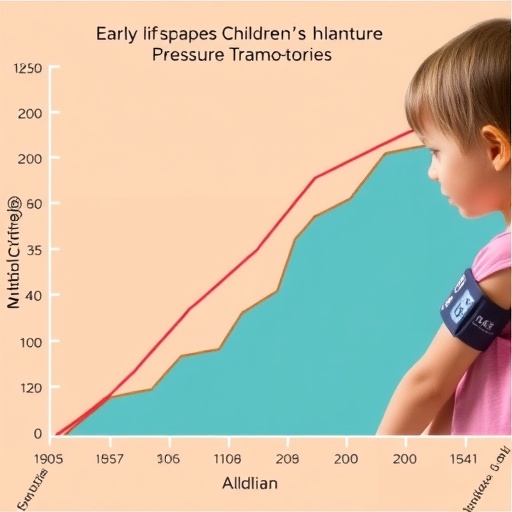
In a groundbreaking study poised to reshape our understanding of pediatric health, researchers have meticulously charted the intricate relationship between early life factors and the trajectory of blood pressure percentiles in children. This comprehensive investigation sheds new light on the factors that contribute to elevated blood pressure during childhood, offering potential pathways for early intervention and long-term cardiovascular health improvements.
The research delves deep into the longitudinal patterns of blood pressure from infancy through childhood, emphasizing the critical windows during which environmental, genetic, and developmental influences converge to shape cardiovascular outcomes. By tracking blood pressure percentile trajectories rather than simply relying on isolated measurements, the study provides a nuanced perspective on how blood pressure evolves over time, underscoring the dynamic nature of this vital parameter.
Central to the findings is the identification of specific early life factors that significantly influence blood pressure trajectories. Variables such as birth weight, gestational age, nutrition in infancy, and exposure to secondhand smoke have emerged as pivotal determinants. These factors interact in complex ways, amplifying or mitigating risks associated with elevated blood pressure. The intricate interplay highlights the necessity for a multifaceted approach to pediatric health monitoring that transcends traditional one-time assessments.
The methodology employed in this investigation is particularly noteworthy, combining robust longitudinal cohort data with advanced statistical modeling techniques. By utilizing percentile trajectories as the main analytic tool, researchers have captured subtle shifts and patterns that might otherwise go unnoticed. This approach facilitates the discernment of distinct blood pressure trajectory groups within the pediatric population, each correlating with varying degrees of future cardiovascular risk.
One of the most striking revelations of the study is the persistence of elevated blood pressure from early childhood into later years. Children who exhibit higher blood pressure percentiles at younger ages tend to maintain these elevated levels as they grow, suggesting a window of opportunity for early detection and intervention. This persistence lays the foundation for potential progression into adolescent and adult hypertension, underscoring the urgency of early life preventive strategies.
The implications of these findings extend beyond clinical practice into public health policy. Understanding the modifiable early life factors influencing blood pressure trajectories paves the way for targeted health promotion strategies. Nutritional guidance, reduction of environmental tobacco smoke exposure, and monitoring of growth parameters can be integrated into pediatric healthcare protocols to mitigate the onset of hypertension.
Furthermore, this study challenges the current pediatric blood pressure guidelines by advocating for the incorporation of trajectory analysis. Rather than focusing solely on single-instance measurements, the authors argue for a paradigm shift towards dynamic monitoring. Such an approach could enhance the identification of at-risk children, enabling timely and personalized interventions that might alter the course of cardiovascular health.
The research team also highlights the genetic underpinnings that may predispose certain children to elevated blood pressure trajectories. While genetics alone do not dictate outcomes, their interaction with early environmental exposures creates a complex mosaic influencing cardiovascular risk. Future research integrating genomic data may unlock deeper insights, refining prediction models and therapeutic targets.
Importantly, the study addresses the socio-economic and demographic disparities that shape blood pressure patterns. Children from lower socio-economic backgrounds often face compounded risks due to factors such as inadequate nutrition and higher exposure to environmental pollutants. The recognition of these disparities stresses the need for equitable healthcare access and culturally sensitive interventions.
In terms of practical clinical application, the study proposes routine blood pressure monitoring tied to percentile trajectories as part of standard pediatric care. Such monitoring could be augmented with lifestyle counseling and, where necessary, pharmacological interventions tailored to the risk profile derived from trajectory data. This stratified approach may optimize resource allocation and improve health outcomes.
Another facet of the research considers the role of early nutritional interventions. Breastfeeding, timing of solid food introduction, and nutrient composition are all implicated in shaping cardiovascular trajectories. These insights align with broader efforts to promote optimal early nutrition as a foundation for lifelong health.
Moreover, the study underscores the need for comprehensive education for parents and caregivers. Awareness of the factors influencing childhood blood pressure trajectories empowers families to engage proactively in preventive measures. Health literacy campaigns can disseminate knowledge that reinforces early life health optimization.
The international relevance of this study cannot be overstated, as elevated pediatric blood pressure is a global concern with growing prevalence. Cross-cultural validations of these findings will be crucial, as environmental and genetic backgrounds vary widely. Collaborative efforts may refine the trajectory models to accommodate diverse populations.
Lastly, the researchers acknowledge the limitations of their study, including the challenges inherent in long-term follow-up and potential confounding variables. Nonetheless, the rigorous design and innovative analytic techniques provide a robust foundation for future research directions.
In summary, this seminal study offers a transformative lens through which to view pediatric blood pressure and cardiovascular risk. By unraveling the complex tapestry of early life influences and their longitudinal impact, it sets the stage for proactive, personalized, and equitable healthcare strategies that may ultimately curb the burden of hypertension from childhood onward.
Cite Scienmag News
Denise Maddox. (April 30, 2026). Early Life Shapes Children’s Blood Pressure Trajectories. Scienmag. https://scienmag.com/early-life-shapes-childrens-blood-pressure-trajectories/
Denise Maddox. "Early Life Shapes Children’s Blood Pressure Trajectories." Scienmag, 30 April 2026, https://scienmag.com/early-life-shapes-childrens-blood-pressure-trajectories/. Accessed 1 September 2026.
Denise Maddox. "Early Life Shapes Children’s Blood Pressure Trajectories." Scienmag. April 30, 2026. https://scienmag.com/early-life-shapes-childrens-blood-pressure-trajectories/


