


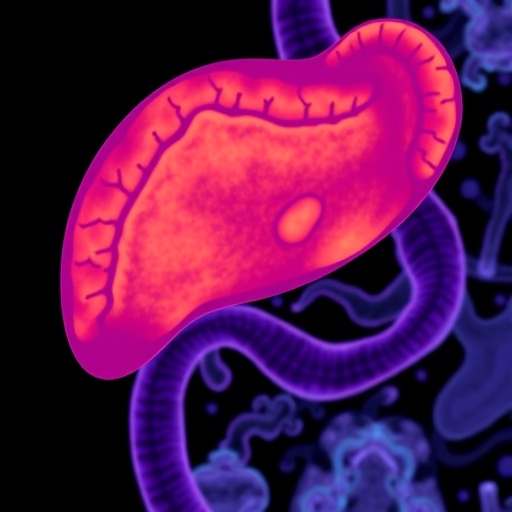
In a remarkable advance poised to revolutionize pancreatic cancer diagnosis, researchers have unveiled a next-generation artificial intelligence model named REDMOD that can detect the earliest and most subtle tissue changes of pancreatic ductal adenocarcinoma (PDAC). PDAC, the predominant form of pancreatic cancer, notoriously evades early detection due to a lack of obvious symptoms and visible abnormalities on conventional imaging. This breakthrough AI-driven framework promises to shift the paradigm from typically late, incurable diagnoses to identifying the disease at its nascent stage, dramatically enhancing treatment prospects and patient survival.
Pancreatic ductal adenocarcinoma remains one of the deadliest cancers, largely because it is customarily diagnosed at an advanced stage when therapeutic interventions offer minimal benefit. The aggressive nature of PDAC combined with its clinical silence contributes to dismal survival statistics, with many cases identified only after metastasis. Traditional computed tomography (CT) scans and clinical evaluations, despite their utility in many oncologic contexts, often fail to reveal the subtle microarchitectural tissue changes that herald the earliest cancerous transformations within the pancreas. This has fostered an urgent need for novel detection modalities capable of revealing these invisible early signs.
Addressing this critical gap, the REDMOD framework harnesses the power of radiomics—the extraction and analysis of complex quantitative features from medical images—combined with automated pancreas segmentation. This segmentation enables precise delineation of the pancreatic borders from surrounding tissues without manual oversight, mitigating risks associated with human error and variability. Such technical sophistication ensures that the AI examines consistent regions with high fidelity across diverse imaging datasets, a necessity for reliable early detection in a real-world clinical context.
To evaluate its clinical validity, the AI was retrospectively applied to abdominal CT scans from 219 patients initially deemed disease-free by radiologists but who were subsequently diagnosed with PDAC. These scans spanned time intervals extending up to three years prior to official diagnosis. Impressively, REDMOD identified pre-clinical malignant signatures an average of 475 days—approximately 15 months—before the clinical diagnosis was made. Notably, nearly two-thirds of these cancers were localized to the pancreatic head, an area notoriously challenging to assess. This discovery underscores a significant temporal window during which early intervention could substantially alter patient outcomes.
Comparison with a large control group comprising 1,243 age-, sex-, and scan-date matched individuals who remained PDAC-free for over three years highlighted REDMOD’s specificity. The model accurately recognized over 81% of cases as negative for cancer in an independent multicenter cohort and demonstrated 87.5% accuracy in a publicly available NIH dataset. Such high specificity is crucial in minimizing false positives that can lead to anxiety and unnecessary medical procedures. The consistency of REDMOD’s output was further bolstered by repeat scans from the same patients, which yielded 90 to 92% concordance in detecting early malignant signatures months apart, illustrating the AI’s longitudinal reliability.
Perhaps most compelling is REDMOD’s performance relative to highly experienced radiologists. The AI achieved a sensitivity of 73% in detecting early-stage PDAC changes—nearly double the 39% sensitivity attributed to human experts. This gap widened dramatically for cases detected over two years before clinical diagnosis, with REDMOD maintaining a 68% accuracy while radiologist detection fell to only 23%. These findings challenge the current clinical reliance on human interpretation alone and advocate for AI integration to capture otherwise invisible radiological cues.
Despite these promising results, the lead researchers cautiously note that further validation in prospective, high-risk patient groups remains imperative before widespread clinical adoption. Patients exhibiting symptoms such as unexpected weight loss or recent-onset diabetes—conditions often associated with increased PDAC risk—may benefit most from such AI surveillance. Moreover, while this study benefitted from multi-institutional data enhancing its generalizability, the participant demographics lacked ethnic diversity, signaling an area for expansion in future research.
At its core, the REDMOD framework represents a convergence of advanced computational imaging analysis and clinical oncology. The system’s fully automated design eliminates the bottleneck of manual image segmentation, accelerating processing and reducing inter-operator variability. Beyond pancreatic cancer, such methodologies herald a new era of radiological precision medicine, wherein hidden oncologic processes can be unmasked well before they manifest clinically or morphologically to the human eye.
The implications of this research extend into health economics and patient quality of life. Modeling indicates that increasing early-stage, localized PDAC detection from 10% to 50% could more than double survival rates, illustrating the profound influence of diagnostic timing. In a disease where late diagnosis is the norm and effective treatment options are limited, the ability to non-invasively detect cancer over a year in advance transforms the clinical landscape, offering hope where few options previously existed.
In summary, REDMOD embodies a significant leap toward proactive pancreatic cancer detection. By unveiling the “invisible” textures of early cellular malignant transformation within routine CT scans, it empowers clinicians with unprecedented foresight. Although prospective trials and validation in diverse populations are essential next steps, this research lays the foundation for AI-enhanced diagnostic pathways that could save countless lives and fundamentally change the prognosis of a devastating cancer.
News Publication Date: 28-Apr-2026
Web References: 10.1136/gutjnl-2025-337266
Keywords
Pancreatic cancer, Artificial intelligence, Imaging, Radiology, Early detection, Pancreatic ductal adenocarcinoma, Radiomics, Computed tomography, Automated segmentation, Medical imaging analysis
Cite Scienmag News
Rowan Blackwood. (April 29, 2026). AI Model Identifies Early, Typically Invisible Tissue Changes Indicative of Pancreatic Cancer. Scienmag. https://scienmag.com/ai-model-identifies-early-typically-invisible-tissue-changes-indicative-of-pancreatic-cancer/
Rowan Blackwood. "AI Model Identifies Early, Typically Invisible Tissue Changes Indicative of Pancreatic Cancer." Scienmag, 29 April 2026, https://scienmag.com/ai-model-identifies-early-typically-invisible-tissue-changes-indicative-of-pancreatic-cancer/. Accessed 28 August 2026.
Rowan Blackwood. "AI Model Identifies Early, Typically Invisible Tissue Changes Indicative of Pancreatic Cancer." Scienmag. April 29, 2026. https://scienmag.com/ai-model-identifies-early-typically-invisible-tissue-changes-indicative-of-pancreatic-cancer/


